
About Lobsang Sangay
Born 1968. Lobsang Sangay is an Indian politician, lawyer, jurist and head of government.
Lobsang Sangay (, ; born 5 September 1968) is a Tibetan-American politician in exile who was Kalon Tripa of the Tibetan Administration in India from 2011 to 2012, and Sikyong of the Central Tibetan Administration in India from 2012 to 2021.
The Tibetan Administration was created in 1991 after the 14th Dalai Lama rejected calls for Tibetan independence. The 14th Dalai Lama became permanent head of the Tibetan Administration and the executive functions for Tibetans-in-exile in 1991. In March 2011, at 71 years of age, the 14th Dalai Lama decided not to assume any political and administrative authority. The Charter of Tibetans in Exile was updated immediately in May 2011, and all articles related to political duties and regents of the 14th Dalai Lama were repealed.
Sangay was born in Darjeeling, India, and studied international law and democracy at Harvard University. He holds American citizenship.
Early life and education Sangay was born in a refugee community in Darjeeling, India, in 1968, with a typical Shichak (settlement) background amidst fields, cows, and chickens, fetching wood in the forest and helping his parents' small business, including selling winter sweaters. Sangay studied English Literature at Hansraj College, Delhi from 1988 to 1991. In 1995, he received a Fulbright Scholarship to study at Harvard Law School, where he subsequently received his LL.M. degree. Sangay spent 15 years at Harvard University, as a student and then as a senior fellow.
Academic career In 2003, Sangay organized five conferences between Chinese and Tibetan scholars, including a meeting between the Dalai Lama and thirty-five Chinese scholars at Harvard University.
In 2004, he became the first Tibetan to earn a S.J.D. degree from Harvard Law School and was a recipient of the 2004 Yong K. Kim' 95 Memorial Prize In 2006, Sangay was selected as one of the twenty-four Young Leaders of Asia by the Asia Society, a global organization working to strengthen relationships and promote understanding among the people, leaders, and institutions of Asia and the United States. Funded by the Hao Ran Foundation, Sangay was a Senior Fellow at the East Asian Legal Studies Program at Harvard Law School through 2011. He is an expert in Tibetan law and international human rights law.
Sikyong: 2011–2021 On 14 March 2011, the 14th Dalai Lama decided not to assume any political and administrative authority. The Charter of Tibetans in Exile was updated immediately and came into force on 29 May 2011. According to Sangay, there was "a high level of anxiety among Tibetans" over the Dalai Lama's decision to relinquish his own political authority.
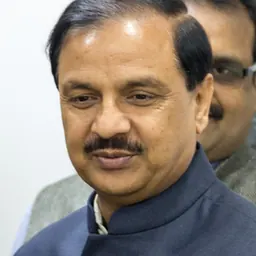
On 27 April 2011, Sangay was elected Kalon Tripa of the Tibetan Administration. Sangay won 55% of the votes, defeating Tenzin Tethong (37.4%) and Tashi Wangdi (6.4%). 83,400 Tibetans were eligible to vote and 49,000 ballots were cast. Lobsang Sangay with Indian Minister of State Mahesh Sharma in 2015.
In February 2013, he gave the first annual lecture of the Indian Association of Foreign Affairs Correspondence. Expressing concern about the possible ripple effects of recent acts of armed rebellion in west Asia, he called for the international community to strengthen its endorsement of non-violent approaches to oppression. "If non-violence is the right thing to do," he emphasized, "we ought to be supported by the international community." Noting the media attention given to armed Syrian "freedom fighters," he said: "Tibetans have been democratic and non-violent for the last so many decades, how come we don't receive similar support and attention?"
Sangay made a statement on 10 March 2013, the 54th anniversary of the Tibetan National Uprising Day, in which he paid tribute to the "yearning for freedom" that inspired "the epochal events of March 10, 1959," and dedicated the anniversary of those events "to all the self-immolators and those who have died for Tibet." He also restated his dedication to the Middle Way Approach, expressing hope that a "speedy resolution" by China of the Tibet issue could "serve as a model for other freedom struggles" and "be a catalyst for moderation of China."
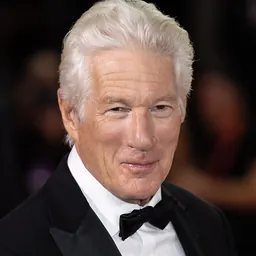
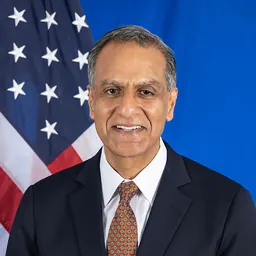
In January 2017, outgoing US ambassador to India, Richard Verma, hosted Lobsang Sangay for a dinner along with an Indian minister and Richard Gere, an event that angered China.
In 2018, Sangay visited South Africa, although the government cancelled public events related to the visit after protests by South Africans and members of the local Chinese community.
In November 2020, Sangay became the first leader of the exiled Central Tibetan Administration to visit the White House in 60 years.
Personal life Sangay has been married for 23 years to Kesang Yangdon Shakchang, whose parents were from the Lhokha and Phare area. They have a daughter Menda Rewa.
His father died in 2004.
Lobsang Sangay holds American citizenship
Awards and honors Sangay was awarded the Presidential Medal award by Salisbury University, Maryland, USA, on 13 October 2015.
He received the Gold Medal of the College Historical Society of Trinity College Dublin for Outstanding Contribution to Public Discourse by the Auditor of the Society, Ms Ursula Ni Choill.
Works
Tibet: Exiles' Journey, Journal of Democracy – Volume 14, Number 3, July 2003, pp. 119–130 Tibet: Exiles' Journey archived Canada Tibet Committee | Library | WTN | Archive | Old We Sing a Song of Sadness Tibetan Political Prisoners Speak Out, Billy Jackson, Publish America, 2004, Lobsang Sangay, China in Tibet: Forty Years of Liberation or Occupation?, Harvard Asia Quarterly, Volume III, No. 3, 1999. Human rights and Buddhism : cultural relativism, individualism & universalism, Thesis (LL. M.), Harvard Law School, 1996, Democracy in distress : is exile polity a remedy? : a case study of Tibet's government in exile, Thesis (S.J.D.), Harvard Law School, 2004, A constitutional analysis of the secularization of the Tibetan diaspora : the role of the Dalai Lama, in Theology and the soul of the liberal state, ed. Leonard V Kaplan; Charles Lloyd Cohen, Lanham : Lexington Books, 2010, The Battle for the Soul of the Dalai Lama, Foreign Affairs, 6 November 2023
Don’t just read it —
keep it.
Full-length biographies made to live with: read them, listen on the way to work, watch them tonight.
- E-book
- Audio
- Video
Instant download · yours to keep · every purchase keeps this site free
Important facts
People in Lobsang Sangay's life
Named in this biography and alive at the same time




Related people
Same field, nearest in time




Contemporaries
People whose lives overlapped Lobsang Sangay's



Frequently asked questions
Who is Lobsang Sangay?
Prime Minister of the Tibetan Government in Exile
When was Lobsang Sangay born?
Lobsang Sangay was born on 5 September 1968 in Darjeeling.
What is Lobsang Sangay's occupation?
Lobsang Sangay is a politician, lawyer, jurist and head of government.
What nationality is Lobsang Sangay?
Lobsang Sangay is Indian.
Sources & further reading
Cite this page
APA: Biography.guide. (2026). Lobsang Sangay. https://biography.guide/lobsang-sangay/
MLA: "Lobsang Sangay." Biography.guide, https://biography.guide/lobsang-sangay/.
Chicago: "Lobsang Sangay." Biography.guide. https://biography.guide/lobsang-sangay/.
Data last updated: 2026-09-20 · Spot an error? Report a correction.
Page generated 2026-09-27 05:30 UTC