
About Llewellyn Thompson
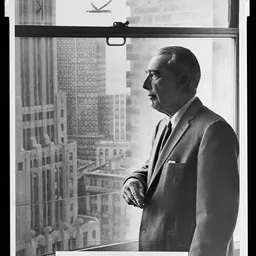
Lived 1904 – 1972 (aged 67). Llewellyn Thompson was an American diplomat.
Llewellyn E. "Tommy" Thompson Jr. (August 24, 1904 – February 6, 1972) was an American diplomat. He served in Sri Lanka, Austria, and for a lengthy period in the Soviet Union, where his tenure saw some of the most significant events of the Cold War. He was a key advisor to President John F. Kennedy during the Cuban Missile Crisis. A 2019 assessment described him as "arguably the most influential figure who ever advised U.S. presidents about policy toward the Soviet Union during the Cold War."
Early life Thompson was born in Las Animas, Colorado, He was possibly of Welsh descent. He studied economics at the University of Colorado at Boulder.
Diplomatic career In 1928, he joined the foreign service. He was the first US representative to the International Labour Organization of the League of Nations. He was the second secretary at the US embassy to the Soviet Union from 1941 and remained in Moscow with a skeleton staff after Germany invaded the Soviet Union, which forced the US embassy to withdraw to Kuybyshev in October 1941. Thompson also testified before the Warren Commission, which investigated the Kennedy assassination.
On August 7, 1962, he was awarded the President's Award for Distinguished Federal Civilian Service by President John F. Kennedy.
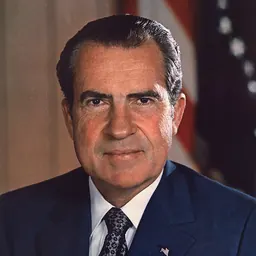
He held a number of other positions throughout his foreign service career, including Ambassador-at-Large for Soviet Affairs and Deputy Under-Secretary of State for Political Affairs. In his second term in Moscow under President Lyndon Johnson, Thompson was present at the Glassboro Summit Conference between Johnson and Alexei Kosygin to discuss US-Soviet relations with the Soviets. Thompson was a pivotal participant in the formulation of Lyndon Johnson administration's non-proliferation policy on nuclear weapons and was instrumental in beginning the Strategic Arms Limitation Talks process. After Thompson's retirement, he was recruited by President Richard Nixon to participate in the SALT I negotiations.
Family Thompson's wife, Jane Monroe Goelet, an artist, brought art from the US State Department's Art in Embassies Program to the ambassador's residence at Spaso House, Moscow. The program exhibits original works by US citizens in the public areas of ambassador’s residences all over the world.
His daughters have written a biography published in March 2018 by Johns Hopkins University Press: "The Kremlinologist: Llewellyn E Thompson, America's Man in Cold War Moscow" .
Death and legacy Thompson died of cancer in 1972 and is buried in his hometown of Las Animas.
U.S. Route 50 through Las Animas was renamed to Ambassador Thompson Boulevard.
Don’t just read it —
keep it.
Full-length biographies made to live with: read them, listen on the way to work, watch them tonight.
- E-book
- Audio
- Video
Instant download · yours to keep · every purchase keeps this site free
Important facts
People in Llewellyn Thompson's life
Named in this biography and alive at the same time

Related people
Same field, nearest in time

Contemporaries
People whose lives overlapped Llewellyn Thompson's



Frequently asked questions
Who was Llewellyn Thompson?
American diplomat (1904–1972)
When was Llewellyn Thompson born?
Llewellyn Thompson was born on 24 August 1904 in Las Animas.
When did Llewellyn Thompson die?
Llewellyn Thompson died on 6 February 1972 in Bethesda.
What was Llewellyn Thompson's occupation?
Llewellyn Thompson was a diplomat.
What nationality was Llewellyn Thompson?
Llewellyn Thompson was American.
Sources & further reading
· Wikipedia: Llewellyn Thompson
Cite this page
APA: Biography.guide. (2026). Llewellyn Thompson. https://biography.guide/llewellyn-thompson/
MLA: "Llewellyn Thompson." Biography.guide, https://biography.guide/llewellyn-thompson/.
Chicago: "Llewellyn Thompson." Biography.guide. https://biography.guide/llewellyn-thompson/.
Data last updated: 2026-09-20 · Spot an error? Report a correction.
Page generated 2026-09-27 05:21 UTC