
About Lizzie Holmes
Lived 1850 – 1926 (aged 75). Lizzie Holmes was an American women's rights activist, anarchist, writer and journalist.
Lizzie Holmes (, Hunt; after first marriage, Swank; after second marriage, Holmes; pen name, May Huntley; December 21, 1850 – August 8, 1926) was an American anarchist, writer, and organizer of Chicago's working women during the late 19th century in the United States. She was a key figure in Chicago's labor movement in the years just preceding the Haymarket affair, during which she worked with and played a leading role in a range of unions including the Knights of Labor and the International Working People's Association. Prior to becoming a labor organizer, she worked as a school teacher and music instructor in Ohio.
In addition to her work as a labor organizer, Holmes served as a writer and editor in various radical and anarchist newspapers. She worked as the assistant editor of The Alarm, and she published articles in Lucifer, the Light-Bearer, Freedom, and Free Society. In contrast to some of her anarchist contemporaries, she was also willing to publish in more conservative outlets, which led to her publishing a string of articles in the American Federation of Labor affiliated journal American Federationist.
Along with her close friend and collaborator Lucy Parsons, Holmes fought for and demonstrated the validity of gender equality within the anarchist and broader labor movement. Holmes has been recognized as an early pioneer of anarchist feminism, and an influence on more prominent thinkers like Emma Goldman.
After the Haymarket affair, Holmes testified in court on behalf of her friend Albert Parsons.
According to Holmes, Hiram Swank died after five years of marriage, and Holmes left for Chicago accompanied only by her mother, her two brothers, and her children. She was subsequently fired from her work as a seamstress due to her efforts to unionize her workplace, but Holmes remained undeterred in her affiliation with the union. Parsons introduced Lizzie Holmes to both socialism and anarchism, with Holmes quickly understanding the socialist critique of capitalism based on her time in the garment industry. In spite of her testimony, Parsons was sentenced to death by hanging.
Many of the anarchist organizations and institutions previously built up by Lizzie Holmes came under both legal and public scrutiny following the Haymarket Affair, as public opinion turned against anarchism. The Alarm came back, with Lizzie as editor, but under the shadow of Haymarket, it never achieved the same level of attention or interest.
Don’t just read it —
keep it.
Full-length biographies made to live with: read them, listen on the way to work, watch them tonight.
- E-book
- Audio
- Video
Instant download · yours to keep · every purchase keeps this site free
Important facts
People in Lizzie Holmes's life
Named in this biography and alive at the same time
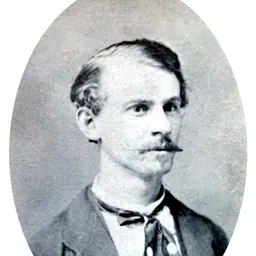
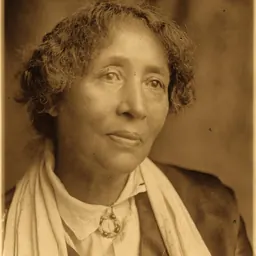
Related people
Same field, nearest in time



Contemporaries
People whose lives overlapped Lizzie Holmes's


Frequently asked questions
Who was Lizzie Holmes?
American editor, anarchist
When was Lizzie Holmes born?
Lizzie Holmes was born on 21 December 1850 in Iowa.
When did Lizzie Holmes die?
Lizzie Holmes died on 8 August 1926 in Santa Fe.
What was Lizzie Holmes's occupation?
Lizzie Holmes was a women's rights activist, anarchist, writer and journalist.
What nationality was Lizzie Holmes?
Lizzie Holmes was American.
Sources & further reading
Cite this page
APA: Biography.guide. (2026). Lizzie Holmes. https://biography.guide/lizzie-holmes/
MLA: "Lizzie Holmes." Biography.guide, https://biography.guide/lizzie-holmes/.
Chicago: "Lizzie Holmes." Biography.guide. https://biography.guide/lizzie-holmes/.
Data last updated: 2026-09-20 · Spot an error? Report a correction.
Page generated 2026-09-27 05:32 UTC