
About Liu Zhijun
Born 1953. Liu Zhijun is a Chinese politician.
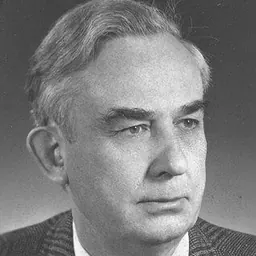
Liu Zhijun (; born 29 January 1953) is a former Chinese politician who served as the Minister of Railways. Liu was a peasant's son who left school in his teens to take a job as a low-level bureaucrat in the Railway Ministry. He rose rapidly within the Ministry, eventually heading several regional railway departments and serving as vice-minister before being promoted to the head of the Railway Ministry in 2003.
As Railway Minister, Liu oversaw numerous expansions of China's railway system, most notably the rapid development of China's high-speed railway. He was a figure of national praise until February 2011, when he was arrested and expelled from the Party over allegations of corruption. After the Wenzhou train collision in July 2011, in which forty people died and one hundred and ninety-two people were injured, a government report singled out his leadership as one of the main contributors to the crash and he was publicly criticized.
In April 2013, Liu was arrested on corruption charges for taking over 64 million yuan in bribes and abusing his power as Minister of Railways. He was convicted and received a death sentence with reprieve in July 2013. On 14 December 2015, Liu Zhijun's sentence was statutorily commuted to life imprisonment. The prison authorities said that he was expressing repentance and had committed no intentional offences during the reprieve period.
Career
Early career Liu was born in Huarong, Hubei. His father was a farmer, and he grew up in the villages around Hunan. When he was a teenager, in 1972, he left school and took a job as a low-level bureaucrat in the national ministry of railways. He joined the Chinese Communist Party (CCP) the next year, in August 1973. While working at the rail ministry he became a trusted letter-writer for some of his more poorly-educated superiors within the ministry, and in 1974, when he was twenty-one, he married into a politically well-connected family. He became a member of the CCP Central Committee during its sixteenth congress, in 2002. At the time that Liu was made Minister of Railways, the Ministry of Railways was the second most powerful ministry in China (second to the military). It had its own police, judges, and courts, and had a budget of billions of dollars. After being named minister, Liu announced plans to dramatically expand China's then-underdeveloped railway system by building 7,500 miles of new high-speed railway tracks, more than could be found in the rest of the world combined. The central government supported Liu's plans, and allocated Liu a budget of over two hundred and fifty billion dollars (over several years). This made Liu's plan the world's most well-funded public infrastructure project since the American president Ike Eisenhower constructed the American Interstate Highway System in the 1950s. In order to complete China's first high-speed rail line before the end of 2008, Liu led the Railway Ministry's employees to work around the clock. His habit of telling people that "To achieve a great leap, an entire generation must be sacrificed" earned him the nickname "Great Leap Liu". (Some of his detractors also called him "Lunatic Liu" for the pace of his work). Illegal subcontracting was a common practice throughout Liu's tenure as head of the rail ministry, so that much of the staff who built the railway were poorly educated, trained, and supplied. jewelry, and art. He was sentenced to death, but this sentence was suspended and reduced to sixteen years in jail, after which he was transferred to a hospital to serve his sentence there. While serving his sentence in hospital he reportedly continued to conduct rail business by phone. Investigators began to act after concluding that Liu was planning to use his illegal fortune in order to bribe his way into the Communist Party Central Committee, and eventually into the Politburo.
His dismissal was linked to an earlier corruption case involving Shanxi business magnate Ding Yuxin (former name Ding Shumiao) of Boyou Investment Management Group Ltd., a company whose portfolio benefited greatly from China's rapid high-speed rail construction. Just prior to his dismissal Liu had traveled over 7,000 miles across China, from 30 January to 8 February, inspecting China's railways in order to ensure smooth operations during the subsequent Chinese New Year travel season. His downfall came suddenly and unexpectedly. At the time of his dismissal, the international media considered Liu the highest-level Party official to be prosecuted for corruption since Chen Liangyu lost his post as Party Chief of Shanghai in 2006.
Liu was expelled from the Chinese Communist Party in May 2011 for "severe violations of discipline" and "primary leadership responsibilities for the serious corruption problem within the railway system". The Chinese state press alleged that Liu took an illegal 4% commission on railway deals, and that he had accumulated over two hundred and fifty million dollars in bribes. The CCP later accused him of "sexual misconduct", a revelation which surprised many who had followed Liu's career. The Hong Kong-based newspaper Ming Pao repeated this report, alleging that Liu kept eighteen mistresses.
In July 2011, while Liu was still under investigation, the Wenzhou train collision, in which a faulty signal box led to the deaths of forty people and injured one hundred and ninety-two, exposed him to further accusations of systematic corruption and incompetence within his Rail Ministry. The Railway Ministry unsuccessfully attempted to cover up the details of the crash, but lingering public criticism led Prime Minister Wen Jiabao to visit the crash site shortly after the incident, where he promised a full, public government investigation and justice for those found responsible. The government released its findings in December 2011, in which it acknowledged and blamed the disaster on "serious design flaws", "a neglect of safety management", and flaws in the bidding and testing processes used to acquire materials. The report publicly blamed fifty-four private and government figures for the disaster, the most prominent of which was Liu Zhijun.
Following the December report, Liu's name became a byword for "a broken system". He was put on trial in 2013 and received a death sentence with reprieve in July 2013. After his fall in 2011, Chinese government censors removed and/or blocked within China the many glowing reviews of his government service which had accumulated over his career, so that now only the details of his arrest remain available within China.
On 14 December 2015, Liu Zhijun's sentence was commuted to life imprisonment. The prison authorities said that he was expressing repentance and had committed no intentional offences during the reprieve period.
Don’t just read it —
keep it.
Full-length biographies made to live with: read them, listen on the way to work, watch them tonight.
- E-book
- Audio
- Video
Instant download · yours to keep · every purchase keeps this site free
Important facts
People in Liu Zhijun's life
Named in this biography and alive at the same time


Related people
Same field, nearest in time






Contemporaries
People whose lives overlapped Liu Zhijun's

Frequently asked questions
Who is Liu Zhijun?
Chinese politician
When was Liu Zhijun born?
Liu Zhijun was born on 29 January 1953 in Ezhou.
What is Liu Zhijun's occupation?
Liu Zhijun is a politician.
What nationality is Liu Zhijun?
Liu Zhijun is Chinese.
Sources & further reading
Cite this page
APA: Biography.guide. (2026). Liu Zhijun. https://biography.guide/liu-zhijun-politician/
MLA: "Liu Zhijun." Biography.guide, https://biography.guide/liu-zhijun-politician/.
Chicago: "Liu Zhijun." Biography.guide. https://biography.guide/liu-zhijun-politician/.
Data last updated: 2026-09-26 · Spot an error? Report a correction.
Page generated 2026-09-27 05:16 UTC