
About Liu Yazi
Lived 1887 – 1958 (aged 71). Liu Yazi was a Chinese poet and writer.
Liu Yazi (, 28 May 1887, at Wujiang, in Suzhou, Jiangsu – 21 June 1958 in Beijing) was a Chinese poet and political activist called the "last outstanding poet of the traditional school." He married Zheng Peiyi in 1906, and was the father of two daughters, Liu Wufei and Liu Wugou, and of a son, Liu Wu-chi, a literary scholar.
Career Liu Yazi's funeral, with Liu Shaoqi to the left and Zhou Enlai to the right. The old lady in the middle of front row was his wife Zheng Peiyi Liu was a leader of the Southern Society (Nanshe), founded in 1909 in Suzhou, Jiangsu, just north of Shanghai. During the last years of the Qing dynasty Liu and his associates advocated use of their southern dialect, the Wu dialect, rather than Mandarin Chinese and wrote poetry in classical forms using Classical Chinese. They supported the Tongmenghui Partyof Sun Yat-sen and opposed the Manchu government. After the Revolution of 1911, Liu became a committed journalist and activist in opposition to Yuan Shikai. The Southern Society, whose national members numbered in the thousands, with Liu as its head continued its activities during the anti-traditional New Culture Movement. The Society broke up in the early 1920s as Liu came to support the position of Hu Shih that literature should be written in the vernacular language. Liu went to Canton in 1923 to join the Guomindang Party (GMD) in 1923, but soon became resentful of the leadership of Chiang Kai-shek and in 1927 fled to Japan to escape repression. In 1932, however, he was re-elected to the GMD Central Supervisory Committee and was appointed to a position in the Shanghai City Government. After the outbreak of the Second Sino-Japanese War in 1937, Liu initially remained in Shanghai, but fled first to Hong Kong, then in 1941 to Guilin, and for the last years of the war to China's wartime capital, Chongqing. He became a member of the China Democratic League, which supported neither the GMD nor the Communists.
After the war Shanghai did not seem safe, so Liu fled once again to Hong Kong, where he continued his anti-GMD activities. In 1949 he moved to Beijing. He was a member of the Standing Committee of the National People's Congress from 1954 to 1958, but died of pneumonia in 1958. He was buried the in Babaoshan Revolutionary Cemetery.
Don’t just read it —
keep it.
Full-length biographies made to live with: read them, listen on the way to work, watch them tonight.
- E-book
- Audio
- Video
Instant download · yours to keep · every purchase keeps this site free
Important facts
People in Liu Yazi's life
Named in this biography and alive at the same time
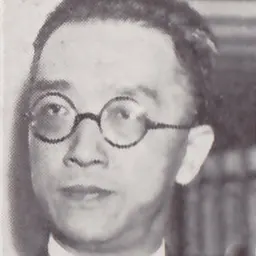


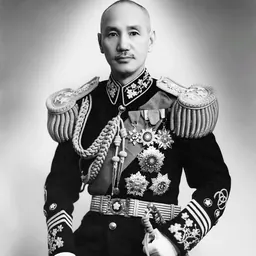
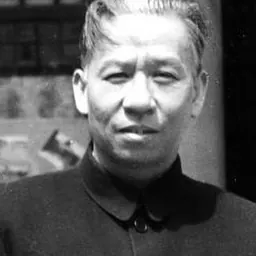

Related people
Same field, nearest in time

Contemporaries
People whose lives overlapped Liu Yazi's



Frequently asked questions
Who was Liu Yazi?
Chinese poet (1887–1958)
When was Liu Yazi born?
Liu Yazi was born on 28 May 1887 in Wujiang District.
When did Liu Yazi die?
Liu Yazi died on 21 June 1958 in Beijing.
What was Liu Yazi's occupation?
Liu Yazi was a poet and writer.
What nationality was Liu Yazi?
Liu Yazi was Chinese.
Sources & further reading
Cite this page
APA: Biography.guide. (2026). Liu Yazi. https://biography.guide/liu-yazi/
MLA: "Liu Yazi." Biography.guide, https://biography.guide/liu-yazi/.
Chicago: "Liu Yazi." Biography.guide. https://biography.guide/liu-yazi/.
Data last updated: 2026-09-20 · Spot an error? Report a correction.
Page generated 2026-09-27 05:28 UTC