
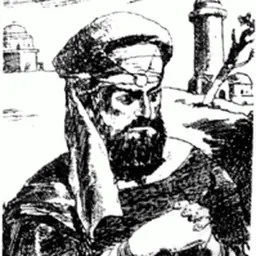
Liu Yan
King of the Southern Han during China's 10th-century Five Dynasties and Ten Kingdoms Era
About Liu Yan
Lived 889 – 942 (aged 52–53). Liu Yan was a ruler.
Liu Yan (; 889
As Liu Yan grew up, it was said that he was tall and capable in both horsemanship and archery. Liu Yan was also given the title of military advisor to Li Zhirou as the Prince of Xue, and his name was changed from Liu Yan to Liu Zhi. Liu Zhi continued serving under his brother, and was first recorded to have participated in a campaign in 902, when Lu Guangchou, who controlled the Qian Prefecture (虔州, in modern Ganzhou, Jiangxi) region as Qian's prefect, attacked Qinghai, capturing Shao Prefecture (韶州, in modern Shaoguan, Guangdong) and giving it to his son Lu Yanchang, and then putting Chao Prefecture (潮州, in modern Chaozhou, Guangdong) under siege. Liu Yin personally led an army and repelled Lu Guangchou from Chao, and then prepared to attack Shao. Under Liu Zhi's advice (as Liu Zhi believed that a direct attack would not be successful due to the strength of Lu Yanchang's army), he put Shao under siege to try to wear out Lu Yanchang's defense, but the strategy backfired when, due to high water levels on the river, the Qinghai army's food supplies were disrupted. Lu Guangchou then launched a relief army from Qian, repelling Liu Yin from Shao.
Meanwhile, Emperor Zhaozong commissioned the chancellor Cui Yuan as the new military governor of Qinghai, but Cui, while on the way to Qinghai, heard about popular uprisings in the region and also was worried that Liu Yin would not yield the position to him, and therefore returned to then-capital Luoyang. Subsequently, after Liu Yin bribed the powerful warlord Zhu Quanzhong the military governor of Xuanwu Circuit (宣武, headquartered in modern Kaifeng, Henan), who had the Tang imperial court under his physical control by that point, Emperor Zhaozong's son and successor Emperor Ai of Tang commissioned Liu Yin as full military governor in 904. Liu Zhi served as Liu Yin's deputy military governor. It was said that at that time, in addition to the continued conflict with Lu Guangchou, substantial portions of the region were controlled by other warlords—Khúc Hạo (曲顥) at Jiao Prefecture (交州, in modern Hanoi, Vietnam); Liu Shizheng (劉士政) at Gui Prefecture (桂州, in modern Guilin, Guangxi); Ye Guanglüe (葉廣略) at Yong Prefecture (邕州, in modern Nanning, Guangxi); Pang Juzhao (龐巨昭) at Rong Prefecture (容州, in modern Rong County, Guangxi); Liu Changlu (劉昌魯) at Gao Prefecture (高州, in modern Gaozhou, Guangdong); and Liu Qian (劉潛, different person than Liu Zhi's father) at Xin Prefecture (新洲, in modern Yunfu, Guangdong). In addition, east of the Pearl River, there were some 70 camps of people who did not recognize Liu Yin's authorities. It was said that after Liu Yin entrusted the military matters to Liu Zhi, Liu Zhi gradually had these warlords expelled or forced into submission, such that he became known as the preeminent general in the Lingnan region.
In 911, Liu Yin grew deathly ill. He submitted a petition recommending Liu Zhi as acting military governor, and died shortly after. Liu Zhi took over the circuit. Shortly after, Later Liang's Emperor Taizu made Liu Zhi full military governor. His name was changed back to Liu Yan.
Thereafter, Liu stopped sending tributes and emissaries to the Later Liang court.
In 918, after Liu Yan offered sacrifices to heaven and earth and issued a general pardon, he changed the name of his state from Yue to Han (and thus his state became known as Southern Han).
In 922, there was an incident where Liu Yan, believing in the words of a sorcerer that he needed to leave the capital to avoid a disaster, left Xingwang to visit Meikou (梅口, in modern Meizhou, Guangdong), near the Min border. The Min general Wang Yanmei (Wang Shenzhi's son or nephew) decided to launch a surprise attack on Liu Yan's train, but before Wang Yanmei's forces arrived, Liu Yan received the news and fled Meikou before Min forces could attack.
Meanwhile, in 923, Later Liang had been conquered by its northern rival Jin, whose prince Li Cunxu declared himself the emperor of a new Later Tang (as Emperor Zhuangzong). When the news reached Liu Yan, Liu Yan became fearful of this powerful new state in the north, and in 925 sent his official He Ci (何詞) to Later Tang to try to seek friendly relations in humble terms However, later in the year, when foreign monks informed him that the character "Gong" was not favorable to Southern Han's fortune, he further changed his name to a newly created character (龑, Yǎn), showing the character of a dragon (龍) over that of heaven (天). The pronunciation was similar to his birth name, but distinct in tone. (The Zizhi Tongjian placed this second name change in 941. ) Also in 925, when Zheng Min (鄭旻) the emperor of Changhe, sent his brother Zheng Zhaochun (鄭昭淳) to Southern Han to seek a marriage alliance, Liu Yan gave another niece, the Princess Zengcheng, to Zheng Min in marriage.
In 930, Liu Yan sent his generals Liang Kezhen (梁克貞) and Li Shoufu (李守鄜) to attack Jiao Prefecture; they captured it and took Khúc Thừa Mỹ (曲承美, son and successor of Khúc Hạo) captive, taking (for the time being) Jinghai Circuit (靜海, Vietnamese: Tĩnh Hải, headquartered at Jiao Prefecture) under Southern Han control and ending the control of the circuit by the Khúc family. Liang further advanced to Champa and pillaged it of its treasure. Liu stationed his general Li Jin (李進) at Jiao Prefecture to defend it.
The Southern Han hold on Jinghai would not last long, however. After the fall of the Khúcs, Dương Đình Nghệ - the prefect of Ai Prefecture (愛州, Vietnamese: Ái châu, in modern Thanh Hóa Province, Vietnam) built up a personal army of 3,000 adoptive sons, wanting to take control of Jinghai. Although Li knew about this, he did nothing as he was receiving regular bribes from Dương. In 931, Dương Đình Nghệ put Jiao Prefecture under siege. Liu Yan sent the general Cheng Bao (程寶) to try to lift the siege, but before Cheng could get there, the city fell. Li fled back to Xingwang, where Liu put him to death. Cheng tried to recapture Jiao Prefecture, but Dương Đình Nghệ defeated and killed him in battle.
In 934, Empress Ma died.
Also in 934, Liu Yan allowed his then-surviving oldest son Liu Hongdu the Prince of Qin (Liu Hongdu's older brothers Liu Yaoshu and Liu Guitu having died earlier)
In 937, Dương Đình Nghệ was killed by his general Kiều Công Tiễn (矯公羨), who took over Jinghai. In 938, when another former general of Dương's, Ngô Quyền (吳權), rose at Ai Prefecture and subsequently attacked Jiao Prefecture, Kiều Công Tiễn sought aid from Southern Han. Liu Yan wanted to use this opportunity to take over Jinghai again, so he commissioned his son Liu Hongcao as the military governor of Jinghai and changed his title to Prince of Jiao, having him command an army to head to Jiao Prefecture while Liu Yan himself commanded a follow-up army. By the time that Liu Hongcao was approaching Jiao Prefecture, however, Ngô Quyền had already defeated and killed Kiều Công Tiễn and occupied Jiao Prefecture. When Liu Hongcao prepared to attack, Ngô Quyền set a trap for him—setting large wooden planks covered with iron into the tidal zone, such that when Liu Hongcao attacked at high tide, the planks were invisible, but when the tide fell, the Southern Han ships became stuck on the planks and unable to move. Ngô Quyền then counterattacked, killing more than half of the Southern Han soldiers, including Liu Hongcao. Liu Yan, hearing the news, cried bitterly and withdrew his own fleet. (This became known as the Battle of Bạch Đằng River.)
In 939, Zhao Guangyi, pointing out that there had not been any emissaries sent between Southern Han and Chu after Empress Ma's death and that the two states, related by marriage, should be friendly to each other, recommended the official Li Shu (李紓) as an appropriate emissary. Liu Yan agreed, and after Li visited Chu, Chu also sent emissaries to Southern Han, reestablishing relations between the two states. Despite this, in 941, Liu Yan sent an emissary to Later Jin's Emperor Gaozu (whose Later Jin state had earlier taken over Later Tang's territory) seeking a military alliance where they would attack Chu and divide its territory; the Later Jin emperor declined. Children Liu Yaoshu (劉耀樞), the Prince of Yong (created 932), died early Liu Hongbi (劉弘弼), the Prince of Qi (created 932, killed by Liu Sheng 947) Liu Hongya (劉弘雅), the Prince of Shao (created 932, killed by Liu Sheng 945) Liu Hongze (劉弘澤), the Prince of Zhen (created 932, killed by Liu Sheng 944) Liu Honggao (劉弘杲), the Prince of Xun (born 923, created 932, killed by Liu Sheng 943). Liu Hongjiǎn (劉弘簡) (note different tone than his brother), the Prince of Tong (created 932, killed by Liu Sheng 947) Liu Hongyi (劉弘益), the Prince of Ding (created 932, killed by Liu Sheng 947)
Don’t just read it —
keep it.
Full-length biographies made to live with: read them, listen on the way to work, watch them tonight.
- E-book
- Audio
- Video
Instant download · yours to keep · every purchase keeps this site free
Important facts
more
Tien-huang Ta-ti, Liu Kung, Emperor GaozuPeople in Liu Yan's life
Named in this biography and alive at the same time




Related people
Same field, nearest in time



Contemporaries
People whose lives overlapped Liu Yan's



Frequently asked questions
Who was Liu Yan?
king of the Southern Han during China's 10th-century Five Dynasties and Ten Kingdoms Era
When was Liu Yan born?
Liu Yan was born in 889.
When did Liu Yan die?
Liu Yan died in 942.
What was Liu Yan's occupation?
Liu Yan was a ruler.
What nationality was Liu Yan?
Liu Yan's recorded nationality: Southern Han.
Sources & further reading
Cite this page
APA: Biography.guide. (2026). Liu Yan. https://biography.guide/liu-yan/
MLA: "Liu Yan." Biography.guide, https://biography.guide/liu-yan/.
Chicago: "Liu Yan." Biography.guide. https://biography.guide/liu-yan/.
Data last updated: 2026-09-20 · Spot an error? Report a correction.
Page generated 2026-09-27 05:00 UTC