
About Liu Rengong
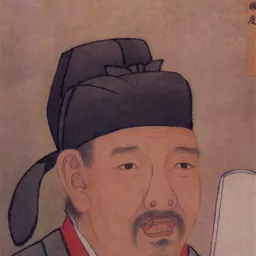
Lived 801 – 914 (aged 112–113). Liu Rengong was a Chinese politician.
Liu Rengong (died 914) was a warlord late in the Chinese Tang dynasty who controlled Lulong Circuit (盧龍, headquartered in modern Beijing) from 895 (when his one-time lord Li Keyong conquered Lulong and left him in charge of it) to 907 (when he was overthrown by his son Liu Shouguang and put under house arrest). He was initially a Lulong officer, but later fled to Li Keyong's Hedong Circuit (河東, headquartered in modern Taiyuan, Shanxi). After Li conquered Lulong and left him in charge, he turned against Li and became an independent warlord, although at times he and Li would still act in concert. His domain later became the basis of the Five Dynasties and Ten Kingdoms period state Yan that Liu Shouguang established. In 913, however, Li Keyong's son and successor Li Cunxu the Prince of Jin conquered Yan and captured both Liu Shouguang and Liu Rengong; he put them to death the next year.
Background It is not known when Liu Rengong was born—although he was said to be spreading the rumor that he would become a military governor (jiedushi) at age 48 when he later served Li Kuangwei, indicating that he was not yet 48 by that point. His family was originally from Leshou (樂壽, in modern Cangzhou, Hebei), which was not a part of Lulong Circuit, although he would follow his father Liu Sheng to Lulong Circuit, as Liu Sheng served under the military governor Li Keju. It was said that Liu Rengong was already shown to be full of tactics in his youth, and often made military suggestions. When Li Keju sent the officer Li Quanzhong to attack Yi Prefecture (易州, in modern Baoding, Hebei), which belonged to neighboring Yiwu Circuit (義武, headquartered in modern Baoding) in 885, Liu Rengong served under Li Quanzhong. When Li Quanzhong's subordinate Yu Yan put Yi under siege but could not capture it for months, it was Liu who came up with the idea of digging a tunnel into the city to capture it. For this act, he became known under the nickname of Liu Kutou (劉窟頭, i.e., "Liu who headed into the tunnel").
Service under Li Keyong Liu Rengong was said to carefully serve both Li Keyong and Li Keyong's chief strategist Gai Yu, He left an army detachment and a group of associates, headed by Yan Liude , at Lulong, to accompany Liu. contrary to the prior customs during Lulong's independence periods where Lulong kept its own revenues. In 897, by which time Emperor Zhaozong had fled from the imperial capital Chang'an to Zhenguo Circuit (鎮國, headquartered in modern Weinan, Shaanxi) due to attacks by the warlord Li Maozhen the military governor of Fengxiang Circuit (鳳翔, headquartered in modern Baoji, Shaanxi), Li Keyong planned a campaign to assist the emperor. He thus requisitioned troops from Lulong, but Liu declined his requisition request, claiming that the soldiers were needed to defend against Khitan incursions. For several months, Li Keyong sent repeated letters, and Liu continued to decline. When Li Keyong sent a harshly worded rebuke, Liu threw the letter onto the ground, put the Hedong emissary under arrest, and tried to kill the Hedong officers stationed at Lulong, who fled and escaped death, according to the Zizhi Tongjian.
As independent warlord
In fall 897, angry at Liu Rengong's betrayal, Li Keyong commanded the army himself and attacked Lulong. He engaged the Lulong forces commanded by Liu's son-in-law Dan Keji , but was defeated when his army was ambushed by the Lulong officer Yang Shikan at Mugua Creek (木瓜澗, in modern Baoding), at great losses; it was only the inclement weather at the time that prevented the Lulong forces from inflicting greater damage. Li Keyong was forced to abandon this attempt to retake Lulong. Thereafter, Liu formed a relationship with Li Keyong's archrival Zhu Quanzhong the military governor of Xuanwu Circuit (宣武, headquartered in modern Kaifeng, Henan), and under Zhu's recommendation, Emperor Zhaozong bestowed the honorary chancellor designation of Tong Zhongshu Menxia Pingzhangshi on Liu. However, Liu also wrote a letter to Li Keyong apologizing for what happened.
In winter 900, after forcing Wang to become a vassal, Zhu again had Zhang lead an army, with supplements from Weibo, to attack Liu. Zhang quickly captured Lulong's Ying and Mo (莫州, in modern Cangzhou) Prefectures and Yichang's Jing Prefecture (景州, in modern Cangzhou). (In the latter battle, the prefect Liu Renba , who might have been a brother to Liu Rengong, was captured.) Zhang prepared to next attack You Prefecture, but subsequent weather conditions stopped him, and he instead attacked Yiwu and forced that circuit into submission (despite Liu Shouwen's attempts to assist Yiwu).
Also in 903, Wang Jinghui , an officer at Li Keyong's Yun Prefecture (雲州, in modern Datong, Shanxi), assassinated the prefect Liu Zaili and submitted to Liu Rengong. Li Keyong sent Li Sizhao and Li Cunshen to attack Wang. Liu sent forces to aid Wang, forcing Li Sizhao and Li Cunshen to retreat some distance, allowing Wang to abandon Yun and flee to Liu Rengong's territory.
it was said that over the years, as Liu Rengong became more entrenched in his rule of Lulong, he became even more arrogant, wasteful, and violent. Believing the headquarters in You Prefecture to be insecure, he built a grand mansion at Mount Da'an (大安山, in modern Beijing), which was built like an imperial palace. He selected many beautiful women and put them in the Da'an mansion. He also retained alchemists to try to achieve immortality. He hoarded the money from the people of the circuit, instead making coins out of clay, and he prohibited purchasing tea leaves from south of the Yangtze River, instead using the leaves of the circuit's trees as tea substitutes.
Overthrow by Liu Shouguang and subsequent house arrest In or sometime before 907, Liu Rengong discovered that Liu Shouguang had been having an affair with Liu Rengong's favorite concubine Lady Luo. He caned Liu Shouguang, threw him out of the household, and disowned him.
Death Liu Shouguang, however, was not satisfied with the princely title under Later Liang suzerainty. In 911, he claimed the title of Emperor of Yan. Subsequently, Li Cunxu, who was by that time allied with Wang Rong and Wang Chuzhi the military governor of Yiwu, had Zhou Dewei command a major operation against the new Yan state. By late 913, nearly all Yan cities had fallen to the Jin army, except for You Prefecture. Liu Shouguang claimed that he would surrender to Li Cunxu if Li Cunxu personally arrived to accept his surrender, but when Li Cunxu arrived, Liu Shouguang again refused to surrender, under Li Xiaoxi's advice. However, Li Xiaoxi then himself surrendered to the Jin army and revealed the desperate state the Yan army was in. Li Cunxu then ordered a final attack, and the city fell. Liu Rengong, his wife, and his concubines were taken captive. Liu Shouguang tried to flee to Cang Prefecture (which was then defended by Liu Shouqi, who had become a Later Liang general), but was captured on the way there. (When he was brought back to You Prefecture, Liu Rengong and his wife both spat on him and stated, "Rebellious bandit! Look at what you did to our household!")
In spring 914, Li Cunxu took the Liu household, including Liu Rengong and Liu Shouguang, on a victory tour through Yiwu and Chengde Circuits, at Wang Chuzhi's and Wang Rong's invitation. When they arrived at Chengde Circuit, at Wang Rong's request (as Wang Rong wanted to finally meet Liu Rengong in person), Li Cunxu temporarily removed the shackles from Liu Rengong and Liu Shouguang, and had them attend a feast that Wang Rong held for him. After they arrived back at Hedong's capital Taiyuan, Li Cunxu first executed Liu Shouguang in the capital, along with his wives, and then had his deputy military governor Lu Rubi transport Liu Rengong to Li Keyong's tomb at Dai Prefecture (代州, in modern Xinzhou, Shanxi). There, his chest was first pierced, with the blood sacrificed to Li Keyong, and then he was decapitated.
Notes and references
New Book of Tang, vol. 212. History of the Five Dynasties, vol. 135. New History of the Five Dynasties, vol. 39. Zizhi Tongjian, vols. 256, 259, 260, 261, 262, 264, 265, 266, 267, 268, 269.
Don’t just read it —
keep it.
Full-length biographies made to live with: read them, listen on the way to work, watch them tonight.
- E-book
- Audio
- Video
Instant download · yours to keep · every purchase keeps this site free
Important facts
People in Liu Rengong's life
Named in this biography and alive at the same time



Related people
Same field, nearest in time


Contemporaries
People whose lives overlapped Liu Rengong's


Frequently asked questions
Who was Liu Rengong?
warlord in the Chinese Tang Dynasty
When was Liu Rengong born?
Liu Rengong was born in 801.
When did Liu Rengong die?
Liu Rengong died in 914.
What was Liu Rengong's occupation?
Liu Rengong was a politician.
What nationality was Liu Rengong?
Liu Rengong was Chinese.
Sources & further reading
Cite this page
APA: Biography.guide. (2026). Liu Rengong. https://biography.guide/liu-rengong/
MLA: "Liu Rengong." Biography.guide, https://biography.guide/liu-rengong/.
Chicago: "Liu Rengong." Biography.guide. https://biography.guide/liu-rengong/.
Data last updated: 2026-09-20 · Spot an error? Report a correction.
Page generated 2026-09-27 05:23 UTC