
Liu Liangmo
20th century Chinese musician
About Liu Liangmo
Lived 1909 – 1988 (aged 78). Liu Liangmo was a Chinese YMCA.
Liu Liangmo Liángmó) (6 November 1909 – 8 August 1988) was a musician and Chinese Christian leader known for his promotion of the patriotic mass singing movement in the 1930s and promotion in the United States of support for China's resistance to Japan in World War II. He was a leader in the Three-Self Patriotic Movement (TSPM) after 1949.
Education and discovery of mass singing Liu was born between November 11, 1908, and November 9, 1909, in Zhenhai County (now Ningbo), Zhejiang province. His family was poor. In June 1936 Liu stood on a two-meter high platform in a sports arena in Shanghai packed with thousands to lead a several hundred member chorus in the March of the Volunteers, a patriotic song which after 1949 became the national anthem. Mass singing became even more widespread as it proved its ability to mobilize patriotic support for the government following the Xi'an Incident of December 1936.
As relations with Japan grew more tense, in February 1937, at the invitation of General Fu Zuoyi and acting under the auspices of the national YMCA, Liu formed a war zone Soldier Relief Board in Suiyuan, in western China. Liu later recalled that General Fu told him that "Mass singing and slogans are the two great weapons to train the people and soldiers. Of the two, singing is more important because during the war it can stimulate a spirit of unity among our soldiers and masses."
Israel Epstein, then a young reporter for a Tianjin newspaper, reported many years later that he first heard Liu in the gymnasium of the Tianjin YMCA in the summer of 1937. The hall was filled with "ordinary people from the street – students, petty clerks, workmen, schoolchildren, newsboys, and even rickshaw pullers," who "with serious faces repeated the separate phrase of the song they were being taught. Then they sang two phrases at a time. Then a whole stanza...." Epstein further recalled that Liu seemed to be listening to and prompting each singer separately, while at the same time he never stopped singing. He seemed two men – one singing, like his audience with relieved passion at being able at last to utter the 'one last cry' of every Chinese; the other disciplined and methodical, teaching and listening. Two Japanese detectives appeared, and some of the audience seemed intimidated, but Liu merely said that the doors of the hall were open to all who had come to sing, and asked the detectives to join in singing "March of the Volunteers." Afterwards Liu explained to Epstein that if he had allowed the Japanese to intimidate him, the young men he hoped to train would have drifted away, but that if he had incited the crowd to throw the Japanese out, the movement would have been shut down. "You do not realize," he told Epstein, how important an instrument an easily learned song is." Many Chinese cannot read, but "the song carries resistance from mouth to mouth."
Liu wrote about gender issues, and during the 1930s he contributed articles to leading women's magazines. When he arrived in New York in 1940 he immediately organized a chorus for the Chinese Youth Club that sang for war rallies.
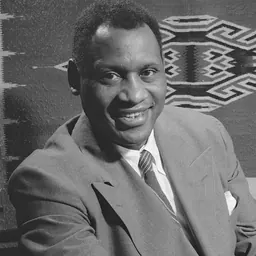
Liu also rallied support for China's war effort through the international network of progressive figures. Soon after he arrived in New York, Liu mentioned to a friend that he knew of the African American singer and political activist Paul Robeson and his early support for China, and said that he would like to meet him. The friend (perhaps Lin Yutang) contacted Robeson, In early 1941 Liu and the Children's Chorus recorded an album of Chinese songs with Robeson for Keynote Records.
From 10 February 1941 through September 1956, the U.S. Federal Bureau of Investigation, the U.S. War Department, and the Chester and New York City Police Departments regularly surveilled Liu and monitored his activities.
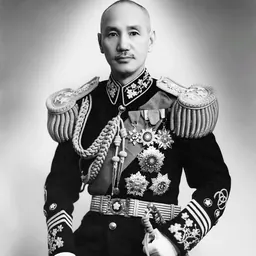
During Lt. Gen. Joseph Stillwell's struggles with Chiang Kai-shek, who had demanded that the U.S. recall Stillwell, Liu advocated on behalf of Stillwell in the U.S. When accusations of racism were made against a Chinese restaurant owner on the West Coast Liu urged his readers to report any such incidents to the Chinese consul. He pointed to the African American and Chinese soldiers who worked side by side building the Burma Road in China, declaring that these men "know that all are comrades and brothers." During Madme Chiang Kai-shek's visit to the United States in 1943, Liu was openly critical of the Nationalist government of her husband, even more so when she made remarks that seemed to disparage African Americans. By 1945 these incidents had made the Pittsburgh Courier's African American readers so distrustful of Chinese that the publisher discontinued Liu's connection with the paper.
In 1945 Liu addressed the Chinese Students' Christian Association, the oldest such group in North America, to attack the dictatorial rule of the Nationalists. Liu criticized censorship by the Nationalists, their economic policies which lead to stagnation and inflation, and what he described as Chiang Kai-shek's one-man rule.
In 1954 Liu attended the First National Chinese Christian Conference, held in Beijing.
Liu was one of the leaders of China's delegation to the December 1957 Afro-Asian Peoples' Solidarity Conference, along with Guo Moruo, Liu Ningyi, and Ji Chaoding.
In 1982, Liu, then vice-chairman of the Shanghai Municipal Political Consultative Conference,
Liu died in 1988 in Shanghai.
Selected publications
, translated and reprinted in Judy Yung, Gordon Chang, and Him Mark Lai, eds., Chinese American Voices: From the Gold Rush to the Present (Berkeley: University of California Press, 2006), pp. 204– 208.
Don’t just read it —
keep it.
Full-length biographies made to live with: read them, listen on the way to work, watch them tonight.
- E-book
- Audio
- Video
Instant download · yours to keep · every purchase keeps this site free
Important facts
People in Liu Liangmo's life
Named in this biography and alive at the same time





Contemporaries
People whose lives overlapped Liu Liangmo's




Frequently asked questions
Who was Liu Liangmo?
20th century Chinese musician
When was Liu Liangmo born?
Liu Liangmo was born on 6 November 1909 in Ningbo.
When did Liu Liangmo die?
Liu Liangmo died on 8 August 1988 in Shanghai.
What was Liu Liangmo's occupation?
Liu Liangmo was a YMCA.
What nationality was Liu Liangmo?
Liu Liangmo was Chinese.
Sources & further reading
Cite this page
APA: Biography.guide. (2026). Liu Liangmo. https://biography.guide/liu-liangmo/
MLA: "Liu Liangmo." Biography.guide, https://biography.guide/liu-liangmo/.
Chicago: "Liu Liangmo." Biography.guide. https://biography.guide/liu-liangmo/.
Data last updated: 2026-09-22 · Spot an error? Report a correction.
Page generated 2026-09-27 05:25 UTC