
About Lippo Memmi
Lived 1291 – 1356 (aged 64–65). Lippo Memmi was a painter.
Lippo Memmi ( – 1356) was an Italian painter from Siena. He was the foremost follower of Simone Martini, who was his brother-in-law.
Together with Martini, in 1333 he painted what is regarded as one of the masterworks of the International Gothic, the Annunciation with St. Margaret and St. Ansanus (now in the Uffizi), probably mainly working on the two saints. He was one of the artists who worked at Orvieto Cathedral, for which he finished the Virgin of Mercy ("Madonna dei Raccomandati"). Later he followed Martini to the Papal court in Avignon, where he worked until the mid-14th century. After his return to Siena, Memmi continued to work until his death in 1356.
Memmi's famed artwork, La Madonna della Febbre was the first venerated image of the Blessed Virgin Mary granted with a Canonical coronation by a Pope on 27 May 1631. The image has long been since held miraculous and is enshrined at the Sacristy chapel of the Blessed Sacrament inside Saint Peter's Basilica in Rome.
Style The famed Madonna della Febbre, first to be canonically crowned by Pope Urban VIII on 27 May 1631. The surrounding marble frame is a ciborium by Donatello di Bardi, Sacristy of Saint Peter's Basilica, Rome Memmi's figures retain the static and generally frontal view found in the earlier generation of late Duecento masters such as Guido da Siena. Common features of his documented and attributed work are the sophisticated compositional arrangements, figures rendered with a striking facial roundness, narrow eyes, graceful brow lines, and elongated noses.
Memmi's figures are considered less innovative than those of his Trecento contemporaries, the sensibility of the lines used in the face and the eyes hearken back to the conventions of the Byzantine tradition. Though they demonstrate Memmi's adherence to earlier conventions of emphasizing the spiritual function of Medieval art, there are also indications of the forward-looking stylistic developments of his fellow Sienese masters. A description of his St. Agnes panel (1300–50) shows how Memmi's pictorial style was less severe and angular than the Duecento works his imagery recalled: “...has softer qualities and its spirit is tranquil”. Indeed, his depiction of emotion and realism is also subdued by this 'soft tranquility', leaving figures to read as somewhat archaic, yet projecting a dreamy quality.
Memmi is remembered for distinctive stamped tin halos with ray patterns in gold leaf. This interest in design carries over to Memmi's observation of fabric patterns and their placement. He is also known as an effective miniaturist, using sgraffito to delicately render garments as depicted in the Griggs Madonna and Child (1350) at The Metropolitan Museum of Art in New York, and the Assumption of the Virgin (1340) at the Alte Pinakothek in Munich. Memmi's interest in detail is evident in his innovative compositional devices using simple geometric shapes such as the circular arrangement of the angels in the Assumption of the Virgin.
Attribution and artistic legacy
A considerable amount of ongoing research on unsigned panels and altarpieces of early to mid-Trecento Sienese art has revealed the plausible influence of Memmi on various artists in the generation following the outbreak of the Black Death in 1348. Thus, a more complete understanding of his style and artistic achievements continues to emerge. His status as an artist of personal expression, rather than simply a craftsman and “Fratello in Arte” of his brother-in-law Simone Martini is gaining acceptance.
Research in the 1920s began to separate the works of Lippo Memmi from those of Guido da Siena. It was also accepted that an artist bearing the name Barna was a fellow student under Simone Martini and an artistic collaborator with Memmi. In attributing the panel of St. Agnes to Memmi, Heaton states that it is “...a panel endowed with unity of design and characteristics rarely found in the works of an artist not possessing a more independent, creative personality than is usually predicated of Lippo Memmi”. Judas receives the thirty pieces of silver, fresco, San Gimignano.
The Memmi workshop The Memmi workshop began with Lippo's father, Memmo di Filippuccio. Its early works, such as the 1317 San Gimignano Maestà in the Palazzo Comunale, are a collaboration of the two. In the 1330s the shop produced the Orvieto Polyptych panels. Lippo's brother Federigo Memmi belonged to the shop before 1343, during the time the New Testament cycle and other works attributed to "Barna of Siena" were produced.
Simone Martini was the brother-in-law of Lippo. After Lippo returned to Siena from Avignon there is little evidence of interaction with Simone Martini. The influence of Memmi's Assumption on Naddo Ceccarelli in his Rebel Angels (another term for fallen angels) suggests a more direct stylistic connection between the ideas emerging from Lippo's shop and the younger generation of Sienese artists apprenticing under him.
Collaboration with Simone Martini The 1333 Annunciation at the Uffizi in Florence is signed by both Lippo and Simone. Memmi's definite contribution to the panel are the halos for, and columnar renderings of St. Margaret and St. Ansanus that bookend the panel. The scribe work in the Arch Angel Michael's halo and arguably the gold leaf background were also Memmi contributions.
Stamp work with gold leaf and tin Memmi and Martini most likely settled into a familiar style in gilding patterns with the Monaldeschi altarpiece in Orvieto from about 1320 consisting of a “composite punch design of a quatrefoil set about a central rosette”. His most identifiable device is found in the alternating long and short lines depicting light emanating from the halos of saints and angels, most famously recognized in the Annunciation, yet we see this in works throughout his career such as the Virgin and Child in New York, the Virgin of Humility in Berlin, and his small Maesta in the San Domenico cloister in Siena. Examination of the motifs and degree of complexity in the punchwork has allowed historians to recognize the hand of Lippo Memmi and gives a clearer idea of his place in collaborations with Simone Martini. Stamp designs, gilding and the execution of rayed halos are similar, yet show that Lippo Memmi's mature gild and scribe work patterns in the 1317 San Gimignano Maestà are rooted in the simpler patterns and less developed line he applied to Martini's Maestà of 1315 at the Palazzo Pubblico in Siena. Stories of the New Testament (c. 1338 – 1345) – Fresco cycle, Collegiata di San Gimignano
Don’t just read it —
keep it.
Full-length biographies made to live with: read them, listen on the way to work, watch them tonight.
- E-book
- Audio
- Video
Instant download · yours to keep · every purchase keeps this site free
Important facts
People in Lippo Memmi's life
Named in this biography and alive at the same time



Related people
Same field, nearest in time
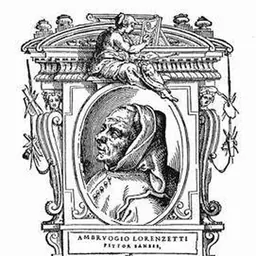




Contemporaries
People whose lives overlapped Lippo Memmi's




Frequently asked questions
Who was Lippo Memmi?
Italian painter (1291-1356)
When was Lippo Memmi born?
Lippo Memmi was born in 1291 in Siena.
When did Lippo Memmi die?
Lippo Memmi died in 1356 in Siena.
What was Lippo Memmi's occupation?
Lippo Memmi was a painter.
Sources & further reading
Cite this page
APA: Biography.guide. (2026). Lippo Memmi. https://biography.guide/lippo-memmi/
MLA: "Lippo Memmi." Biography.guide, https://biography.guide/lippo-memmi/.
Chicago: "Lippo Memmi." Biography.guide. https://biography.guide/lippo-memmi/.
Data last updated: 2026-09-23 · Spot an error? Report a correction.
Portrait: Wikimedia Commons · author & licence
Page generated 2026-09-27 05:06 UTC