
Lionel Earle
British civil servant
About Lionel Earle
Lived 1866 – 1948 (aged 81–82).
Sir Lionel Earle, (1 February 1866 – 10 March 1948) was a British civil servant.
Early life and education Earle was born in Marylebone, London, in 1866. He was the second son of Charles William Earle, a captain of the Rifle Brigade, and Maria Theresa Villiers, a popular horticultural writer as Mrs C. W. Earle, and the daughter of Edward Ernest Villiers. He was educated at Marlborough College and studied languages at Göttingen University and the Sorbonne. He initially intended to become a surgeon, but his relatives (although not his liberal parents) strongly opposed the idea, and instead he spent a year at Merton College, Oxford, in 1886 studying for the diplomatic service exam. He failed to achieve a sufficient grade to enter the service, and left Oxford without taking a degree.
Career
Earle spent some time in business, and then was appointed assistant secretary to the Royal Commission on the Paris Exhibition in 1898. On 15 January 1900, he was appointed an acting second secretary in the diplomatic Service. and served as such until the following year. In 1907, he stood unsuccessfully for a seat on the London County Council on a progressive, free-trade platform. He was private secretary to Lord Crewe from 1907 to 1910, and to Lord Harcourt in 1910–12.
In 1912, Prime Minister H. H. Asquith, a family friend, offered Earle the position of permanent secretary to the Office of Works; he accepted, and remained in the position until his retirement in 1933. Earle was passionately interested in the arts and matters of aesthetic taste, and was widely regarded as a lay expert; he consequently had an unusual degree of dominance over the department. Between 1927 and 1930 he sat on the Royal Commission on National Museums and Galleries, he was a trustee of the Wallace Collection, and was chairman of the Ancient Monuments Board for England (later incorporated into English Heritage). He was particularly well known for his improvements to the Royal Parks. He tended toward conservatism in his own taste, but recognised a need for modern war memorials to reflect the spirit of the time, and publicly defended some pieces which were avant-garde to the point of controversy, such as Jacob Epstein's controversial Rima in Hyde Park and Alfred Hardimann's Haig. and a Knight Grand Cross of the Royal Victorian Order (GCVO) in 1933. He was also a Commander of the Belgian Order of the Crown.
Don’t just read it —
keep it.
Full-length biographies made to live with: read them, listen on the way to work, watch them tonight.
- E-book
- Audio
- Video
Instant download · yours to keep · every purchase keeps this site free
Important facts
People in Lionel Earle's life
Named in this biography and alive at the same time
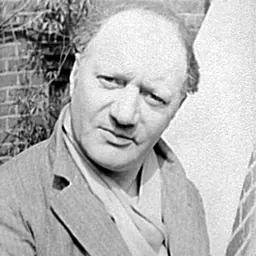


Contemporaries
People whose lives overlapped Lionel Earle's




Frequently asked questions
Who was Lionel Earle?
British civil servant
When was Lionel Earle born?
Lionel Earle was born in 1866.
When did Lionel Earle die?
Lionel Earle died in 1948.
Sources & further reading
Cite this page
APA: Biography.guide. (2026). Lionel Earle. https://biography.guide/lionel-earle/
MLA: "Lionel Earle." Biography.guide, https://biography.guide/lionel-earle/.
Chicago: "Lionel Earle." Biography.guide. https://biography.guide/lionel-earle/.
Data last updated: 2026-09-20 · Spot an error? Report a correction.
Page generated 2026-09-27 05:10 UTC