
About Lionel de Fonseka
Born 1889. Lionel de Fonseka was an art critic.
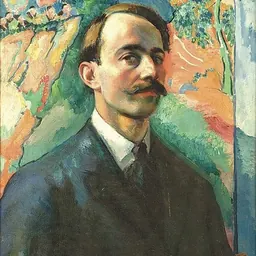
Lionel de Fonseka or Fonseka-Varnasuriya (born 27 October 1889 ) was a Sinhalese writer and art critic, best known for On the Truth of Decorative Art.
Life Lionel de Fonseka was educated at Royal College, Colombo and Oxford University, where he knew Alain Locke. De la Verité dans l'art - subsequently translated into English as On the Truth of Decorative Art (1912) - argued against the corruption of Sinhalese art by Western influence:
In his text, Fonseka argued for the inherent superiority of 'Eastern' over 'Western' art, owing to its use of symbolic form as a reflection of a larger civilisation rather than an individual artist. According to his nephew, de Fonseka wrote the book "primarily to satisfy his father, that he was using his time to good purpose". However, the book is said to have influenced Ananda Coomaraswamy, Eric Gill and Romain Rolland.
In April 1913 Fonseka, Arthur Ransome, Coomaraswamy, Anthony Ludovici and Lascelles Abercrombie entered into controversy in the Academy over who had priority in using the phrase "Art for life's sake". De Fonseka entered into fashionable London life, attending a King's Levée at Buckingham Palace on 3 June 1913.
De Fonseka subsequently lived and worked in France and Belgium for over a decade. He donated a gold chalice to Bruges Cathedral. After a pilgrimage to Fátima, Portugal, he wrote an account of the Marian apparitions believed to have taken place at Cova da Iria.
Working as a barrister in Ceylon, as well as writing a weekly column for the Ceylon Catholic Messenger.
Works De la verité dans l'art, Paris, 1912. Translated as On the Truth of Decorative Art: A Dialogue between an Oriental and an Occidental, London: Greening, 1912. Published with an introduction by Ananda Coomaraswamy in 1913. 'China Sunday!', The New Age, vol. 13, no. 1 (1 May 1913), p. 9. 'Futurism in Food', The New Age, vol. 13. no. 6 (5 June 1913), pp. 148–149. 'The White Dancer', The New Age, vol. 14. no. 3 (20 November 1913), pp. 76–78. 'A Thinking Man', The New Age, vol. 14. no. 8 (25 December 1913), pp. 238–9. 'War and the Aesthete', The New Age, vol. 16, no. 9 (31 December 1914), pp. 216–17. 'The Karave Flag', Ceylon Antiquary and Literary Register, Vol. Ill, Part I (July, 1921), pp. 1–11. Les eaux de lumière: dialogue entre un Oriental et un Occidental (The waters of life: dialogue between an oriental and an occidental), Monaco: Éditions de Fontvieille, 1953.
Don’t just read it —
keep it.
Full-length biographies made to live with: read them, listen on the way to work, watch them tonight.
- E-book
- Audio
- Video
Instant download · yours to keep · every purchase keeps this site free
Important facts
Related people
Same field, nearest in time

Frequently asked questions
Who was Lionel de Fonseka?
Sri Lankan writer
When was Lionel de Fonseka born?
Lionel de Fonseka was born on 27 October 1889.
What was Lionel de Fonseka's occupation?
Lionel de Fonseka was an art critic.
Sources & further reading
· Wikipedia: Lionel de Fonseka
Cite this page
APA: Biography.guide. (2026). Lionel de Fonseka. https://biography.guide/lionel-de-fonseka/
MLA: "Lionel de Fonseka." Biography.guide, https://biography.guide/lionel-de-fonseka/.
Chicago: "Lionel de Fonseka." Biography.guide. https://biography.guide/lionel-de-fonseka/.
Data last updated: 2026-09-20 · Spot an error? Report a correction.
Page generated 2026-09-27 04:59 UTC