
About Linton Wells II
Born 1946. Linton Wells II is a writer.
Linton Wells II (born 1946) is an American public servant and educator who served a total of 51 years in government service. He served 26 years in the United States Navy as an officer, and then was appointed by the president of the United States as the Principal Deputy Assistant Secretary of Defense, serving through two administrations of both parties, both the Democrat Bill Clinton and the Republican George W. Bush. He wrote many books, articles, and white papers on matters of national security, including important texts related to the use of American military capabilities in global humanitarian operations. His expertise focused on the strategic impacts of technological change and on building resilience to natural and man-made disasters as issues of US national security. He shaped, over five decades of public service, current US Department of Defense directives that link policy and technology with public-private cooperation. His writings significantly altered U.S. and international approaches to civil-military engagement, US policy in global humanitarian assistance, and global public-private partnerships in disaster relief. He has also made fundamental contributions to technical areas that have defined network-enabled military capabilities and cyberspace operations. After retiring from public service, he continued to contribute to the international STAR-TIDES network that he had founded in 2007, a consortium of several thousand global nodes comprising agencies, organizations, institutions and individuals in 40+ countries that promote the free exchange of research results on global issues of human security. As of 2024 he is Executive Advisor to the Center for Resilient and Sustainable Communities (C-RASC) at George Mason University and chairs the Advisory Group of the C4I and Cyber Center there. C-RASC has been working with the People-Centered Internet (PCI) on ways to “put humanity at the center of the Internet” and support a variety of revitalization initiatives. He is on the board of PCI, and also the president and CEO of Global Resilience Strategies and Senior Advisor to Resilient Japan. He was listed by Fortune magazine in 2009 as one of the top 16 "Players of Tech". in the Office of the Secretary of Defense (OSD). During his years in The Pentagon he was appointed by President Bush to be Acting Assistant Secretary of Defense (Networks and Information Integration) and DoD Chief Information Officer (CIO). After completing several appointments within the Pentagon, in 2007 he accepted an offer to become the Force Transformation Chair at National Defense University. He was additionally selected in 2010 to direct the NDU Center for Technology and National Security Policy and, later, to be Interim Director of the Institute for National Strategic Studies (INSS).
His post-government work focused on the impact of rapidly changing technologies on U.S. national security policy, emphasizing the strategic importance of the accelerating and converging developments in Biotechnology, Robotics, Information technology, Nanotechnology and Energy ("BRINE"), a term coined by his colleague Frank Hoffman. He now is a Visiting Distinguished Research Fellow at INSS at NDU, and Executive Advisor to the C4I and Cyber Center in the Volgenau School of Engineering and to transdisciplinary Center for Resilient and Sustainable Communities (C-RASC), both at the George Mason University (GMU). He is widely published on the national security implications of workforce issues, including: the replacement of labor by automation and artificial intelligence, defining how innovative learning can contribute to leader development, educational transformation, and improved decision-making for complex (“Wicked”) problems.
He serves on several national and international advisory boards, and is the Managing Partner of Wells Analytics, LLC, and President of Global Resilience Strategies.
Biography
Early life and education Wells was born in Luanda, Angola, the son of American foreign correspondent Linton Wells and pioneer aviator Fay Gillis Wells. His education included:
1951-1954 - Brunswick School, Greenwich, CT (grades 1-4) 1954-1958 - Pine Crest School, Fort Lauderdale, FL (grades 5-8) 1958-1963 - Browning School, New York City (grades 9-12) 1963-1967 - U.S. Naval Academy, Bachelor of Science degree in Physics and Oceanography. Trident Scholar and recipient of the Charles N.G. Hendrix award for excellence in oceanography. 1971-1975 - Johns Hopkins University from 1971 to 1975 on an Arleigh Burke scholarship, receiving a Master of Science in Engineering in Mathematical Sciences in 1974, and a PhD in Political Science (International Relations) in 1975. 1983 - National Institute for Defense Studies (防衛研究所) in Tokyo, Japan. 1994 - Harvard Kennedy School of Government, as a Diplomate of the Senior Officers in National Security Program.
Navy career In twenty-six years of commissioned service he served in a variety of ships as a Surface Warfare Officer. A full roster of his shipboard service includes:
1967-1969 - , Weapons and Supply Officer 1969-1970 - , Navigator 1976-1977 - , Operations Officer 1980-1981 - , Executive Officer 1984-1986 - , Commanding Officer 1989-1991 - Destroyer Squadron 21, Commander
Civilian service in the Office of the Secretary of Defense Wells served in the Office of the Secretary of Defense from 1977 to 1980 and from 1991 to 2007, with his final position being that of Principal Deputy Assistant Secretary of Defense (Networks and Information Integration). He served as the Acting Assistant Secretary and DoD Chief Information Officer on two occasions, in 2001 and again in 2004–5.
Throughout his time in government, Wells became known for his transformational contributions in four broad areas: Network-Enabled Defense, Diplomacy and Development: Providing policy, oversight and guidance for the introduction of network-enabled capabilities across the Department of Defense. building capacity ahead of crises to mitigate damage, and engaging with non-traditional partners. He also holds several inter-governmental advisory roles defining civil-military cooperation and promoting cross-disciplinary approaches, including reducing the vulnerability of humanitarian activities and Smart Cities to offensive cyberspace operations. Technology-Policy Integration: Promoting research into the emerging and intersecting policy challenges of cyberspace operations, space, and robotics East Asian and Middle Eastern security issues: Significant policy analyses related to the defense of Japan and the Persian Gulf region, at the request of the US Department of Defense.
Civilian awards 2014 - Chairman of the Joint Chiefs of Staff Medal for Distinguished Public Service 2012 - Inducted into the Wall of Excellence for US Naval Academy Oceanography 2008 - Woodrow Wilson Award for Distinguished Government Service from Johns Hopkins University 2000, 2001, 2007 - Department of Defense Medal for Distinguished Public Service (DoD's highest award to a private citizen) Third Award added a Silver Palm. 1995 - Browning School Alumnus Achievement Award 1987 - The Explorers Club, elected a National Fellow 1976 - International Forest of Friendship Honoree 1975 - Tau Beta Pi (Maryland Alpha chapter)—engineering honorary. 1966 - Sigma Pi Sigma
Military awards 1991 - Legion of Merit Second Award 1980 - Defense Superior Service Medal
Publications Wells has written widely on security studies in English and Japanese journals. He has also co-edited a series of books on international transformation and leader development.
Books Doughty, Ralph, Linton Wells II, and Theodore Hailes, eds. 2015. Innovative Learning: A Key to National Security, Fort Leavenworth: The Army Press. . Wells, Linton II, Theodore C. Hailes, and Michael C. Davies. 2013. Changing Mindsets to Transform Security: Leader Development for an Unpredictable and Complex World, Washington: National Defense University, Center for Technology and National Security Policy. Kugler, Richard L. and Linton Wells II. 2013. Strategic Shift: Appraising Recent Shifts in U.S. Defense Plans and Priorities, Washington: National Defense University, Center for Technology and National Security Policy. Neal, Derrick and Linton Wells II, eds. 2010. Capability Development in Support of Comprehensive Approaches Washington: National Defense University, Center for Technology and National Security Policy. Neal, Derrick, Henrik Friman, Ralph Doughty, and Linton Wells II, eds. 2009. Crosscutting Issues in International Transformation: Interactions and Innovations among People, Organizations, Processes, and Technology Washington: National Defense University, Center for Technology and National Security Policy. Lacriox, Eric and Linton Wells II. 1997. Japanese Cruisers of the Pacific War. Annapolis: Naval Institute Press. .
He has published more than 30 monographs, book chapters and articles, many of which are available from the National Defense University website.
Don’t just read it —
keep it.
Full-length biographies made to live with: read them, listen on the way to work, watch them tonight.
- E-book
- Audio
- Video
Instant download · yours to keep · every purchase keeps this site free
Important facts
Family & relationships
People in Linton Wells II's life
Named in this biography and alive at the same time


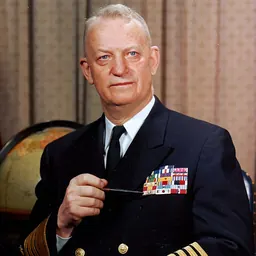


Related people
Same field, nearest in time



Contemporaries
People whose lives overlapped Linton Wells II's
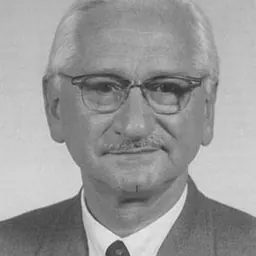

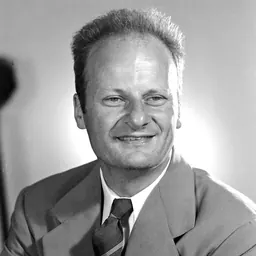


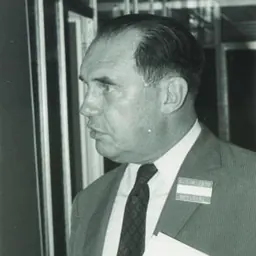
Frequently asked questions
Who is Linton Wells II?
American public servant (born 1946)
When was Linton Wells II born?
Linton Wells II was born in 1946 in Luanda.
What is Linton Wells II's occupation?
Linton Wells II is a writer.
Sources & further reading
Cite this page
APA: Biography.guide. (2026). Linton Wells II. https://biography.guide/linton-wells-ii/
MLA: "Linton Wells II." Biography.guide, https://biography.guide/linton-wells-ii/.
Chicago: "Linton Wells II." Biography.guide. https://biography.guide/linton-wells-ii/.
Data last updated: 2026-09-26 · Spot an error? Report a correction.
Page generated 2026-09-27 05:15 UTC