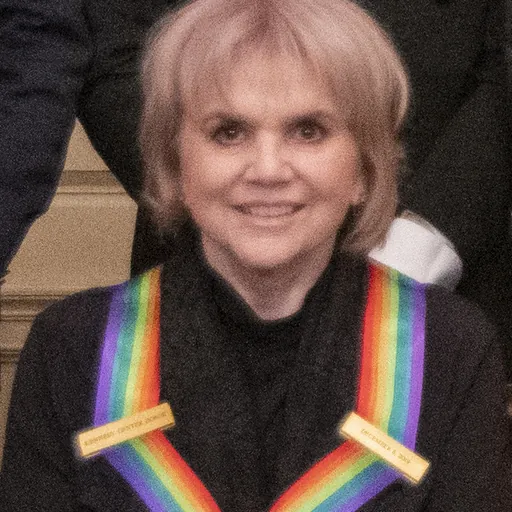
About Linda Ronstadt
Born 1946. Linda Ronstadt is an American singer, actor, singer-songwriter, stage actor, television actor and guitarist.
Linda Maria Ronstadt (born July 15, 1946) is an American retired singer and musician who performed and recorded in diverse genres including rock, folk, pop, country, and soul. three American Music Awards, two Academy of Country Music awards, an Emmy Award, and an ALMA Award. Many of her albums have been certified gold, platinum or multiplatinum in the United States and internationally. She has also earned nominations for a Tony Award and a Golden Globe award. She was awarded the Latin Grammy Lifetime Achievement Award by the Latin Recording Academy in 2011 and also awarded the Grammy Lifetime Achievement Award by the Recording Academy in 2016. She was inducted into the Rock and Roll Hall of Fame in April 2014. On July 28, 2014, she was awarded the National Medal of Arts and Humanities. (Some of the content of the lead section is supported by these news items: Ronstadt was among five honorees who received the 2019 Kennedy Center Honors for lifetime artistic achievements.)
Ronstadt has released 24 studio albums and 15 compilation or greatest hits albums. She charted 38 US Billboard Hot 100 singles. Twenty-one of those singles reached the top 40, ten reached the top 10, and one reached number one ("You're No Good"). Ronstadt also charted in the UK; two of her duets, "Somewhere Out There" with James Ingram and "Don't Know Much" with Aaron Neville, peaked at numbers 8 and 2 respectively, and the single "Blue Bayou" reached number 35 on the UK Singles Chart. She has charted 36 albums, ten top-10 albums, and three number one albums on the US Billboard albums chart. Ronstadt has lent her voice to over 120 albums, collaborating with artists in many genres, including Dolly Parton, Emmylou Harris, Bette Midler, Billy Eckstine, Frank Zappa, Carla Bley (Escalator Over the Hill), Rosemary Clooney, Flaco Jiménez, Philip Glass, Warren Zevon, Gram Parsons, Neil Young, Paul Simon, Earl Scruggs, Johnny Cash, and Nelson Riddle. Christopher Loudon, of Jazz Times, wrote in 2004 that Ronstadt is "blessed with arguably the most sterling set of pipes of her generation".
Ronstadt reduced her activity after 2000 when she felt her singing voice deteriorating. Since that time, Ronstadt has continued to make public appearances, going on a number of public speaking tours in the 2010s. She published an autobiography, Simple Dreams: A Musical Memoir, in September 2013. A documentary based on her memoirs, Linda Ronstadt: The Sound of My Voice, was released in 2019.
Early life Linda Maria Ronstadt was born in Tucson, Arizona on July 15, 1946, the third of four children of Gilbert Ronstadt (19111995), a prosperous machinery merchant who ran the F. Ronstadt Co., and Ruth Mary (née Copeman) Ronstadt (19141982), a homemaker.
Ronstadt had a Roman Catholic upbringing and was raised on the family's ranch with her three siblings. The family was featured in Family Circle magazine in 1953. Her brother Peter Ronstadt would serve as Tucson's chief of police from 1981 to 1991.
Ronstadt family history Ronstadt's father came from a pioneering Arizona ranching family The family's influence on and contributions to Arizona's history, including wagon making, commerce, pharmacies, and music, are documented in the library of the University of Arizona. Her great-grandfather, the engineer Friedrich August Ronstadt (who went by Federico Augusto Ronstadt), immigrated first to Sonora, Mexico, and later to the Southwest (at that time a part of Mexico) in the 1840s from Hanover, Germany. He married Margarita Redondo y Vásquez, a Mexican citizen, and eventually settled in Tucson. In 1991, the City of Tucson opened its central transit terminal on March 16 and dedicated it to Linda's grandfather, Federico José María Ronstadt, a local pioneer businessman; he was a wagon maker whose early contribution to the city's mobility included six mule-drawn streetcars, delivered in 190304.
Ronstadt's mother Ruth Mary, of German, English, and Dutch ancestry, was raised in Flint, Michigan. Ruth Mary's father, Lloyd Groff Copeman, a prolific inventor and holder of nearly 700 patents, invented an early form of the electric toaster, many refrigerator devices, the grease gun, the first electric stove, and an early form of the microwave oven. His flexible rubber ice cube tray earned him millions of dollars in royalties.
Career summary
Early on, her singing style had been influenced by singers such as Lola Beltrán and Édith Piaf; she has called their singing and rhythms "more like Greek music ... It's sort of like 6/8 time signature ... very hard driving and very intense." She also drew influence from country singer Hank Williams.
She has said that "all girl singers" eventually "have to curtsy to Ella Fitzgerald and Billie Holiday". She admires Callas for her musicianship and her attempts to push 20th-century singing, particularly opera, back into the bel canto "natural style of singing".
A self-described product of American radio of the 1950s and 1960s, Ronstadt is a fan of its eclectic and diverse music programming.
Beginning of professional career At age 14, Ronstadt formed a folk trio with her brother Peter and sister Gretchen. The group played coffeehouses, fraternity houses, and other small venues, billing themselves as "the Union City Ramblers" and "the Three Ronstadts", and they even recorded themselves at a Tucson studio under the name "the New Union Ramblers". But increasingly, Ronstadt wanted to make a union of folk music and rock 'n' roll, the 18-year-old decided to move to Los Angeles.
The Stone Poneys
Ronstadt visited a friend from Tucson, Bobby Kimmel, in Los Angeles during Easter break from college in 1964, and later that year, shortly before her eighteenth birthday,
Solo career Still contractually obligated to Capitol Records, Ronstadt released her first solo album, Hand Sown ... Home Grown, in 1969. It has been called the first alternative country record by a female recording artist.
Ronstadt's second solo album, Silk Purse, was released in March 1970. Recorded entirely in Nashville, it was produced by Elliot Mazer, whom Ronstadt chose on the advice of Janis Joplin, who had worked with her on the Cheap Thrills album. The Silk Purse album cover showed Ronstadt in a muddy pigpen, while the back and inside cover depicted her onstage wearing bright red. Ronstadt has stated that she was not pleased with the album, although it provided her with her first solo hit, the multi-format single "Long Long Time", and earned her first Grammy nomination (for Best Contemporary Vocal Performance/Female).
Touring
Soon after she went solo in the late 1960s, one of her first backing bands was the pioneering country-rock band Swampwater, which combined Cajun and swamp rock elements in their music. Its members included Cajun fiddler Gib Guilbeau and John Beland, who later joined the Flying Burrito Brothers, as well as Stan Pratt, Thad Maxwell, and Eric White, brother of Clarence White of the Byrds. Swampwater went on to back Ronstadt during TV appearances on The Johnny Cash Show and The Mike Douglas Show, and at the Big Sur Folk Festival.
Another backing band included Don Henley, Glenn Frey, Bernie Leadon, and Randy Meisner, who went on to form the Eagles. They toured with her for a short period in 1971 and played on Linda Ronstadt, her eponymous third album, from which a failed single, Ronstadt's version of Jackson Browne's "Rock Me on the Water", was drawn. At this stage, Ronstadt began working with producer and boyfriend John Boylan. She said, "As soon as I started working with John Boylan, I started co-producing myself. I was always a part of my productions. But I always needed a producer who would carry out my whims."
In 1975, Ronstadt performed shows with Jackson Browne, the Eagles, and Toots and the Maytals. In these shows she would sing lead vocal on numerous songs including the Eagles' "Desperado" while singing background and playing tambourine and acoustic guitar on others.
Several years before Ronstadt became what author Gerri Hirshey called the first "arena-class rock diva" with "hugely anticipated tours" In 1974 she told Peter Knobler in Crawdaddy, "People are always taking advantage of you; everybody that's interested in you has got an angle."
There were few "girl singers" on the rock circuit at the time, and they were relegated to "groupie level when in a crowd of a bunch of rock and roll guys", a status Ronstadt avoided. Relating to men on a professional level as fellow musicians led to competition, insecurity, bad romances, and a series of boyfriend-managers. At the time, she admired singers like Maria Muldaur for not sacrificing their femininity but says she felt enormous self-imposed pressure to compete with "the boys" at every level. She noted in a 1969 interview in Fusion magazine that it was difficult being a single "chick singer" with an all-male backup band.
Collaborations with Peter Asher
In general when you fall in love with an artist and their music, the plan is a fairly simple one. .. get people to go and see them, and make a record that you think properly presents their music to the public and some of which you can get on the radio. — Peter Asher, on collaborating with Ronstadt which soon occurred, resulting in frequent collaborations over the following years. Meanwhile, the album became Ronstadt's most successful up to that time, selling 300,000 copies by the end of 1974.
Asher turned out to be more collaborative, and more on the same page with her musically, than any producer she had worked with previously. Ronstadt's professional relationship with Asher allowed her to take command and effectively delegate responsibilities in the recording studio. and remained in that role through the late 1980s. Asher attributed the long-term success of his working relationship with Ronstadt to the fact that he was the first person to manage and produce her with whom there was a solely professional relationship. "It must be a lot harder to have objective conversations about someone's career when it's someone you sleep with," he said.
Vocal styles
The album design for What's New by designer Kosh was unlike any of her previous disc covers. It showed Ronstadt in a vintage dress lying on shimmering satin sheets with a Walkman headset. At the time, Ronstadt received some chiding for both the album cover and her venture into what was then considered "elevator music" by cynics, but remained determined to record with Riddle, and What's New became a hit. The album was released in September 1983 and spent 81 weeks on the Billboard Album Chart and held the number three position for a month and a half (held out of the top spot only by Michael Jackson's Thriller and Lionel Richie's Can't Slow Down) and the RIAA certified it triple platinum
Ronstadt faced considerable pressure not to record What's New or record with Riddle. According to jazz historian Peter Levinson, author of the book September in the Raina Biography on Nelson Riddle, Joe Smith, president of Elektra Records, was terrified that the Riddle album would turn off Ronstadt's rock audience. Ronstadt did not completely turn her back on her rock and roll past, however; the video for the title track featured Danny Kortchmar as the old beau that she bumped into during a rainstorm.
What's New brought Riddle to a younger audience. According to Levinson, "the younger audience hated what Riddle had done with Frank Sinatra, which in 1983 was considered 'Vintage Pop'". Working with Ronstadt, Riddle brought his career back into focus in the last three years of his life. What's New is the first album by a rock singer to have major commercial success in rehabilitating the Great American Songbook. Luisa Espinel, Ronstadt's aunt, was an international singer in the 1920s and 1930s. Espinel's father was Fred Ronstadt, Linda Ronstadt's grandfather, and the songs she had learned, transcribed, and published were some of the ones he had brought with him from Sonora. Ronstadt researched and extracted from the favorites she had learned from her father Gilbert and she called her album by the same name as her aunt's booklet and as a tribute to her father and his family. Though not fully bilingual, she has a fairly good command of the Spanish language, allowing her to sing Latin American songs with little discernible U.S. accent; Ronstadt has often identified herself as Mexican-American. Her formative years were spent with her father's side of the family. In fact, in 1976, Ronstadt had collaborated with her father to write and compose a traditional Mexican folk ballad, "Lo siento mi vida"a song that she included on Hasten Down the Wind. Ronstadt has also credited Mexican singer Lola Beltrán as an influence on her own singing style, and she recalls how a frequent guest to the Ronstadt home, Eduardo "Lalo" Guerrero, father of Chicano music, would often serenade her as a child.
Returning to the contemporary music scene By the late 1980s, while enjoying the success of her big band jazz collaborations with Riddle and her surprise hit mariachi recordings, Ronstadt elected to return to recording mainstream pop music once again. In 1987, she made a return to the top of the Billboard Hot 100 singles chart with "Somewhere Out There", which peaked at number 2 in March. Ronstadt included New Orleans soul singer Aaron Neville on several of the album's songs.
Ronstadt incorporated the sounds of the Oakland Interfaith Gospel Choir, Tower of Power horns, the Skywalker Symphony, and numerous musicians. It included the duets with Aaron Neville, "Don't Know Much" (Billboard Hot 100 number 2 hit, Christmas 1989
In December 1990, she participated in a concert held at the Tokyo Dome to commemorate John Lennon's 50th birthday, and to raise awareness of environmental issues. Other participants included Miles Davis, Lenny Kravitz, Hall & Oates, Natalie Cole, Yoko Ono, and Sean Lennon. An album resulted, titled Happy Birthday, John.
Return to roots music Ronstadt released the highly acclaimed Winter Light album at the end of 1993. It included New Age arrangements such as the lead single "Heartbeats Accelerating" as well as the self-penned title track and featured the glass harmonica. It was her first commercial failure since 1972, and peaked at number 92 in Billboard, whereas 1995's Feels Like Home was Ronstadt's much-heralded return to country-rock and included her version of Tom Petty's classic hit "The Waiting". The single's rollicking, fiddle-infused flip side, "Walk On", returned Ronstadt to the Country Singles chart for the first time since 1983. An album track entitled "The Blue Train" charted 10 weeks in Billboards Adult Contemporary Top 40. This album fared slightly better than its predecessor, reaching number 75. Both albums were later deleted from the Elektra/Asylum catalog. Ronstadt was nominated for three Lo Nuestro Awards in 1993: Female Regional Mexican Artist of the Year, Female Tropical/Salsa Artist of the Year, and her version of the song "Perfidia" was also listed for Tropical/Salsa Song of the Year.
In 1996, Ronstadt produced Dedicated to the One I Love, an album of classic rock and roll songs reinvented as lullabies. The album reached number 78 in Billboard and won the Grammy Award for Best Musical Album for Children.
In 1998, Ronstadt released We Ran, her first album in over two years. The album harkened back to Ronstadt's country-rock and folk-rock heyday. She returned to her rock 'n' roll roots with vivid interpretations of songs by Bruce Springsteen, Doc Pomus, Bob Dylan, and John Hiatt. The recording was produced by Glyn Johns. A commercial failure, the album stood at 57,897 copies sold at the time of its deletion in 2008. It is the poorest-selling studio album in Ronstadt's Elektra/Asylum catalog. We Ran did not chart any singles but it was well received by critics.
Despite the lack of success of We Ran, Ronstadt kept moving towards this adult rock exploration. In the summer of 1999, she released the album Western Wall: The Tucson Sessions, a folk-rock-oriented project with Emmylou Harris. It earned a nomination for the Grammy Award for the Best Contemporary Folk Album and made the Top 10 of Billboards Country Albums chart. Still in print as of December 2016, it has sold 223,255 copies per Nielsen SoundScan.
Also in 1999, Ronstadt went back to her concert roots when she performed with the Eagles and Jackson Browne at Staples Center's 1999 New Year's Eve celebration kicking off the December 31 end-of-the-millennium festivities. As Staples Center Senior Vice President and general manager Bobby Goldwater said, "It was our goal to present a spectacular event as a sendoff to the 20th century", and "Eagles, Jackson Browne, and Linda Ronstadt are three of the most popular acts of the century. Their performances will constitute a singular and historic night of entertainment for New Year's Eve in Los Angeles."
In 2000, Ronstadt completed her long contractual relationship with the Elektra/Asylum label. The fulfillment of this contract commenced with the release of A Merry Little Christmas, her first holiday collection, which includes rare choral works, the somber Joni Mitchell song "River", and a rare recorded duet with the late Rosemary Clooney on Clooney's signature song, "White Christmas".
Since leaving Warner Music, Ronstadt has gone on to release one album each under Verve and Vanguard Records.
Your musical soul is like facets of a jewel, and you stick out one facet at a time ... (and) I tend to work real hard on whatever it is I do, to get it up to speed, up to a professional level. I tend to bury myself in one thing for years at a time. — Linda Ronstadt
In August 2007, Ronstadt headlined the Newport Folk Festival, making her debut at this event, where she incorporated jazz, rock, and folk music into her repertoire. It was one of her final concerts.
In 2010, Ronstadt contributed the arrangement and lead vocal to "A La Orilla de un Palmar" on the Chieftains' studio album San Patricio (with Ry Cooder). This remains her most recent commercially available recording as lead vocalist.
Retirement In 2011, Ronstadt was interviewed by the Arizona Daily Star and announced her retirement. In August 2013, she revealed to Alanna Nash, writing for AARP, that she had Parkinson's disease and could "no longer sing a note." Her diagnosis was subsequently re-evaluated as progressive supranuclear palsy.
Selected career achievements
On April 10, 2014, Ronstadt was inducted into the Rock and Roll Hall of Fame. In July 2019, Ronstadt was selected as a Kennedy Center Honoree.
As of 2019, Ronstadt had earned three number-one pop albums, 10 top-ten pop albums, and 38 charting pop albums on the Billboard Pop Album Charts. She has 15 albums on the Billboard Top Country Albums chart, including four that hit number one. Ronstadt's singles have earned her a number-one hit and three number-two hits on the Billboard Hot 100 chart, with 10 top-ten pop singles and 21 reaching the Top 40. She has also scored two number-one hits on the Billboard Hot Country Songs chart, and two number-one hits on the Billboard Adult Contemporary chart. Rolling Stone wrote that a whole generation "but for her, might never have heard the work of Buddy Holly, Chuck Berry, or Elvis Costello." The 2012 revision kept only the compilation, but raised it to the place once occupied by Heart Like a Wheel.
Ronstadt's album sales have not been certified since 2001. At that time, Ronstadt's U.S. album sales were certified by the Recording Industry Association of America at over 30 million albums sold; however, Peter Asher, her former producer and manager, placed her total U.S. album sales at over 45 million. Her RIAA certification (audits paid for by record companies or artists for promotion) tally as of 2001 totaled 19 Gold, 14 Platinum and 7 Multi-Platinum albums. She produced Cristal – Glass Music Through the Ages, an album of classical music using glass instruments with Dennis James, where she sang on several of the arrangements. In 1999, Ronstadt also produced the Grammy Award-winning Trio II. She has received a total of 27 Grammy Award nominations in various fields that include rock, country, pop and Tropical Latin, and has won 11 Grammy Awards in the categories of Pop, Country, Tropical Latin, Musical Album for Children and Mexican-American. In 2016, Ronstadt was again honored by the National Academy of Recording Arts and Sciences with the Lifetime Achievement Grammy.
She was the first female solo artist to have two Top 5 singles simultaneously on Billboard magazine's Hot 100: "Blue Bayou" and "It's So Easy". By December of that year, both "Blue Bayou" and "It's So Easy" had climbed into Billboards Top 5 and remained there for the month's last four weeks. In 1999, Ronstadt ranked number 21 in VH1's 100 Greatest Women of Rock & Roll. Three years later, she ranked number 40 in CMT's 40 Greatest Women in Country Music. In 2023, Rolling Stone ranked Ronstadt at No. 47 on their list of the 200 Greatest Singers of All Time.
Personal life Jerry Brown (pictured) had a high-profile relationship with Ronstadt when he was the governor of California in the late 1970s. In the early 1970s, Ronstadt briefly dated fellow musician JD Souther, who co-produced her Don't Cry Now album. Beginning in the mid-1970s, Ronstadt's private life became increasingly public. It was fueled by a relationship with then-Governor of California Jerry Brown, a Democratic presidential candidate. They shared a Newsweek magazine cover in April 1979, as well as the covers of Us Weekly and People magazine.
In 1983, Ronstadt dated comedian Jim Carrey for eight months. From the end of 1983 to 1988, Ronstadt was engaged to Star Wars director and creator George Lucas.
In December 1990, she adopted an infant daughter, Mary Clementine Ronstadt. In 1994, she adopted a baby boy, Carlos Ronstadt. Ronstadt has never married. Speaking of finding an acceptable mate, in 1974 she told Peter Knobler in Crawdaddy, "... he's real kind but isn't inspired musically and then you meet somebody else that's just so inspired musically that he just takes your breath away but he's such a moron, such a maniac that you can't get along with him. And then after that it's the problem of finding someone that can stand you!"
In the late 1980s, after living in Los Angeles for 30 years, Ronstadt moved to San Francisco because she said she never felt at home in Southern California.
In 2009, in honor of Ronstadt, the Martin Guitar Company made a 0042 model "Linda Ronstadt Limited Edition" acoustic guitar. Ronstadt appointed the Land Institute as recipient of all proceeds from her signature guitar.
In 2013, Simon & Schuster published her autobiography, Simple Dreams: A Musical Memoir, as well as the Spanish version, Sueños SencillosMemorias Musicales.
In August 2013, Ronstadt revealed she was diagnosed with Parkinson's disease, leaving her unable to sing due to loss of muscular control, which is common to Parkinson's patients. She was diagnosed eight months prior to the announcement and had initially attributed the symptoms she had been experiencing to the aftereffects of shoulder surgery and a tick bite. In late 2019, it was reported her doctors had revised their diagnosis to progressive supranuclear palsy, a degenerative disease commonly mistaken for Parkinson's due to the similarity of the symptoms.
Political activism Ronstadt's politics received criticism and praise during and after her July 17, 2004, performance at the Aladdin Theatre for the Performing Arts in Las Vegas. Toward the end of the show, as she had done across the country, Ronstadt spoke to the audience, praising Fahrenheit 9/11, Michael Moore's documentary film about the Iraq War; she dedicated the song "Desperado" to Moore. Accounts say the crowd's initial reaction was mixed, with "half the crowd heartily applauding her praise for Moore, (and) the other half booing." Ronstadt's comments, as well as the reactions of some audience members and the hotel, became a topic of discussion nationwide. Aladdin casino president Bill Timmins and Michael Moore each made public statements about the controversy.
The incident prompted international headlines and debate on an entertainer's right to express a political opinion from the stage and made the editorial section of The New York Times. Following the incident, many friends of Ronstadt's, including the Eagles, immediately cancelled their engagements at the Aladdin.
In 2007, Ronstadt resided in San Francisco while also maintaining her home in Tucson. That same year, she drew criticism and praise from Tucsonans for commenting that local city council's failings, developers' strip mall mentality, greed and growing dust problem had rendered the city unrecognizable and poorly developed.
In August 2009, Ronstadt, in a well-publicized interview to PlanetOut Inc. titled "Linda Ronstadt's Gay Mission", championed gay rights and same-sex marriage, and stated "homophobia is anti-family values. Period, end of story."
On January 16, 2010, Ronstadt converged with thousands of other activists in a "National Day of Action". Ronstadt stated that her "dog in the fight"as a native Arizonan and coming from a law enforcement familywas the treatment of illegal aliens and Arizona's enforcement of its illegal immigrant law, especially Maricopa County Sheriff Joe Arpaio's efforts in that area.
On April 29, 2010, Ronstadt began a campaign, including joining a lawsuit, against Arizona's new illegal-immigration law SB 1070 calling it a "devastating blow to law enforcement ... the police don't protect us in a democracy with brute force", something she said she learned from her brother Peter, who was Chief of Police in Tucson.
Ronstadt has also been outspoken on environmental and community issues. She is a major supporter and admirer of sustainable agriculture pioneer Wes Jackson, saying in 2000, "the work he's doing right now is the most important work there is in the (United States)",
Ronstadt endorsed Kamala Harris for the 2024 US presidential election.
National arts advocacy
In 2004, Ronstadt wrote the foreword to the book The NPR Curious Listener's Guide to American Folk Music, and in 2005, she wrote the introduction to the book Classic Ferrington Guitars, about luthier Danny Ferrington and the custom guitars that he created for Ronstadt and other musicians such as Elvis Costello, Ry Cooder, and Kurt Cobain.
Ronstadt has been honored for her contribution to the American arts. On September 23, 2007, she was inducted into the Arizona Music & Entertainment Hall of Fame, along with Stevie Nicks, Buck Owens, and filmmaker Steven Spielberg. On August 17, 2008, Ronstadt received a tribute by various artists, including BeBe Winans and Wynonna Judd, when she was honored with the Trailblazer Award, presented to her by Plácido Domingo at the 2008 ALMA Awards, a ceremony later televised in the U.S. on ABC.
In 2008, Ronstadt was appointed artistic director of the San José Mariachi and Mexican Heritage Festival. On March 31, 2009, in testimony that the Los Angeles Times termed "remarkable", Ronstadt spoke to the United States Congress House Appropriations Subcommittee on Interior, Environment & Related Agencies, attempting to convince lawmakers to budget $200 million in the 2010 fiscal year for the National Endowment of the Arts. Mix magazine stated that "Linda Ronstadt (has) left her mark on more than the record business; her devotion to the craft of singing influenced many audio professionals ... (and is) intensely knowledgeable about the mechanics of singing and the cultural contexts of every genre she passes".
Album of the Year
Best Contemporary Vocal Performance, Female Best Country Vocal Performance, Female "I Can't Help It (If I'm Still in Love with You)"
Hasten Down the Wind
Record of the Year
"How Do I Make You"
"Get Closer"
Get Closer
What's New
Lush Life
Album of the Year
Best Country Performance by a Duo or Group with Vocal Best Pop Performance by a Duo or Group with Vocals "Somewhere Out There" (with James Ingram)
Best Mexican-American Performance Canciones de Mi Padre
Best Female Vocal Pop Performance Cry Like a Rainstorm, Howl Like the Wind
"Don't Know Much" (with Aaron Neville)
"All My Life" (with Aaron Neville)
Best Tropical Latin Album Frenesí Best Mexican-American Album Mas Canciones
Best Musical Album for Children Dedicated to the One I Love
Best Country Album Trio II (with Dolly Parton and Emmylou Harris) Best Contemporary Folk Album Western Wall: The Tucson Sessions (with Emmylou Harris) Best Country Collaboration with Vocals "After the Gold Rush" (with Dolly Parton and Emmylou Harris)
Best Traditional Folk Album Adieu False Heart (with Ann Savoy)
Best Music Film Linda Ronstadt: The Sound of My Voice
In 1981 the album In Harmony: A Sesame Street Record won the Grammy for Best Album for Children. Ronstadt was one of the various artists featured on the album. The Grammys were awarded to the producers, David Levine and Lucy Simon.
Latin Grammy Awards Year Category Nominated work Result Ref. 2011Lifetime Achievement Award
Primetime Emmy Awards Year Category Nominated work Result Ref. 1989 Outstanding Individual Performance in a Variety or Music Program Canciones de Mi Padre (Great Performances)
Tony Awards Year Category Nominated work Result Ref. 1981 Best Performance by a Leading Actress in a Musical The Pirates of Penzance
Golden Globe Awards 1983Best Performance by a Leading Actress in a Musical or Comedy, Linda Ronstadt in The Pirates of Penzance Year Category Nominated work Result Ref. 1983 Best Actress – Motion Picture Comedy or Musical The Pirates of Penzance
Arizona Music and Entertainment Hall of Fame 2007Inducted for her significant impact on the evolution and development of the entertainment culture in the state of Arizona
Academy of Country Music 1974Best New Female Artist 1987Album of the Year/ Trio, Dolly Parton, Linda Ronstadt and Emmylou Harris
Country Music Association 1988Vocal Event of the Year / Trio, Dolly Parton, Linda Ronstadt and Emmylou Harris
American Latino Media Arts 2008Trailblazer Award for Contribution to American Music
Lo Nuestro nominations 1989Regional Mexican Female Artist, Regional Mexican Album (Canciones de Mi Padre), and Crossover Artist 1992Regional Mexican Female Artist 1993Tropical Female Artist, Regional Mexican Female Artist, and Tropical Song ("Perfidia").
Kennedy Center 2019 Kennedy Center Honoree
Discography
Studio albums
Linda Ronstadt, Stone Poneys and Friends, Vol. III (1968) Hand Sown ... Home Grown (1969) Silk Purse (1970) Linda Ronstadt (1972) Don't Cry Now (1973) Heart Like a Wheel (1974) Prisoner in Disguise (1975) Hasten Down the Wind (1976) Simple Dreams (1977) Living in the USA (1978) Mad Love (1980) Get Closer (1982) What's New (1983) Lush Life (1984) For Sentimental Reasons (1986) Trio (1987) Canciones de Mi Padre (1987) Cry Like a Rainstorm, Howl Like the Wind (1989) Mas Canciones (1991) Frenesí (1992) Winter Light (1993) Feels Like Home (1995) Dedicated to the One I Love (1996) We Ran (1998) Trio II (1999) Western Wall: The Tucson Sessions (1999) A Merry Little Christmas (2000) Hummin' to Myself (2004) Adieu False Heart (2006)
Videography, filmography and stage appearances
Books
Explanatory notes
Don’t just read it —
keep it.
Full-length biographies made to live with: read them, listen on the way to work, watch them tonight.
- E-book
- Audio
- Video
Instant download · yours to keep · every purchase keeps this site free
Important facts
People in Linda Ronstadt's life
Named in this biography and alive at the same time




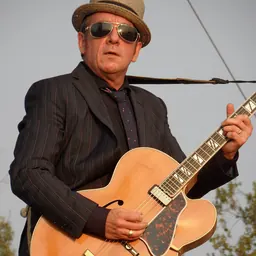
Related people
Same field, nearest in time
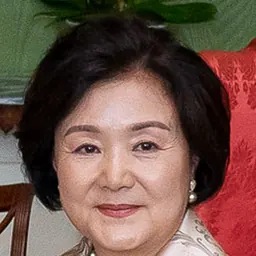





Contemporaries
People whose lives overlapped Linda Ronstadt's

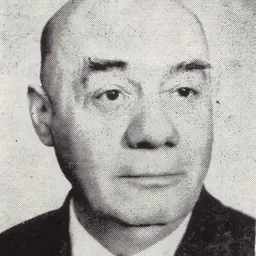


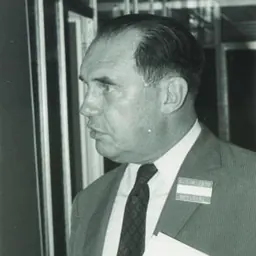
Frequently asked questions
Who is Linda Ronstadt?
American singer (born 1946)
When was Linda Ronstadt born?
Linda Ronstadt was born on 15 July 1946 in Tucson.
What is Linda Ronstadt's occupation?
Linda Ronstadt is a singer, actor, singer-songwriter, stage actor, television actor and guitarist.
What nationality is Linda Ronstadt?
Linda Ronstadt is American.
Sources & further reading
Cite this page
APA: Biography.guide. (2026). Linda Ronstadt. https://biography.guide/linda-ronstadt/
MLA: "Linda Ronstadt." Biography.guide, https://biography.guide/linda-ronstadt/.
Chicago: "Linda Ronstadt." Biography.guide. https://biography.guide/linda-ronstadt/.
Data last updated: 2026-09-21 · Spot an error? Report a correction.
Portrait: Wikimedia Commons · author & licence
Page generated 2026-09-27 04:59 UTC