
About Lincoln Bush
Born 1860. Lincoln Bush was an American civil engineer.
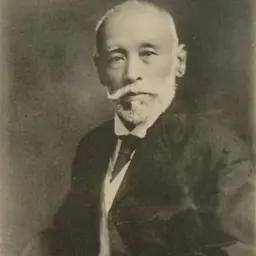
Lincoln Lincoln Bush (December 14, 1860 – December 10, 1940) was an American civil engineer and inventor, known for his work with railroads.
Biography Bush was born on December 14, 1860, in Palos Township, Illinois, the son of Lewis Bush and Mary Ritchey Bush. He was named for the newly elected president, although later dropped the name 'Abraham'. He was educated as a teacher at the Cook County Normal School, and taught for several years in public schools. Subsequently, he chose to become an engineer, and attended the University of Illinois. There he was a member and President of the Engineers' Club, and earned a Bachelor of Science degree in Civil Engineering in 1888. He then worked in a series of positions, as an assistant engineer at the Union Pacific Railroad and Pacific Shortline from 1888 to 1890, as assistant to Civil Engineer Elmer Lawrence Cathell from 1890 to 1892, as a Chief Draftsman in the West Office of the Pittsburg Bridge Company from 1892 to 1896, and Assistant Bridge Engineer and Acting Division Engineer for the Chicago and North Western Railroad from 1900 to 1903.
Bush began work for the Delaware, Lackawanna and Western Railroad in 1900, and in 1903 became that railroad's Chief Engineer. a position he served in for six years, during which he directed many improvements to the line and facilities, sometimes working with the company architect, Frank J. Nies. Bush designed the tracks and sheds for the Lackawanna's Hoboken Terminal, the head house of which was designed by architect Kenneth Murchison. In place of the wide-span balloon roofs used at major terminals up to that time, Bush developed and patented a modular style of train shed known as Bush-style sheds, constructed of cast iron, steel and concrete, incorporating a vent over the tracks to allow steam and smoke to escape and skylights over the passenger platforms for illumination. Bush sheds were cheaper and easier to construct than balloon roofs, and were adopted for use at several major terminals in the years immediately following. Bush led planning of the Lackawanna Cut-Off, a huge project to eliminate curves, hills, and grade crossings, although construction was completed after he left the railroad.
In 1909, Bush resigned from the DL&W to become a partner in the civil engineering consulting firm Flickwir and Bush. During his time as president, chief engineer and treasurer of the firm he oversaw construction of the massive Tunkhannock Viaduct, the largest concrete structure in the world at the time, for the Lackawanna. During World War I he served in the construction division of the Army Quartermaster Corps as a Colonel, and designed ports, warehouses, arsenals, and other structures. train sheds, Pennsylvania Station, North Charles Street, Baltimore, Maryland
Gallery
Don’t just read it —
keep it.
Full-length biographies made to live with: read them, listen on the way to work, watch them tonight.
- E-book
- Audio
- Video
Instant download · yours to keep · every purchase keeps this site free
Important facts
Related people
Same field, nearest in time




Frequently asked questions
Who was Lincoln Bush?
American engineer and inventor
When was Lincoln Bush born?
Lincoln Bush was born in 1860.
What was Lincoln Bush's occupation?
Lincoln Bush was a civil engineer.
What nationality was Lincoln Bush?
Lincoln Bush was American.
Sources & further reading
Cite this page
APA: Biography.guide. (2026). Lincoln Bush. https://biography.guide/lincoln-bush/
MLA: "Lincoln Bush." Biography.guide, https://biography.guide/lincoln-bush/.
Chicago: "Lincoln Bush." Biography.guide. https://biography.guide/lincoln-bush/.
Data last updated: 2026-09-20 · Spot an error? Report a correction.
Page generated 2026-09-27 05:14 UTC