
Lim To Khiam
Ming-dynasty Teochew pirate
About Lim To Khiam
Lived 1500 – 1580. Lim To Khiam was a Chinese.
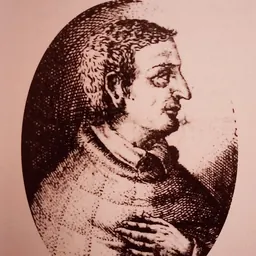
Lin Daoqian (, Malay: Tok Kayan, ), also written as Lim Toh Khiam and Vintoquián, was a Chinese pirate of Teochew origin active in the 16th century. He led pirate attacks along the coast of Guangdong and Fujian, but they were driven away by the Ming navy forces in 1563. By 1567 he was again raiding the South China coast. He later moved to South East Asia, and settled in Patani where he established a significant presence. He died in Patani.
Life Lin was of Teochew origin, and he was described as being from either Chenghai or Huilai in Guangdong. Later he moved to Quanzhou, Fujian. Yu occupied Penghu after driving Lin away, but did not pursue Lin to Taiwan. Lin may have operated in Taiwan on and off for many years.
By 1567, Lin was again raiding along the coast of China, and in 1568, and the Ming authority placed a bounty on Lin in an attempt to capture him. The Ming authority also attempted to recruit Lin in their fight against the pirates, using Lin's fleet to attack other pirates in 1569. and would alternately rebel and swear allegiance to the Ming authority. It was reported in 1573 that he had rebelled, and fled to find sanctuary in a foreign country. At some point he was said to have been attacked by another pirate chief Lin Feng, who captured 55 of his ships. History of Ming suggests that Lin moved to Southeast Asia out of fear of other pirates.
By the first half of 1570s, Lin was already operating along the Siamese coast, and the Ming authority joined force with the Siamese navy as well as using Portuguese ships to combat the pirates. In 1578, he established a base in Patani with 2,000 followers, and they dominated the town for some time. Ming sources indicate that he attacked Siamese ships but was repelled in 1578, and in 1580 he again attacked Siam but also left Siam later that year. The Ming authorities tried to capture him while he continued to launch raids against Chinese ships in 1580–81. After 1581 there were no further reports of his piratical activity in Ming sources, suggesting he had retired from raiding and settled in Patani. According to the local lore of Patani, he married the daughter of the Sultan (perhaps Raja Hijau), converted to Islam and built a mosque. A port near Patani he established and named after him existed for a while. He died in Patani, said to be due to cannon fire while he was testing cannons he had made for the queen of Pattani. Some suggested that he died in the 1580s, others proposed that he was still alive during the reign of Raja Biru in the early 17th century. He is believed to be buried in Kubo Bukit Cina, the oldest Chinese cemetery in Patani.
Lore and legends In Taiwan There are a number of myths and legends about Lin in Taiwan, although historical sources give varying accounts of his presence of Taiwan and it is not clear where he had actually stayed. According to Taiwanese legends, Lin slaughtered many of the natives in Taiwan, using their blood as caulk for his ships. It was said that while anchored at Takau, Taiwan in 1563, Lin placed his treasure into eighteen and a half bamboo baskets, hiding them in the surrounding hills, and the Takau Hill then acquired an alternate name Buried-Gold Hill . Another story goes that Lin was told by a Taoist master that he would be able to conquer all of China if, after he had performed certain tasks in a hundred days, he fired three arrows towards Beijing on the dawn of the last day. The master gave him 3 magic arrows and a "divine rooster". Lin handed the rooster in the care of his sister Jin-lien . On the midnight of last day, Jin-lien inadvertently startled the rooster, causing it to crow. Lin awoke and mistakenly thought that dawn had arrived, immediately firing off three divine arrows with his name towards the imperial capital. The three arrows flew into the imperial palace, striking the Dragon Throne. However, as it was midnight, the throne was empty. The emperor found the three arrows with Lin's name on them stuck in his throne, realizing that Lin had attempted to kill him, then ordered his troops to attack Lin. Lin, however, managed to escape.
In Patani
The Teochew people of Thailand tell a number of stories about Lin. In one, he was said to have helped the Siamese fight off an Annam attack and was thus given the daughter of the king to marry; however, he later angered the king after making a joke about killing the king, and had to flee.
According to Phongsawadan Mueang Pattani (Chronicle of Pattani), he attempted to cast three bronze cannons to be used in the wars of Pattani. After several failures with the third and largest cannon, he offered to sacrifice himself should his attempt be successful, and was blown up while testing this cannon.
Legacy
It is thought that Lin's activity in the area may have influenced the migration of Teochew people to Thailand in later years. Another Dutch report of 1603 by Jacob van Neck estimated that there may be as many Chinese in Patani as there were native Malays. Many Malays in Kru Se, Patani claim descent from Lin, although they may have been descendants of his followers who married local women. The cannon is used in Pattani as a symbol of the province. A replica of Phaya Tani was created and placed in front of Krue Se Mosque in Pattani in 2013, but it was damaged by separatists who saw it as 'faked' and wanted the return of the actual cannon.
Don’t just read it —
keep it.
Full-length biographies made to live with: read them, listen on the way to work, watch them tonight.
- E-book
- Audio
- Video
Instant download · yours to keep · every purchase keeps this site free
Important facts
more
Lim Toh KhiamContemporaries
People whose lives overlapped Lim To Khiam's





Frequently asked questions
Who was Lim To Khiam?
Ming-dynasty Teochew pirate
When was Lim To Khiam born?
Lim To Khiam was born in 1500 in Guangdong, Chaozhou.
When did Lim To Khiam die?
Lim To Khiam died in 1580 in Patani.
What nationality was Lim To Khiam?
Lim To Khiam was Chinese.
Sources & further reading
Cite this page
APA: Biography.guide. (2026). Lim To Khiam. https://biography.guide/lim-to-khiam/
MLA: "Lim To Khiam." Biography.guide, https://biography.guide/lim-to-khiam/.
Chicago: "Lim To Khiam." Biography.guide. https://biography.guide/lim-to-khiam/.
Data last updated: 2026-09-22 · Spot an error? Report a correction.
Page generated 2026-09-27 05:05 UTC