
About Libbie Henrietta Hyman
Lived 1888 – 1969 (aged 80). Libbie Henrietta Hyman was an American zoologist and scientific collector.
Libbie Henrietta Hyman (December 6, 1888 – August 3, 1969), was an American zoologist. She wrote numerous works on invertebrate zoology and the widely used A Laboratory Manual for Comparative Vertebrate Anatomy (1922, revised in 1942). Her father, an emigrant from Poland, adopted the surname "Hyman" when he immigrated to the United States as a youth. Her mother was from Germany. Joseph Hyman successively owned clothing stores in Des Moines, in Sioux Falls, South Dakota, and in Fort Dodge, Iowa, but the family's resources were limited. Hyman attended public schools in Fort Dodge. At home, she was required to do much of the housework. She enjoyed reading, especially books by Charles Dickens in her father's small den, and she took a strong interest in flowers, which she learned to classify with a copy of Asa Gray's Elements of Botany. She also collected butterflies and moths and later wrote, "I believe my interest in nature is primarily aesthetic." which promptly became widely used, to her astonishment. She followed this, again at the publisher's request, with A Laboratory Manual for Comparative Vertebrate Anatomy, which also had great success. She was, however, much more interested in invertebrates. By 1925 she was considering how to prepare a laboratory guide in that field but "was persuaded by [unnamed] colleagues to write an advanced text" (quoted in Hutchinson, p. 107). She compiled notes from books and scientific papers, including those in the many journals to which she subscribed, organized the notes on cards, and wrote an account of each invertebrate group. She took art lessons in order to illustrate her work professionally. She spent several summers studying specimens and drawing illustrations at Bermuda Biological Laboratory, Marine Biological Laboratory, Mt. Desert Island Biological Laboratory, and Puget Sound Biological Station.
Volume I (Protozoa through Ctenophora) of The Invertebrates, was published in February 1940. Volume 2 (Platyhelminthes and Rhynchocoela) and Volume 3 (Acanthocephala, Aschelminthes, and Entoprocta), both published in 1951, were followed by Volume 4 (Echinodermata) in 1955, Volume 5 (Smaller Coelomate Groups) in 1959, and Volume 6 (Mollusca I) in 1967. In it, she developed her scientific theory that the phylum Chordata, including all vertebrates, was evolutionarily related to the apparently very different and very much more primitive Echinodermata, such as starfish. This group is now known as the deuterostomes. Her theory was based upon the morphological data of classical embryology, and has since been confirmed by molecular sequence analysis.
In addition to her major project, Hyman extensively revised A Laboratory Manual for Comparative Vertebrate Anatomy in 1942 into a textbook as well as laboratory manual; she referred to it as her "bread and butter" for its income. She wrote about 136 papers on physiology and systematics of the lower invertebrates and published technical papers on annelid and polyclad worms and on other invertebrates. She commented in a letter: "The polyclads of Bermuda were so pretty that I could not resist collecting them and figuring out Verrill's mistakes" (quoted in Schram, p. 126). Addison Emery Verrill had been an earlier expert in invertebrate classification.
Hyman served as editor of the journal Systematic Zoology from 1959 to 1963. In 1960, she was elected a Fellow of the American Academy of Arts and Sciences. She was honored in 1961 with membership in the National Academy of Sciences, from which she had received the Daniel Giraud Elliot Medal in 1951. She also received the gold medal of the Linnean Society of London (1960) and a gold medal from the American Museum of Natural History (1969). She died from Parkinson's disease in New York City, aged 80.
Don’t just read it —
keep it.
Full-length biographies made to live with: read them, listen on the way to work, watch them tonight.
- E-book
- Audio
- Video
Instant download · yours to keep · every purchase keeps this site free
Important facts
People in Libbie Henrietta Hyman's life
Named in this biography and alive at the same time
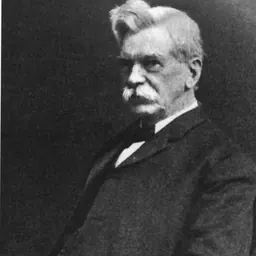
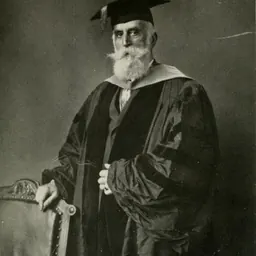

Related people
Same field, nearest in time
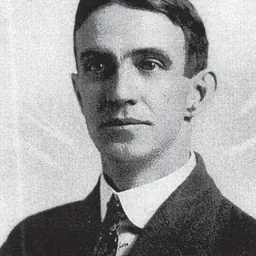
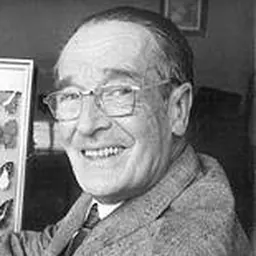



Contemporaries
People whose lives overlapped Libbie Henrietta Hyman's



Frequently asked questions
Who was Libbie Henrietta Hyman?
American zoologist (1888-1969)
When was Libbie Henrietta Hyman born?
Libbie Henrietta Hyman was born on 6 December 1888 in Des Moines.
When did Libbie Henrietta Hyman die?
Libbie Henrietta Hyman died on 3 August 1969 in New York City.
What was Libbie Henrietta Hyman's occupation?
Libbie Henrietta Hyman was a zoologist and scientific collector.
What nationality was Libbie Henrietta Hyman?
Libbie Henrietta Hyman was American.
Sources & further reading
· Wikipedia: Libbie Henrietta Hyman
Cite this page
APA: Biography.guide. (2026). Libbie Henrietta Hyman. https://biography.guide/libbie-henrietta-hyman/
MLA: "Libbie Henrietta Hyman." Biography.guide, https://biography.guide/libbie-henrietta-hyman/.
Chicago: "Libbie Henrietta Hyman." Biography.guide. https://biography.guide/libbie-henrietta-hyman/.
Data last updated: 2026-09-25 · Spot an error? Report a correction.
Page generated 2026-09-27 05:12 UTC