
About Liang Yusheng
Lived 1924 – 2009 (aged 84). Liang Yusheng was a Chinese writer and novelist.
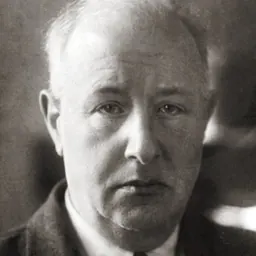
Chen Wentong (5 April 1924 – 22 January 2009), better known by his pen name Liang Yusheng, was a Chinese-born Australian novelist best known for being a pioneer of the "new school" of the wuxia genre in the 20th century. Along with Jin Yong and Gu Long, he was one of the best known wuxia writers in the later half of the 20th century. Throughout his career, he published a total of 35 wuxia novels. The more notable ones include Baifa Monü Zhuan, Yunhai Yugong Yuan, Qijian Xia Tianshan and Pingzong Xiaying Lu. Some of them have been adapted into films and television series, including The Bride with White Hair and Seven Swords (2005).
Pen name Chen's given name "Wentong" means "literary tradition". He chose Liang as the surname of his pen name to remind himself that he was inheriting the literary tradition of his ancestors in the same way the Chen dynasty (557–589) succeeded the Liang dynasty (502–557) during the Northern and Southern dynasties period (420–589). He chose "Yusheng" as the given name of his pen name to pay homage to Gong Baiyu, one of his favourite wuxia writers and sources of influence, because "Yusheng" means "born from (Gong Bai)yu".
On 17 January 1954, two martial arts masters – Chan Hak-fu of the White Crane School and Wu Gongyi of the Tai Chi School – challenged each other to a lei tai match in Macau and attracted much attention in Hong Kong. Luo Fu, the chief editor of New Evening Post, wanted to take advantage of the sensationalism surrounding the lei tai match, so he asked Chen to write a wuxia story inspired by the match and publish it as a serial in the newspaper. This became Chen's debut wuxia novel – Longhu Dou Jinghua – and marked the start of a "new school" wuxia genre. During this time, Chen met Jin Yong, who was also working at New Evening Post and writing wuxia novels.
From 1954 to 1983, Chen wrote a total of 35 wuxia novels, of which most were originally published as serials in newspapers. Among his works, Baifa Monü Zhuan, Yunhai Yugong Yuan, Qijian Xia Tianshan and Pingzong Xiaying Lu are some of the better known ones and have been adapted into films and television series, including The Bride with White Hair (1993) and Seven Swords (2005). Besides wuxia novels, Chen also wrote columns, critiques and essays under different pen names, including "Liang Hueru" and "Fong Yuning".
In 1985, Chen Huiguang, the Chinese Communist Party secretary of the Guangxi Zhuang Autonomous Regional Committee, visited Hong Kong and met Chen, who sought redress for his father. After returning to mainland China, Chen Huiguang ordered the United Front Work Department to publish a statement, which stated that Chen Xinyu had been wrongfully accused and executed. Chen thanked Chen Huiguang for his help and returned to Mengshan County in 1987 to visit his hometown and pay his respects to his ancestors.
Retirement and death Chen migrated to Australia with his family in 1987. At the time, he was a member of the China Writers Association and had been offered the position of honorary president of the Yinglian Society of China (YSC) in Shenzhen.
On 30 November 2004, Chen received an honorary Doctor of Arts from his alma mater, Lingnan University, which has moved to Hong Kong, for his contributions to the development of literature.
In December 2006, while attending an event in Hong Kong to celebrate Cosmos Books' 30th anniversary, Chen suffered a stroke. Among those who wrote tributes to Chen were his mentor Rao Zongyi, his former boss Luo Fu, fellow wuxia writer Jin Yong, and professor Chan Yiu-nam.
Works Liang Yusheng's novels were primarily published as newspaper serials between the 1950s and 1980s. They are usually divided into major narrative cycles and standalone works. English titles below are descriptive translations rather than official ones. The publication dates listed as follows are from Liang Yusheng's biography.
Standalone novels These two novels are self-contained stories with no connection to any of Liang Yusheng's other novels. Nüdi Qiying Zhuan is set in the late seventh and early eighth centuries during Wu Zetian's reign, while Wudang Yijian is set in the 17th century towards the end of the Ming dynasty.
Title Chinese title Date of first publication First publication Notes Nüdi Qiying Zhuan(The Female Emperor and the Heroic Genius) 1 July 1961 – 6 August 1962 Hong Kong Commercial Daily alternative title Tanggong Enyuan Lu (; "Chronicle of Gratitude and Revenge in the Tang Palace"). It can be considered a prequel to the Great Tang trilogy. Wudang Yijian(The First Sword of Wudang) 9 May 1980 – 2 August 1983 Ta Kung Pao The serialised version is related to the Tianshan series but the author removed nearly 300,000 Chinese characters and many recurring characters from the series to fix discrepancies with Baifa Monü Zhuan, which precedes it chronologically and makes it a standalone novel in its book publication.
Qing Dynasty Duologies Liang Yusheng occasionally wrote two-part sagas set within a shared narrative arc. Jianwang Chensi and Huanjian Lingqi are set in the mid-18th century during the Qing dynasty and Longhu Dou Jinghua and Caomang Longshe Zhuan are set during the late Qing dynasty at the turn of the 20th century against the backdrop of the Boxer Rebellion (1899–1901).
Middle Title Chinese title Date of first publication First publication Jianwang Chensi(Web of Swords and Dust) 1 September 1976 – 26 January 1980 Ta Kung Pao Huanjian Lingqi(The Phantom Sword and the Spirit Banner) 27 January 1980 – March 1981 Ta Kung Pao
Late Title Chinese title Date of first publication First publication Longhu Dou Jinghua(Clash of Dragon and Tiger in the Capital) 20 January 1954 – 1 August 1954 New Evening Post Caomang Longshe Zhuan(Dragons and Serpents among the Common Folk) 11 August 1954 – 5 February 1955 New Evening Post
The Great Tang Dynasty trilogy The Datang trilogy is set in the mid-eighth century during the Tang dynasty against the backdrop of the An Lushan rebellion (755–763). Title Chinese title Date of first publication First publication 1 Datang Youxia Zhuan(Story of the Wandering Hero of the Great Tang) 1 January 1963 – 14 June 1964 Ta Kung Pao 2 Longfeng Baochai Yuan(Romance of the Dragon and Phoenix Hairpins) 25 June 1964 – 15 May 1966 3 Huijian Xinmo(The Wise Sword and the Inner Demon) 23 May 1966 – 14 March 1968
The Song dynasty These works share overlapping timelines and characters in the 12th and 13th centuries against the backdrop of the wars (1125–1234) between the Song and Jin dynasties, and the rise of the Mongol Empire.
Title Chinese title Date of first publication Chronological Order First publication Notes Kuangxia Tianjiao Monü(Mad Hero, Proud Genius, and Demoness) 1 July 1964 – 23 June 1968 3 Hong Kong Commercial Daily alternative title Tiaodeng Kanjian Lu (; "Chronicle of Watching the Sword by Lamplight") Feifeng Qianlong(Flying Phoenix and Hidden Dragon) November 1966 2 Cheng Wu Pao Hanhai Xiongfeng(Mighty Winds over the Vast Desert) 15 March 1968 – 21 January 1970 4 Ta Kung Pao Mingdi Fengyun Lu(Chronicle of the Whistling Arrows) 24 June 1968 – 19 May 1972 5 Hong Kong Commercial Daily Fengyun Leidian(Wind and Cloud, Thunder and Lightning) 9 February 1970 – 31 December 1971 6 Ta Kung Pao Wulin Tianjiao(Proud Genius of the Wulin) 2 May 1978 – 9 March 1982 1 Hong Kong Commercial Daily
Pingzong series The Pingzong series is among Liang Yusheng's best-known series, chronicling successive generations of heroes across the 15th century during the Ming dynasty. Title Chinese title Date of first publication First publication 1 Huanjian Qiqing Lu(Tale of the Sword Returned and the Unusual Romance) November 1959 – May 1960 Hong Kong Commercial Daily 2 Pingzong Xiaying Lu(Chronicle of Wandering Heroes) 1 January 1959 – 16 February 1960 Ta Kung Pao 3 Sanhua Nüxia(The Blossom-Scattering Heroine) 23 February 1960 – 22 June 1961 4 Lianjian Fengyun Lu(Chronicle of the Allied Swords) 3 July 1961 – 25 November 1962 5 Wulin Sanjue(Three Supreme Experts of the Wulin) 1 October 1972 – 16 August 1976 6 Guangling Jian(Sword of Guangling) 3 June 1972 – 31 July 1976 Hong Kong Commercial Daily
Tianshan series The Tianshan series is Liang Yusheng's earliest series of novels, noted for its frontier settings and recurring heroes and heroines. Its historical setting spans from the end of the Ming dynasty in the 17th century to the mid-Qing dynasty in the 19th century. Title Chinese title Date of first publication First publication Connection to other novels Notes 1 Baifa Monü Zhuan(The White-Haired Demoness) 5 August 1957 – 8 September 1958 New Evening Post Baifa Monü Zhuan, Saiwai Qixia Zhuan and Qijian Xia Tianshan form a trilogy 2 Saiwai Qixia Zhuan(Legend of the Gallant Hero Beyond the Frontier) 1955 – 1957 Chou Mo Pao alternative title Feihongjin (; "Flying Red Sash") 3 Qijian Xia Tianshan(Seven Swords of Mount Heaven) 15 February 1956 – 31 March 1957 Ta Kung Pao 4 Jianghu San Nüxia(Three Heroines of the Jianghu) 8 April 1957 – 10 December 1958 Ta Kung Pao 5 Bingpo Hanguang Jian(Sword of the Icy Soul) 1962 Cheng Wu Pao alternative title Yougu Hanbing (; "Frost of the Hidden Valley") 6 Bingchuan Tiannü Zhuan(Story of the Heavenly Maiden of the Glacier) 5 August 1959 – 18 December 1960 New Evening Post Bingchuan Tiannü Zhuan, Yunhai Yugong Yuan and Binghe Xijian Lu form a trilogy 7 Yunhai Yugong Yuan(Romance of the Cloud Sea and Jade Bow) 12 October 1961 – 9 August 1963 New Evening Post 8 Binghe Xijian Lu(Chronicle of Washing the Sword in the Icy River) 24 August 1963 – 22 August 1965 New Evening Post 9 Fenglei Zhen Jiuzhou(Wind and Thunder Shake the Nine Provinces) 22 September 1965 – 28 September 1967 New Evening Post 10 Xiagu Danxin(Chivalrous Bones and Loyal Heart) 5 October 1967 – 20 June 1969 New Evening Post 11 Youjian Jianghu(Wandering Swordsman in the Jianghu) 1 July 1969 – 4 February 1972 New Evening Post Youjian Jianghu, Muye Liuxing, Tanzhi Jinglei and Juesai Chuanfeng Lu form a tetralogy alternative title Tan Jia Ge (; "Ballad of the Strummed Sword") 12 Muye Liuxing(Shooting Stars over the Grasslands) 16 February 1972 – 13 January 1975 New Evening Post alternative title Zheji Chensha Lu (; "Chronicle of Broken Spears Beneath the Sands") 13 Tanzhi Jinglei(A Flick of the Finger, Startling Thunder) 1 May 1977 – 9 March 1981 Chou Mo Pao 14 Juesai Chuanfeng Lu(Chronicle of the Frontier Beacons) 12 February 1975 – 10 April 1978 New Evening Post
Don’t just read it —
keep it.
Full-length biographies made to live with: read them, listen on the way to work, watch them tonight.
- E-book
- Audio
- Video
Instant download · yours to keep · every purchase keeps this site free
Important facts
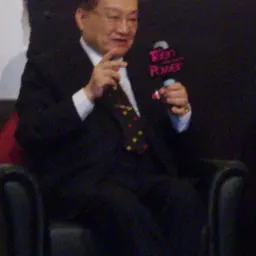
People in Liang Yusheng's life
Named in this biography and alive at the same time




Related people
Same field, nearest in time



Contemporaries
People whose lives overlapped Liang Yusheng's


Frequently asked questions
Who was Liang Yusheng?
Hong Kong writer (1924-2009)
When was Liang Yusheng born?
Liang Yusheng was born on 5 April 1924 in Mengshan County.
When did Liang Yusheng die?
Liang Yusheng died on 22 January 2009 in Sydney.
What was Liang Yusheng's occupation?
Liang Yusheng was a writer and novelist.
What nationality was Liang Yusheng?
Liang Yusheng was Chinese.
Sources & further reading
Cite this page
APA: Biography.guide. (2026). Liang Yusheng. https://biography.guide/liang-yusheng-writer/
MLA: "Liang Yusheng." Biography.guide, https://biography.guide/liang-yusheng-writer/.
Chicago: "Liang Yusheng." Biography.guide. https://biography.guide/liang-yusheng-writer/.
Data last updated: 2026-09-20 · Spot an error? Report a correction.
Page generated 2026-09-27 04:58 UTC