
About Li Kening
Lived 801 – 908 (aged 106–107). Li Kening was a Chinese politician.
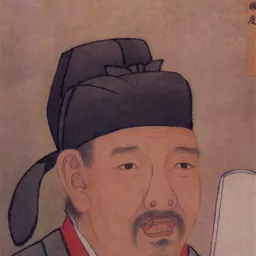
Li Kening (died March 25, 908 ) was a younger brother of the late Chinese Tang dynasty warlord Li Keyong, the Prince of Jin. After Li Keyong's death, Li Kening initially served as a key advisor to Li Keyong's son and successor Li Cunxu (the future Emperor Zhuangzong of Later Tang), but soon was persuaded by his wife Lady Meng to try to take over from Li Cunxu. His plot was discovered, and Li Cunxu put him to death.
Background It is not known where or when Li Kening was born, but it is known that he was Li Keyong's youngest brother and therefore would have been born after 856, when Li Keyong was born. Their father was the ethnic Shatuo general Li Guochang, whose name was originally Zhuye Chixin but was later bestowed the Tang dynasty imperial clan name of Li and a new name of Guochang, but because Li Kening's birth year is unknown, it is not known whether he would have been born with the name of Li or Zhuye. He was said to be kind and filially pious, and (despite his eventual fate) described to be the most virtuous among Li Keyong's brothers and cousins.
Service under Li Keyong When Li Keyong rose in rebellion against Duan Wenchu (段文楚) the Tang defender of Datong Circuit (大同, headquartered in modern Datong, Shanxi) in 878, Li Kening served under him and carried the title of commander of Fengcheng Base (奉誠軍). When Li Keyong's enemy Helian Duo subsequently attacked the Shatuo base Huanghua (黃花, in modern Shuozhou, Shanxi), Li Kening helped defend the city and protect Li Keyong and the other brothers, and also participated in the later defense of Li Keyong's then-power base of Wei Prefecture (蔚州, in modern Zhangjiakou, Hebei). Li Kening was said to be part of that army; he followed Li Keyong in Li Keyong's subsequent campaigns against Huang. Li Kening was made the prefect of Liao Prefecture (遼州, in modern Jinzhong, Shanxi), and then the defender of Yun Prefecture (雲州, in modern Datong). Early in the Qianning era (894-898) of Emperor Xizong's brother and successor Emperor Zhaozong, Li Kening was made the prefect of Xin Prefecture (忻州, in modern Xinzhou, Shanxi). and for this achievement was given the honorary title of acting Situ (司徒, one of the Three Excellencies).
Early in the Tianyou era (904 and on — used by Emperor Zhaozong, Emperor Zhaozong's son and successor Emperor Ai, as well as post-Tang regimes that refused to recognize the subsequent Later Liang, founded by Zhu), Li Kening was made the commander of all Han and non-Han soldiers within Li Keyong's realm, acting Taibao (太保), and the military governor of Zhenwu Circuit (振武, headquartered in modern Shuozhou, Shanxi), and he made the decisions that did not needed to be submitted to Li Keyong. ) Lady Meng agreed with their idea, and therefore urged Li Kening to go with the idea, causing Li Kening's resolve to support Li Cunxu to be shaken. Further, he was also encountering policy disagreements with Zhang and Li Cunzhang and argued with them frequently. He thereafter killed an officer, Li Cunzhi (李存質), without Li Cunxu's approval, and also requested to be made the military governor of Datong Circuit. Li Cunxu agreed.
Despite Li Cunxu's agreement with Li Kening, the conspiracy around Li Kening continued. Li Cunhao specifically planned, with Li Kening's understanding, to seize Li Cunxu when Li Cunxu would visit Li Kening's mansion, deliver Li Cunxu and his mother Lady Dowager Cao to the Later Liang emperor, and take over Hedong Circuit. Li Kening met the officer Shi Jingrong (史敬鎔) to try to get Shi to join the plot and to surveil Li Cunxu. Shi pretended to agree, and then informed the plot to Li Cunxu. Li Cunxu met with Lady Dowager Cao and Zhang and initially offered to resign to try to avoid a conflict, but Zhang persuaded him to act against Li Kening. Zhang summoned Li Cunzhang, Wu Gong, as well as the officers Li Cunjing (李存敬) and Zhu Shouyin to prepare against Li Kening.
On March 25, 908, Li Cunxu held a feast at his own mansion, and all the high-level officers attended. At the feast, soldiers that Li Cunxu had previously hidden seized Li Kening and Li Cunhao. Li Cunxu, weeping, stated to Li Kening:
Li Kening responded, ambiguously:
That day, Li Cunxu executed Li Kening and Li Cunhao.
Notes and references
History of the Five Dynasties, vol. 50. New History of the Five Dynasties, vol. 14. Zizhi Tongjian, vols. 263, 266.
Don’t just read it —
keep it.
Full-length biographies made to live with: read them, listen on the way to work, watch them tonight.
- E-book
- Audio
- Video
Instant download · yours to keep · every purchase keeps this site free
Important facts
People in Li Kening's life
Named in this biography and alive at the same time



Related people
Same field, nearest in time


Contemporaries
People whose lives overlapped Li Kening's


Frequently asked questions
Who was Li Kening?
Chinese politician
When was Li Kening born?
Li Kening was born in 801.
When did Li Kening die?
Li Kening died on 25 March 908.
What was Li Kening's occupation?
Li Kening was a politician.
What nationality was Li Kening?
Li Kening was Chinese.
Sources & further reading
Cite this page
APA: Biography.guide. (2026). Li Kening. https://biography.guide/li-kening/
MLA: "Li Kening." Biography.guide, https://biography.guide/li-kening/.
Chicago: "Li Kening." Biography.guide. https://biography.guide/li-kening/.
Data last updated: 2026-09-20 · Spot an error? Report a correction.
Page generated 2026-09-27 05:02 UTC