
About Li Jinhui
Lived 1891 – 1967 (aged 75). Li Jinhui was a Chinese composer, songwriter and record producer.
Li Jinhui (; 5 September 1891 – 15 February 1967 although some sources suggest he died 1968) was a Chinese composer and songwriter born in Xiangtan, Hunan, Qing China. He created a new musical form with shidaiqu after the fall of the Qing Dynasty—moving away from established musical forms. The Nationalist government attempted to ban Li's music. Critics branded his music as "Yellow Music", a form of pornography, because of its sexual associations and he was branded a "corruptor" of public morals. This kind of music was banned in China after the Chinese Communist Revolution in 1949, and Li was eventually hounded to his death, a victim of political persecution in 1967 during the height of the Cultural Revolution.
Early years The eight Li brothers in Beijing, 1930. From right to left (oldest to youngest): Jinxi, Jinhui, Jinyao, Jinshu, Jinjiong, Jinming, Jinguang, Jinyang.
Born into a scholarly family in Xiangtan, Hunan, Li Jinhui was the second oldest of the renowned eight Li brothers. His older brother Li Jinxi was a linguist and acquaintance of Mao Zedong, and his youngest brother Chin Yang Lee (Li Jinyang) later became an author in the US.
Li grew up studying the Confucian classics and attending progressive schools like Shaoshan and Xiangtan. In total he had 8 brothers, including Li Jinxi. One of the earliest instruments Li studied was the guqin.
During his teenage years, he became fascinated with Chinese folk music, which he later incorporated into his revolutionary new musical style. Even as a student at Changsha Normal High School, Li's musical aptitude was apparent; the teen served as a musician, choir director, and part-time music instructor before he graduated in 1911. Because of this, it can be said that the very first inspirations of Chinese popular music are derived from these forms.
As the head of the division of Peking University's Institute for the Promotion and Practice of Music focused on Hunan music, Li began adapting, transcribing, and performing regional Chinese folk songs to celebrate and reach the common people of China. His greatest source of Jazz influence came from American Buck Clayton who worked with Li for two years. Zhou Xuan would later become one of the Seven great singing stars of the Republic of China.
In 1931, Li's troupe merged with the Lianhua Film Company. Li began writing music for films like Romance at the Dancehall, one of China's first musical talkies. In 1933, Xu Lai became a movie star with the Mingxing Film Company. Their marriage broke down after the sudden death of Xiaofeng in 1935, and the couple divorced in November that year. Li was devastated by the loss of his daughter and wife. It was an acrimonious divorce and he requested compensation from Xu Lai for the investment he had made in training her. Xu later married Kuomintang general Tang Shengming and worked as a Juntong secret agent during the Second Sino-Japanese War.
Li Jinhui had a daughter, Li Minghui (1909–2003), from an earlier marriage. She is considered China's first pop singer, performing songs written by Li Jinhui.
Li also adopted Qian Zhenzhen, the daughter of Qian Zhuangfei, a legendary CCP secret agent. She changed her name to Li Lili, and became one of the most famous Chinese actresses of the 1930s.
Legacy Though a controversial figure in his time, Li Jinhui contributed hundreds of songs to the musical community released by many major recording companies, including Great China, Pathe-EMI and RCA-Victor. He also discovered and catapulted into stardom some of Shanghai's most famous recording artists and actress during the late 1920s to 1940s. In his lifetime, critics derided his work as "Yellow Music" because of its sexual associations. His work was labeled pornographic and was accepted only by select groups. His music movement would later grow into the cantopop and mandopop phenomenon, which became the main genre of music in Hong Kong and Taiwan respectively in the 20th century.
Works Putao xianzi (葡萄仙子 The Grape Fairy) 1923/1927 children's opera San hudie (Three Butterflies), 1926 children's opera Maque yu xiaohai (The Magpie and the Little Child), 1927 children's opera
Don’t just read it —
keep it.
Full-length biographies made to live with: read them, listen on the way to work, watch them tonight.
- E-book
- Audio
- Video
Instant download · yours to keep · every purchase keeps this site free
Important facts
Family & relationships
People in Li Jinhui's life
Named in this biography and alive at the same time
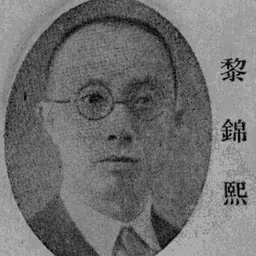
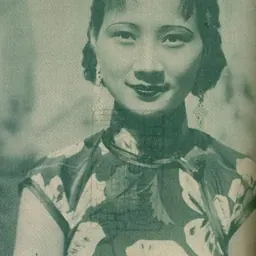
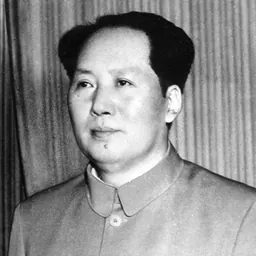


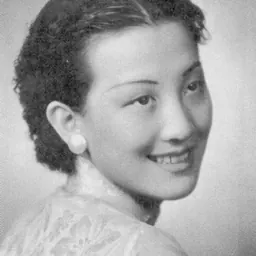
Related people
Same field, nearest in time




Contemporaries
People whose lives overlapped Li Jinhui's


Frequently asked questions
Who was Li Jinhui?
Chinese musician (1891-1967)
When was Li Jinhui born?
Li Jinhui was born on 5 September 1891 in Xiangtan.
When did Li Jinhui die?
Li Jinhui died on 15 February 1967 in Shanghai.
What was Li Jinhui's occupation?
Li Jinhui was a composer, songwriter and record producer.
What nationality was Li Jinhui?
Li Jinhui was Chinese.
Sources & further reading
Cite this page
APA: Biography.guide. (2026). Li Jinhui. https://biography.guide/li-jinhui/
MLA: "Li Jinhui." Biography.guide, https://biography.guide/li-jinhui/.
Chicago: "Li Jinhui." Biography.guide. https://biography.guide/li-jinhui/.
Data last updated: 2026-09-22 · Spot an error? Report a correction.
Page generated 2026-09-27 05:24 UTC