
Lewis Stucley
English gentleman and vice-admiral of Devonshire
About Lewis Stucley
Lived 1574 – 1620 (aged 45–46).
Sir Lewis Stukley (–) lord of the manor of Affeton in Devon, was Vice-Admiral of Devonshire. He was guardian of Thomas Rolfe, and a main opponent of Walter Raleigh in his last days. Stucley's reputation is equivocal; popular opinion at the time idealised Raleigh, and to the public he was "Sir Judas" Stucley.
Early life He was the eldest son of John Stucley (1551–1611) lord of the manor of Affeton in Devon, and his wife Frances St Leger, daughter of Sir John St Leger, (d.1596) of Annery in Devon, His grandfather Lewis Stucley (c.1530–1581) of Affeton was the eldest brother of Thomas Stucley (1520–1578), a mercenary leader who was killed fighting against the Moors at the Battle of Alcazar.
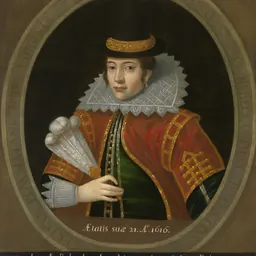
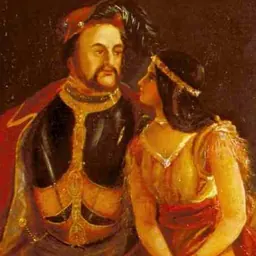
He was knighted by King James I when on his way to London in 1603. In April 1617 he was appointed guardian of Thomas Rolfe, the two-year-old son of John Rolfe and "Rebecca" (Pocahontas).
Arrest Stucley had a public notary board Raleigh's ship the Destiny in port. Then on the basis of a letter from the Lord High Admiral, Charles Howard, 1st Earl of Nottingham, dated 12 June, Stucley had the written authority to arrest Raleigh. He met Raleigh at Ashburton, and accompanied him back to Plymouth. While Stucley was waiting for further orders, Raleigh attempted to escape to France; but returned to his arrest. on 25 July, Stucley's party escorted Raleigh. The events that followed were later much discussed. Raleigh traveled with his wife and son. One of Stucley's entourage was a French physician, Guillaume Manoury. They went via Sherborne, met Sir John Digby, and stayed with Edward Parham at Poyntington. They reached Salisbury on the 27th, haste now prompted by an official reproach. The king was there, on a summer progress, and Raleigh used several devices to play for time, composing a state paper in justification of his expedition. At this point Stucley refused a bribe which Raleigh offered him.
Raleigh attempted an escape down the River Thames, on 9 August; it was with the help of Stucley, who intended to betray him. Raleigh with a party including Stucley took a wherry at night from Towers Stairs; they got past Woolwich, but around Gallions Reach were overhauled by a larger wherry carrying Herbert. They returned to Greenwich and Stucley arrested Raleigh once more in the name of the king.
Demise Stucley had given hostile, but not necessarily false, evidence against Raleigh. A public furore arose. It appeared that Stucley, wrongly said to be Raleigh's cousin, While saying on the scaffold that he forgave everyone, having taken the sacrament for the last time, Raleigh still called Stucley perfidious. Stucley put together a defence of his own actions, for which Leonell Sharpe may have been the writer.
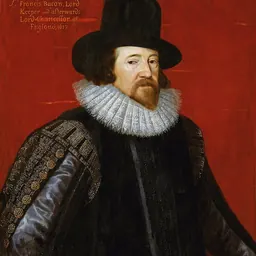
There were in fact two published documents in which Stucley put his side of the argument, an Apology, and the Petition of 26 November. There was also an official defence of the king's proceedings, the Declaration, written by Francis Bacon, possibly with Henry Yelverton and Robert Naunton. The Apology having failed, Stucley issued the Petition in effect asking for official backing; which was published in the Declaration of 27 November, the printers having been up all night.
John Chamberlain wrote to Sir Dudley Carleton at the end of 1618, reporting Stucley's reputation as a betrayer, and reporting the "Judas" epithet. In January 1619 Stucley and his son were charged with clipping coin, on slender evidence from a servant who had formerly been employed as a spy on Raleigh.
Although James I pardoned him, popular hatred pursued him to Affeton so Stuckley fled to Lundy, an island in the Bristol Channel. It is said this is where he died in 1620, raving mad it was rumoured.
Personal life In 1596 he married Frances Monck (born 1571), eldest daughter of Anthony Monck who lived at Potheridge in Devon and aunt of George Monck, 1st Duke of Albemarle, having six sons and one daughter. From the point of view of Stucley's reputation at the time, it mattered whether Raleigh was part of his extended family, which was widely believed, but they were not related.
Don’t just read it —
keep it.
Full-length biographies made to live with: read them, listen on the way to work, watch them tonight.
- E-book
- Audio
- Video
Instant download · yours to keep · every purchase keeps this site free
Important facts
People in Lewis Stucley's life
Named in this biography and alive at the same time





Contemporaries
People whose lives overlapped Lewis Stucley's


Frequently asked questions
Who was Lewis Stucley?
English gentleman and vice-admiral of Devonshire
When was Lewis Stucley born?
Lewis Stucley was born in 1574.
When did Lewis Stucley die?
Lewis Stucley died in 1620.
Sources & further reading
Cite this page
APA: Biography.guide. (2026). Lewis Stucley. https://biography.guide/lewis-stucley/
MLA: "Lewis Stucley." Biography.guide, https://biography.guide/lewis-stucley/.
Chicago: "Lewis Stucley." Biography.guide. https://biography.guide/lewis-stucley/.
Data last updated: 2026-09-20 · Spot an error? Report a correction.
Page generated 2026-09-27 05:07 UTC