
About Lewis McGee
Lived 1888 – 1917 (aged 29). Lewis McGee was an Australian military officer.
Lewis McGee, VC (13 May 1888 – 12 October 1917) was an Australian recipient of the Victoria Cross, the highest decoration for gallantry "in the face of the enemy" that can be awarded to members of the British and Commonwealth armed forces. As a sergeant in the Australian Imperial Force, McGee was awarded the Victoria Cross for his actions in the Battle of Broodseinde—part of the Passchendaele offensive—on 4 October 1917. As his platoon came under heavy machine gun fire from a German pillbox, McGee rushed alone across open ground towards the emplacement. Armed solely with a revolver, he shot the gunners and captured the garrison. He then organised a bombing party, and led the group in the seizure of a second machine gun post.
Born in Tasmania, McGee gained employment as an engine driver with the Tasmanian Department of Railways. In March 1916, he enlisted in the Australian Imperial Force for service in the First World War. He was posted to the 40th Battalion, and completed training in Tasmania and the United Kingdom, where he was promoted to lance corporal. Transferring to the Western Front in November 1916, McGee was rapidly promoted to corporal then sergeant, and took part in the Battle of Messines. He was killed in action on 12 October 1917 during the First Battle of Passchendaele, eight days after his Victoria Cross exploit.
Early life McGee was born in Campbell Town, Tasmania, on 13 May 1888, the youngest of eleven children to John McGee, a labourer and farmer, and his wife Mary (née Green). Three of McGee's sisters had died in infancy prior to his birth, and—when Lewis was aged only seven—his mother succumbed to pleurisy. Following his wife's death, John relocated his remaining family to a new farming property near Avoca. He also achieved a reputation as a "powerful athlete", Arriving seven weeks later, the battalion was dispatched to Salisbury Plain to complete an additional period of training in preparation of its deployment to the Western Front.
Victoria Cross As part of the third phase of the Passchendaele offensive, the 10th Australian Brigade—of which McGee's 40th Battalion was part—was detailed to execute an attack on Broodseinde Ridge. The brigade was allocated four primary objectives to seize during the assault, one for each battalion, with the 40th Battalion to take the final target located on the ridge itself. The advance commenced at the predetermined time of 06:00 on 4 October 1917, under the cover of an artillery barrage. The first three battalions were able to seize their objectives, though the fighting intensified with each stage. As the 40th Battalion set to advance towards the final objective, its progress became hampered by increasingly heavy machine-gun and rifle fire, as well as by barbed wire entanglements and sectors of impassable swamp.
alt=Black and white photograph of a seated man in military uniform holding a baby dressed in a white, flowing gown, with a woman sitting next to him. The woman has her arm around the man's back. Lewis McGee with his wife Eileen and baby daughter Nada in 1916.
With McGee's B Company heading the 40th Battalion's advance, the unit was able to progress to a point approximately in front of the crest, where it was confronted by a thick line of barbed wire and another bog, while simultaneously subject to the fire of ten machine guns in trenches and heavily defended pillboxes. The men of B Company struggled to within of the battalion's objective, when the severe fire of the German machine guns pinned them down in shellholes. On returning to his unit, he reorganised his men and led a bombing party in the capture of a second machine-gun post. McGee's actions reignited the 40th Battalion's advance, with McGee himself "foremost in the remainder" of the action. By 09:12 on 5 October, McGee was later buried in Tyne Cot Cemetery; he was one of 248 members of the 40th Battalion killed or wounded during the Battle of Passchendaele. McGee's fellow Australian Victoria Cross recipient from Broodseinde, Lance Corporal Walter Peeler, was also severely wounded on this day, receiving a bullet wound to his arm.
Legacy alt=Photograph of two men in suits standing over to the left gazing at a grave marker. Several other graves and a structure are in the background. Joseph Maxwell (left) and John Patrick Hamilton (right) visit the grave of fellow Australian Victoria Cross recipient Lewis McGee in Passchendaele, Belgium c. 1956.
The announcement and accompanying citation for McGee's Victoria Cross was promulgated in a supplement to The London Gazette on 26 November 1917, reading:
McGee's wife, Eileen, was presented with her late husband's Victoria Cross by the Governor-General of Australia, Sir Ronald Munro Ferguson, at an investiture ceremony in Launceston's York Park during October 1918. Additionally, Eileen McGee was later gifted an Iron Cross that her husband had captured from a German officer at Broodseinde, which was enclosed in a letter of condolence written to her by an officer of the 40th Battalion.
Prior to his Victoria Cross action, McGee had been noted in the 40th Battalion for his leadership qualities, and had attained a "famous fighting record". In addition to his decoration, McGee had been recommended for a commission as a result of his actions at Broodseinde, with an officer in his battalion declaring "had he lived his commission would have been assured". His original company commander, Major Leslie Payne, noted McGee's "sterling qualities as a leader" and stated: "His ability in the carrying out of certain important tasks early in the year was most marked and ... there is in my opinion, and the opinion of many others, no more gallant and capable non-commissioned officer in the battalion."
McGee is commemorated on a war cenotaph located in Ross, Tasmania, and his name was given to the McGee Soldiers' Club at Anglesea Army Barracks, Tasmania, which was opened in 1956. During the 150th anniversary celebrations of the town of Avoca in March 1984, the Governor of Tasmania, Sir James Plimsoll, unveiled a memorial plaque on the Returned Serviceman's League cenotaph honouring McGee; his widow and their daughter attended the ceremony. McGee's Victoria Cross and other medals are held in the collections of the Queen Victoria Museum and Art Gallery, Tasmania.
Don’t just read it —
keep it.
Full-length biographies made to live with: read them, listen on the way to work, watch them tonight.
- E-book
- Audio
- Video
Instant download · yours to keep · every purchase keeps this site free
Important facts
People in Lewis McGee's life
Named in this biography and alive at the same time




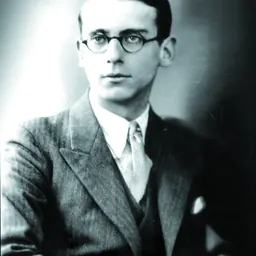
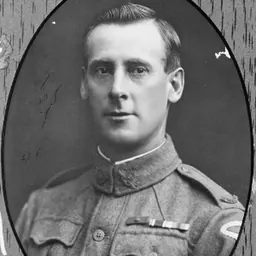
Related people
Same field, nearest in time
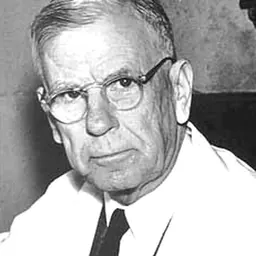
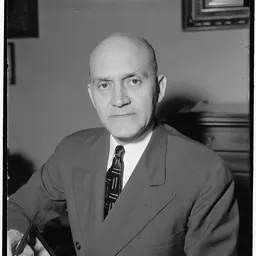



Contemporaries
People whose lives overlapped Lewis McGee's



Frequently asked questions
Who was Lewis McGee?
Australian Victoria Cross recipient
When was Lewis McGee born?
Lewis McGee was born on 13 May 1888 in Campbell Town.
When did Lewis McGee die?
Lewis McGee died on 12 October 1917 in Passendale.
What was Lewis McGee's occupation?
Lewis McGee was a military officer.
What nationality was Lewis McGee?
Lewis McGee was Australian.
Sources & further reading
· DBpedia: Lewis McGee (soldier)
Cite this page
APA: Biography.guide. (2026). Lewis McGee. https://biography.guide/lewis-mcgee/
MLA: "Lewis McGee." Biography.guide, https://biography.guide/lewis-mcgee/.
Chicago: "Lewis McGee." Biography.guide. https://biography.guide/lewis-mcgee/.
Data last updated: 2026-09-26 · Spot an error? Report a correction.
Page generated 2026-09-27 05:16 UTC