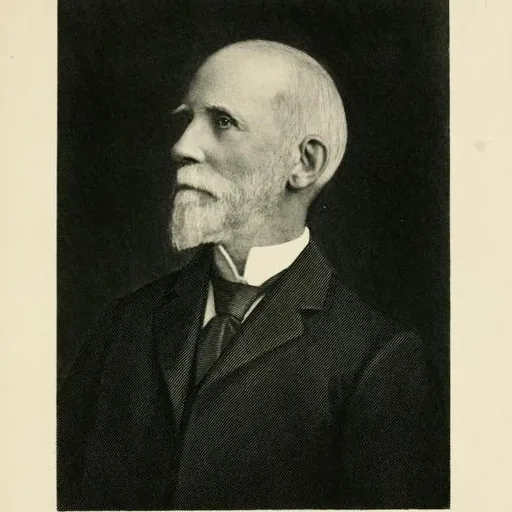
About Lewis Harvie Blair
Lived 1834 – 1916 (aged 82). Lewis Harvie Blair was an American writer.
Lewis Harvie Blair (June 21, 1834 – November 26, 1916) was an American businessman, economics expert, and author.
Personal life Blair was born in Richmond, Virginia on June 21, 1834, to John Geddes Blair and Sara Ann Eyre Heron Blair. He had some formal schooling, but received most of his education through reading. During the Civil War Blair fought with the Confederate States Army with the Company A, 13th Battalion Virginia Light Artillery, where he was known for "challenging authority, engaging in fistfights, and spending time in stockade confinement". Blair would later consider his time spent with the Confederate army a waste, as he considered slavery a "most monstrous institution". Alice herself died in 1894. Blair married again in 1898 to Martha Ruffin Feild, with whom he had four daughters. He died on November 26, 1916, in Richmond of a heart attack and was buried in Hollywood Cemetery. His house on Richmond's Monument Avenue, designed by his son, is a contributing property to the Monument Avenue Historic District.
Business opinions and career Blair ran a wholesale auction business after returning from the Civil War and later ran a retail store, as well as a wholesale grocery business. His business ventures were extremely successful and Blair became very wealthy. He would frequently write to newspapers to criticize the concept of the New South, saying that it was something that was made up by people like Henry W. Grady. He argued that most of the South lived in abject poverty and that it was little better than it was prior in 1860.
Views on race In his 1889 book The Prosperity of the South Dependent upon the Elevation of the Negro, Blair called for greater equality, equal rights, voting rights, and better education for African Americans - even endorsing integration. Historian Fred C. Hobson later commented in his research that while Blair's opinions were similar to those of George Washington Cable, he was able to voice them without receiving as much criticism as Cable. Hobson credits this to Blair living further North than Cable (who lived in New Orleans) and because Blair was wealthy and came from a prominent family.
Later in life Blair rejected his earlier opinions, stating in an unpublished manuscript that he believed African Americans to be inferior to whites, called for the Fourteenth and Fifteenth Amendments to be repealed, and also argued for disenfranchisement and segregation. His change in stance has been compared to Thomas E. Watson.
Don’t just read it —
keep it.
Full-length biographies made to live with: read them, listen on the way to work, watch them tonight.
- E-book
- Audio
- Video
Instant download · yours to keep · every purchase keeps this site free
Important facts
People in Lewis Harvie Blair's life
Named in this biography and alive at the same time


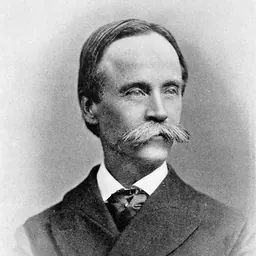
Related people
Same field, nearest in time

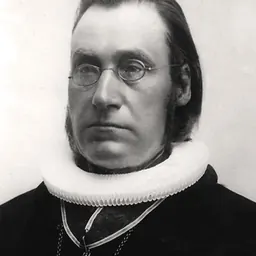
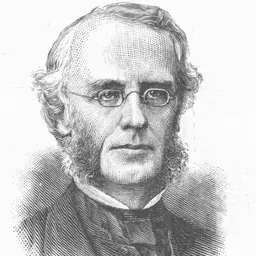
Contemporaries
People whose lives overlapped Lewis Harvie Blair's




Frequently asked questions
Who was Lewis Harvie Blair?
American writer (1834-1916)
When was Lewis Harvie Blair born?
Lewis Harvie Blair was born on 21 June 1834 in Richmond.
When did Lewis Harvie Blair die?
Lewis Harvie Blair died on 26 November 1916.
What was Lewis Harvie Blair's occupation?
Lewis Harvie Blair was a writer.
What nationality was Lewis Harvie Blair?
Lewis Harvie Blair was American.
Sources & further reading
· Wikipedia: Lewis Harvie Blair
Cite this page
APA: Biography.guide. (2026). Lewis Harvie Blair. https://biography.guide/lewis-harvie-blair/
MLA: "Lewis Harvie Blair." Biography.guide, https://biography.guide/lewis-harvie-blair/.
Chicago: "Lewis Harvie Blair." Biography.guide. https://biography.guide/lewis-harvie-blair/.
Data last updated: 2026-09-22 · Spot an error? Report a correction.
Portrait: Wikimedia Commons · author & licence
Page generated 2026-09-27 05:02 UTC