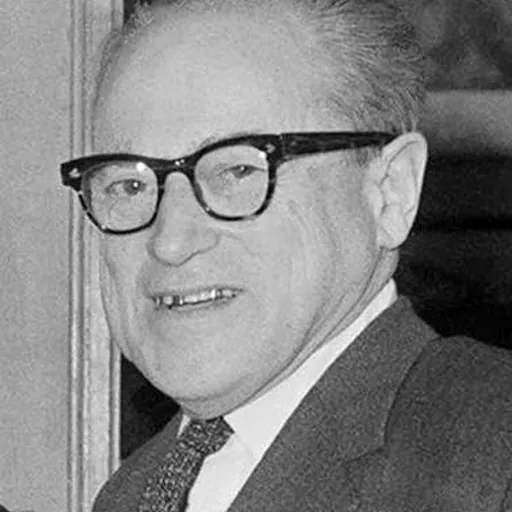
About Lev Zilber
Lived 1894 – 1966 (aged 72). Lev Zilber was a Russian physician, virologist, composer, microbiologist and immunologist.
Lev Aleksandrovich Zilber (; March 27 [ O.S. March 15], 1894 – November 10, 1966) was a Soviet micro-biologist whose work focused on virology and immunology. He was an academician of the USSR Academy of Medical Sciences (AMN SSSR; 1945) and the founder of the Soviet school of virology. His younger brother was the famous writer Veniamin Kaverin.
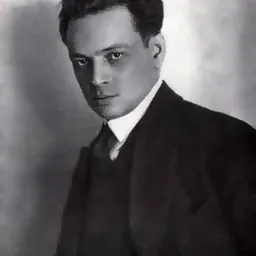
Biography Zilber was born on March 15 [ O.S. March 27] 1894 in the family of the kapellmeister Abel Zilber and his wife, née Khana Girshevna (Anna Grigorievna) Desson, a pianist and owner of music stores. He was born in the village of Medved, Medved volost, Novgorod Governorate. His sister Leya (married Elena Aleksandrovna Tynyanova, 1892–1944) is the wife of the writer and literary critic Yury Tynyanov, his classmate. He was the elder brother of military doctor David Zilber (1897–1967), composer and conductor Alexander Ruchiov (1899–1970) and writer Veniamin Kaverin (1902–1989).
Career In 1912, Zilber graduated from the Pskov provincial gymnasium with a silver medal and entered the natural department of the Faculty of physics and mathematics of St. Petersburg Imperial University. In 1915 he transferred to the medical faculty of Moscow University, having received permission to attend classes at the natural department at the same time and graduated in 1919.
Having left in 1919 as a volunteer for the Bolsheviks, he served in the Red Army in various positions from a doctor to the head of the medical unit. He was taken as a prisoner by the anti-communist whites, but he successfully escaped. Since 1921, he worked at the Institute of microbiology of the People's Commissariat for Health in Moscow.
In 1928 he married Zinaida Yermolyeva. After the wedding, Zilber and Yermolyeva worked at the Pasteur Institute in France and the Robert Koch Institute in Germany. In 1929, he was sent by the People's Commissar for Health N. Semashko to suppress an outbreak of typhoid fever in the city of Dzerzhinsk near Nizhny Novgorod.
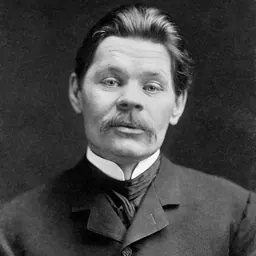
First arrests At the congress in Berlin 1927. From left to right – Vladimir Engelhardt, Zinaida Yermolyeva and Lev Zilber In 1929, he accepted an offer to take the position of director of the Azerbaijan Institute of microbiology and head of the department of microbiology at the Medical University in Baku. He led the suppression of an outbreak of plague in the villages of Bulutan and Hadrut in Nagorno-Karabakh in 1930. Upon his return to Baku, he was introduced to the Order of the Red Banner, but was soon arrested on charges of sabotage to infect the population of Azerbaijan with plague. He was released after 4 months of incarceration (possibly, at the request of Maxim Gorky who was approached by Veniamin Kaverin, his younger brother). Upon his release, Zilber worked in Moscow heading the department of microbiology at the Central Institute for the Improvement of Doctors while also heading the microbiological department of the State Scientific and Control Institute of the People's Commissariat for Health of the RSFSR named after Lev Tarasevich.
In 1932, he led the efforts in eliminating an outbreak of smallpox in the Kazakh Soviet Socialist Republic
In 1939, he became the head of the virology department at the Gamaleya Research Institute of Epidemiology, which he led until his death in 1966. The prisoners brought mice and rats for Zilber's experiments. In the course of research, he formulated a new concept of the origin of cancerous tumors.
After release In March 1944, on the eve of Zilber's 50th birthday, he was released thanks to a letter of innocence addressed to Joseph Stalin
In the summer of 1945, he found and took his family to the USSR – his wife, his wife's sister and two sons who survived in German work camps for 3.5 years. In the same year, he was elected an academician of the newly created USSR Academy of Medical Sciences and appointed scientific director of the Institute of virology of the USSR Academy of Medical Sciences. He also headed the Department of virology and tumor immunology of the Institute of epidemiology, microbiology and infectious diseases of the USSR Academy of Medical Sciences, where he worked over the next few years.
During the latter half of the 1940s, he was occupied formulating a viral theory for the origin of cancer. Zilber received the Stalin Prize of the USSR in 1946; in 1967 he was posthumously awarded the State Prize of the USSR for discovering the pathogenicity of the virus of fowl Rous sarcoma of animals (cycle of works, 1957–66). He was awarded the Order of Lenin, the Order of the Red Banner of Labor and various celebratory medals. In 1959–1965 he participated in the WHO working group on cancer. He would also attend international symposiums and conferences on oncology in cities like Berlin, Libice nad Cidlinou, London, Bratislava, Warsaw, Turin, and Prague. In 1965 he was an organizer and participant of the International Symposium on Cancer Immunology in Sukhumi, Abkhazia. On November 10, 1966, Lev Zilber suddenly died in his office at the Gamaleya Research Institute and was buried at the Novodevichy Cemetery, Moscow.
Family Zilber's two sons became famous biologists in their own right; Lev Lvovich Kiselev (1936–2008), an academician of the Russian Academy of Sciences and Fedor Lvovich Kiselev, an oncologist and member of the Russian Academy of Medical Sciences. Two of his brothers attained prominence in the USSR; David Alexandrovich Zilber was a hygienist who headed national departments of hygiene and wrote several leading textbooks on the subject; and Veniamin Kaverin, a famous writer and screenwriter.
Zilber married twice in his lifetime. His first wife was the renowned Soviet microbiologist Zinaida Yermolyeva who independently discovered penicillin. He then married Valeria Petrovna Kiseleva in 1935. His brother-in-law was Evgeny Schwartz, a playwright.
Scientific Accomplishments Lev Zilber is the author of the scientific discovery "New properties of the pathogenicity of tumor viruses", which is listed in the State Register of Discoveries of the USSR. In 1967, for the discovery of the pathogenicity of the Rous sarcoma virus in non-fowl animals he was posthumously awarded the State Prize of the USSR. His patented treatment for pellagra, Antipellagrin was vital in treating vitamin deficiencies in the USSR. His scientific research on oncology, carcinogenesis, immunology, and microbiology was widely published and cited by both native and foreign scientists. Lev Zilber was well-respected in scientific circles for his distinguished career and findings despite facing several personal as well as institutional struggles.
He is also the author of more than 300 scientific articles published in domestic and foreign journals, as well as popular science articles and essays. He was a member of the associations of oncologists of US, France and Belgium, member of the Royal Society of Medicine, honorary member of the New York Academy of Sciences, organizer and chairman of the committee on virology and cancer immunology at the Union for International Cancer Control, and a designated WHO expert in immunology as well as virology.
Awards
Medal "For Merit to Science and Humanity" of the Czech Academy of Sciences. Medal of the Czechoslovak Medical Society named after Jan Purkyně. The order of Lenin. The order of the Red Banner of Labour.
Don’t just read it —
keep it.
Full-length biographies made to live with: read them, listen on the way to work, watch them tonight.
- E-book
- Audio
- Video
Instant download · yours to keep · every purchase keeps this site free
Important facts
People in Lev Zilber's life
Named in this biography and alive at the same time

Related people
Same field, nearest in time


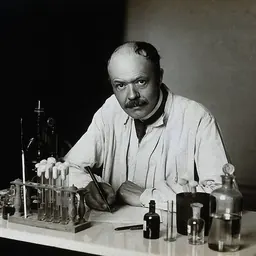
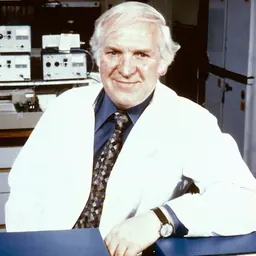
Contemporaries
People whose lives overlapped Lev Zilber's
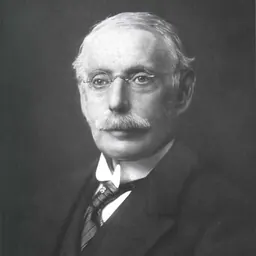

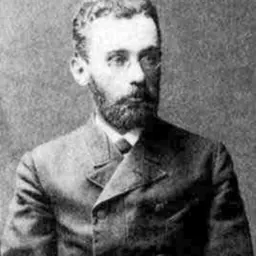

Frequently asked questions
Who was Lev Zilber?
Soviet immunologist and virologist
When was Lev Zilber born?
Lev Zilber was born on 15 March 1894 in Pskov.
When did Lev Zilber die?
Lev Zilber died on 10 November 1966 in Moscow.
What was Lev Zilber's occupation?
Lev Zilber was a physician, virologist, composer, microbiologist and immunologist.
What nationality was Lev Zilber?
Lev Zilber was Russian.
Sources & further reading
Cite this page
APA: Biography.guide. (2026). Lev Zilber. https://biography.guide/lev-zilber/
MLA: "Lev Zilber." Biography.guide, https://biography.guide/lev-zilber/.
Chicago: "Lev Zilber." Biography.guide. https://biography.guide/lev-zilber/.
Data last updated: 2026-09-21 · Spot an error? Report a correction.
Portrait: Wikimedia Commons · author & licence
Page generated 2026-09-27 04:59 UTC