
About Leroy Johnson
Lived 1937 – 2022 (aged 84–85). Leroy Johnson was an American artist, painter, potter, multimedia artist, activist and visual artist.
Leroy Johnson (1937 – July 8, 2022) was a largely self-taught African American artist who used found materials to create mixed-media works. He was known for his paintings, assemblage sculptures and collages that were inspired, influenced and reflective of African American history and his experiences living in the inner city of Philadelphia.
Early life and education Leroy Johnson was born in 1937 in the Eastwick community of Southwest Philadelphia to Harry and Louetta Cowan Johnson. His father worked as a janitor at the Frankford Arsenal. He often visited the Free Library of Philadelphia.
Johnson attended John Bartram High School, where he took commercial art classes. He won an award for sculpture in the Gimble Department Store Art Exhibit. As a student at Bartram, he and four of his commercial-art classmates formed an arts league. Johnson graduated in 1955. In 1957, the arts league made plans to mount an exhibit of their paintings, watercolors and sculptures. They told a newspaper reporter that they were planning to hold it at St. Cyprian Episcopal Church in the Elmwood section of Southwest Philadelphia but had not yet gotten permission from the Rev. Paul Washington, its pastor. All five were working other jobs, Johnson at the Philadelphia Quartermaster Depot.
Artistic influences Horace Pippin was one of his favorite artists, he said, and Pippin’s painting “Giving Thanks” reminded him of his own life as a child. The painting showed a wood-burning stove, a metal iron for pressing clothes, the family seated at a table ready for a meal, as well as quilts, blankets and rugs, he said. The painting represented “a desire and need forged in migration, war, and existence in a nation where terrorism still confronted African Americans,” Johnson wrote for his art residency at the Clay Studio in Philadelphia from 1995-2001.
Both artists and writers inspired Johnson, he said, including novelist Ralph Ellison. “Ben Shahn and Upton Sinclair, that whole milieu gave me the idea that art was about being aware of society, being aware of people and being involved in that,” Johnson said. “That’s what I thought art was. I never thought it was just being able to do a pretty picture.” He also was inspired by the work of artists who he said were improvisational: Thornton Dial, Lonnie Holley, Romare Bearden, Beauford Delaney, Ashcan School artists and Louis B. Sloan. Johnson was also influenced by musicians, including John Coltrane, Biggie Smalls and Jimi Hendricks. The artists of the Arte Povera Movement were also influential, he said, in encouraging him to use objects and materials from his neighborhood to add texture to his works.
Johnson was also influenced by jazz, he said, and incorporated its rhythms in his artworks and community work. He curated a show for the city of Philadelphia’s Jazz Appreciation Month festivities in 2018. He chose works that showed the artist’s exploration and interpretation of jazz. A year later, he was featured in an exhibit of jazz-inspired works at the city’s Art in City Hall space.
Artistic message Johnson described himself as “urban expressionist.” Johnson began making the tabletop rowhouses around 1992-1993, and they represented the dilapidated structures in his neighborhood.
Johnson produced several series of mixed-media work: "Street Scenes," which featured rowhouses and surrounding streets in his neighborhood; "Lynching Series," collages consisting of Bible verses, crosses and news clippings pertaining to lynching in America, and "Men with Hats," relief images of men, including his own "Self-Portrait, Mourning" (2000). He got the idea for one of the pieces - of a man whose large nose covered the top of his lips - from a drawing done by one of his elementary school students.
Johnson intentionally misspelled wording on some of the street signs in his structures to "combat ignorance of African American accomplishments," noted an essay for a solo exhibit in 2004 at Swarthmore College's List Gallery. In the work "Untitled (House)," he spelled the name of abolitionist Cyrus Bustill (great-great-grandfather of activist Paul Robeson) as "Bustil" and Robeson as "Roberson." In another piece, he identified Crispus Attucks as Crispus Attackus. Among the other members was Moe Brooker.
Teaching art Johnson was a teacher, therapist, counselor, school principal.
Johnson taught art at several community venues. In 1992, he conducted a ceramics workshop for beginners and families at the Afro-American Historical and Cultural Museum in Philadelphia (now the African American Museum in Philadelphia). A year later, he returned for a craft workshop for children at the museum. At the Philadelphia Zoo in 1991, he conducted a mask-making workshop as part of Black History Month.
In 1991, he taught pottery and ceramics to troubled youths with behavioral problems at the Touchstone Center for the Arts in Farmington, PA. The students - from Pennsylvania and West Virginia - attended Pressley Ridge School at Ohiopyle.
In 2003, Johnson taught and coached community people, students and nuns to produce a mural at the St. Frances Academy community center in Baltimore. They created a ceramic mosaic mural depicting Africa, and civil rights leaders and symbols. Its title “And Still I Rise” was taken from Maya Angelou’s poem of the same name. He participated in Temple University’s Tyler School of Art and Architecture series “Race, Identity and Experience in American Art” course in 2022. He discussed his life and work.
Exhibits, residencies and awards In 1966, Johnson was one of 12 local artists in an “Exhibition of Contemporary Negro Art” at the William Penn Memorial Museum in Harrisburg, PA. More than 70 artworks by young Black artists and students were represented. Other Philadelphia artists included Moe Brooker, Ellen Powell (Tiberino), Barbara Bullock, Walter Edmonds, Charles Pridgen and Percy Ricks.
In 1969, he was selected for a major exhibit of 100 artists titled “Afro American Artists 1800-1969” sponsored by the Philadelphia School District and the Museum of the Philadelphia Civic Center. It consisted of more than 250 paintings, sculptures and graphics of both past and contemporary Black artists. Johnson was one about three dozen local artists chosen to be shown, including Ellen Powell Tiberino. In 1988, he was among four artists featured in an exhibit titled “Directions 4" at the Afro-American Historical and Cultural Museum. The others were Benjamin Britt, Oscar Page and Deryl Mackie. Johnson was described as an abstract expressionist.
Johnson was resident artist at the Clay Studio from 1995-2001, where he taught at its school and the Claymobile, its outreach program. He was selected as the Peter Benoliel Fellow at the Center for Emerging Visual Artists in Philadelphia in a two-year fellowship in 2019 and an artist in residence at the center in 2021, where he sat up his studio in its gallery. He was also an artist in residence at the Fitler Club from 2019-2021, one of its original artists in residence. His works were featured in the inaugural exhibition of the club’s newest art space “Offsite.”
In 1999, he exhibited at the Tirza Yalon Kolton Ceramic Gallery in Tel Aviv, and conducted workshops in Israel. He was awarded a Pew Center for Arts and Heritage fellowship in 2014, among others.
Community Art Gallery of Friends Neighborhood Guild, 1968
“Afro-American Artists: 1800-1969,” Philadelphia School District and Museum of the Philadelphia Civic Center, 1969
Villanova University Art Gallery, 1983
Louis Belcastro Gallery, Philadelphia, 1984
Afro-American Historical and Cultural Museum, 1988, 1990, 2006
Limerance Gallery, 1989
Esther M. Klein Art Gallery, University City Science Center, 1990
Camden County Historical Society, 1990
Showcase Art Gallery, 1992
Sande Webster Gallery, 1993, 2000
Cheltenham Center for the Arts, 1996
Clay Studio, Philadelphia, 1997, 1999, 2000
Balch Institute for Ethnic Studies/Villanova University, 1997
Art Gallery at City Hall, Philadelphia, 1998, 2015, 2017, 2019
Tirza Yalon Kolton Ceramic Gallery, Tel Aviv, Israel, 1999
Society for Contemporary Craft, Pittsburgh, 2000
American Jazz Museum, Kansas City, MO, 2002
Swarthmore College, List Gallery, 2004
Berman Museum of Art, Ursinus College, 2006
Hearne Fine Art, Little Rock, AR, 2007
HUB Gallery, HUB-Robeson Center, Pennsylvania State University, 2006, 2008
Woodmere Art Museum, Philadelphia, 2008, 2015, 2018
Philadelphia's Magic Gardens, 2011
Philadelphia Free Library, collaborative installation “Street Café" and ephemeral display, 2012, 2017
Contemporary Craft, 2013
Judiciary Art Exhibit Program, Robert C. Byrd Federal Courthouse, Charleston, WV, Works from the Collection of Harvey and Jennifer Peyton, 2013
Marginal Utility, Philadelphia, 2018
Grizzly Grizzly, 2018
Art at Kings Oaks, Newtown, PA 2019
Fitler Club, 2019, 2020
Tiger Strikes Asteroid Philadelphia, 2021
Center for Emerging Visual Artists, 2021
Gross McCleaf Gallery, 2022
Margot Samel Gallery, 2025
Selected collections American Museum of Ceramic Art, Pomona, California
Harvey and Jennifer Peyton Collection, Charleston, WV
Clay Studio, Philadelphia
Juvenile Justice Services Center, Philadelphia, PA
Don’t just read it —
keep it.
Full-length biographies made to live with: read them, listen on the way to work, watch them tonight.
- E-book
- Audio
- Video
Instant download · yours to keep · every purchase keeps this site free
Important facts
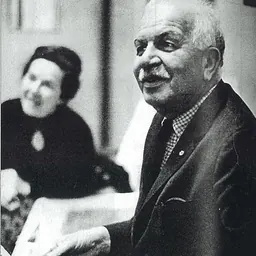
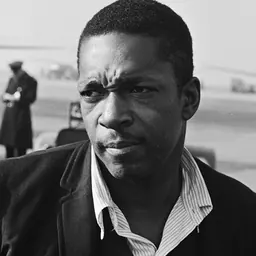
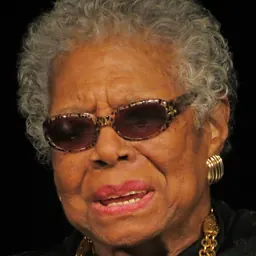
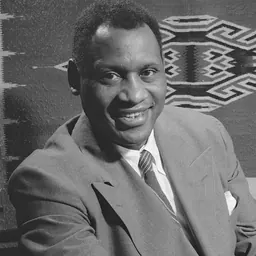
People in Leroy Johnson's life
Named in this biography and alive at the same time




Related people
Same field, nearest in time

Contemporaries
People whose lives overlapped Leroy Johnson's


Frequently asked questions
Who was Leroy Johnson?
Philadelphia-based artist and expressionist
When was Leroy Johnson born?
Leroy Johnson was born in 1937 in Southwest Philadelphia, Philadelphia.
When did Leroy Johnson die?
Leroy Johnson died on 8 July 2022.
What was Leroy Johnson's occupation?
Leroy Johnson was an artist, painter, potter, multimedia artist, activist and visual artist.
What nationality was Leroy Johnson?
Leroy Johnson was American.
Sources & further reading
· DBpedia: LeRoy Johnson (artist)
Cite this page
APA: Biography.guide. (2026). Leroy Johnson. https://biography.guide/leroy-johnson-artist/
MLA: "Leroy Johnson." Biography.guide, https://biography.guide/leroy-johnson-artist/.
Chicago: "Leroy Johnson." Biography.guide. https://biography.guide/leroy-johnson-artist/.
Data last updated: 2026-09-20 · Spot an error? Report a correction.
Page generated 2026-09-27 05:29 UTC