
About Leopold von Sacher-Masoch
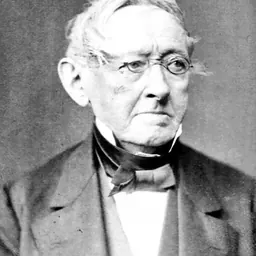
Lived 1836 – 1895 (aged 59). Leopold von Sacher-Masoch was an Austrian journalist, writer, university teacher, historian and opinion journalist, known for Sadomasochism.
Leopold Ritter von Sacher-Masoch (; 27 January 1836 – 9 March 1895) was an Austrian nobleman, writer and journalist, who gained renown for his romantic stories of Galician life. The term masochism is derived from his name, invented by his contemporary, the Austrian psychiatrist Richard von Krafft-Ebing. Masoch did not approve of this use of his name.
During his lifetime, Sacher-Masoch was well known as a man of letters, in particular a utopian thinker who espoused socialist and humanist ideals in his fiction and non-fiction. Most of his works remain untranslated into English.
Biography
Early life and education Sacher-Masoch was born in the city of Lemberg, the capital of the Kingdom of Galicia and Lodomeria (now Lviv, Ukraine), at the time a province of the Austrian Empire, into a Roman Catholic family. His father was an Austrian civil servant, Leopold Johann Nepomuk Ritter von Sacher, and his mother Charlotte Josepha von Masoch, a Ukrainian noblewoman. The father later combined his surname with his wife's von Masoch, at the request of her family (she was the last of the line). Sacher served as a Commissioner of the Imperial Police Forces in Lemberg, and he was recognised with a new title of Austrian nobility as Sacher-Masoch awarded by the Austrian Emperor.
Leopold studied law, history and mathematics at Graz University (where he obtained a doctorate in history in 1856), and after graduating he became a lecturer there.
Galician storyteller
His early, non-fictional publications dealt mostly with Austrian history. At the same time, Masoch turned to the folklore and culture of his homeland, Galicia. Soon he abandoned lecturing and became a free man of letters. Within a decade his short stories and novels prevailed over his historical non-fiction works, though historical themes continued to imbue his fiction.
Later years In 1874, Masoch wrote the novel Die Ideale unserer Zeit (The Ideals of Our Time), an attempt to give a portrait of German society during its Gründerzeit period.
In his late fifties, his mental health began to deteriorate, and he spent the last years of his life under psychiatric care. According to official reports, he died in Lindheim in 1895. (Lindheim, at that time near Altenstadt, was incorporated into the municipality of Altenstadt in 1971.) It is also claimed that Masoch died in an asylum in Mannheim in 1905.
Trivia
Sacher-Masoch is the great-great-uncle, through her Austrian-born mother Eva von Sacher-Masoch, Baroness Erisso, of the late English Rock star and film actress Marianne Faithfull. She died on 30 January 2025.
Masochism
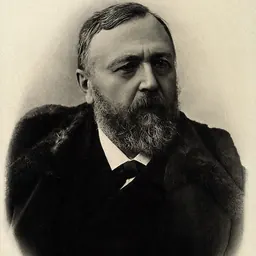
The term masochism was coined in 1886 by the Austrian psychiatrist Richard Freiherr von Krafft-Ebing (1840–1902) in his book Psychopathia Sexualis:
Sacher-Masoch was not pleased with Krafft-Ebing's assertions. Nevertheless, details of Masoch's private life were obscure until Aurora von Rümelin's memoirs, Meine Lebensbeichte (My Life Confession; 1906), were published in Berlin under the pseudonym Wanda v. Dunajew (the name of a leading character in his Venus in Furs). The following year, a French translation, Confession de ma vie (1907) by "Wanda von Sacher-Masoch", was printed in Paris by Mercure de France. An English translation of the French edition was published as The Confessions of Wanda von Sacher-Masoch (1991) by RE/Search Publications.
Selected bibliography
1858 A Galician Story 1846 1865 Kaunitz 1866 Don Juan of Kolomiya 1867 The Last King of Hungary 1870 The Divorcee 1870 Legacy of Cain Vol. 1: Love (includes his most famous work, Venus in Furs) 1872 Faux Ermine 1873 Female Sultan 1873 The Messalinas of Vienna 1873–74 Russian Court Stories: 4 Vols. 1873–77 Viennese Court Stories: 2 Vols. 1874/76 [Love Stories from Several Centuries], 3 volumes, includes "" ("Bloody Wedding in Kyiv"), "Ariella" 1874 Die Ideale unserer Zeit [The Ideals of Our Time] 1875 Galician Stories 1877 The Man Without Prejudice 1877 Legacy of Cain. Vol. 2: Property 1878 The New Hiob 1878 Jewish Stories 1878 The Republic of Women's Enemies 1879 Silhouettes 1881 New Jewish Stories 1883 (The Mother of God) 1886 Eternal Youth 1886 Stories from Polish Ghetto 1886 Little Mysteries of World History 1886 Bloody Wedding in Kyiv''' 1887 Polish Stories 1890 The Serpent in Paradise 1891 The Lonesome 1894 Love Stories 1898 Entre nous 1900 Catherina II 1901 Afrikas Semiramis 1907 Fierce WomenSee also BDSM List of Austrian writers Marquis de Sade Sadism and masochism in fiction Story of ONotes
Don’t just read it —
keep it.
Full-length biographies made to live with: read them, listen on the way to work, watch them tonight.
- E-book
- Audio
- Video
Instant download · yours to keep · every purchase keeps this site free
Important facts
People in Leopold von Sacher-Masoch's life
Named in this biography and alive at the same time

Related people
Same field, nearest in time

Contemporaries
People whose lives overlapped Leopold von Sacher-Masoch's





Frequently asked questions
Who was Leopold von Sacher-Masoch?
Austrian author (1836–1895)
When was Leopold von Sacher-Masoch born?
Leopold von Sacher-Masoch was born on 27 January 1836 in Lviv.
When did Leopold von Sacher-Masoch die?
Leopold von Sacher-Masoch died on 9 March 1895 in Lindheim.
What was Leopold von Sacher-Masoch's occupation?
Leopold von Sacher-Masoch was a journalist, writer, university teacher, historian and opinion journalist.
What was Leopold von Sacher-Masoch known for?
Leopold von Sacher-Masoch was known for Sadomasochism.
What nationality was Leopold von Sacher-Masoch?
Leopold von Sacher-Masoch was Austrian.
Sources & further reading
· Wikipedia: Leopold von Sacher-Masoch
· DBpedia: Leopold von Sacher-Masoch
Cite this page
APA: Biography.guide. (2026). Leopold von Sacher-Masoch. https://biography.guide/leopold-von-sacher-masoch/
MLA: "Leopold von Sacher-Masoch." Biography.guide, https://biography.guide/leopold-von-sacher-masoch/.
Chicago: "Leopold von Sacher-Masoch." Biography.guide. https://biography.guide/leopold-von-sacher-masoch/.
Data last updated: 2026-09-22 · Spot an error? Report a correction.
Page generated 2026-09-27 05:34 UTC