
About Leonora O'Reilly
Lived 1870 – 1927 (aged 57). Leonora O'Reilly was an American trade unionist.
Leonora O'Reilly (February 16, 1870 – April 3, 1927) was an American feminist, suffragist, and trade union organizer. O'Reilly was born in New York state, raised on the Lower East Side of Manhattan in New York City. She was born into a working-class family and left school at the age of eleven to begin working as a seamstress. Leonora O'Reilly's parents were Irish immigrants escaping the Great Famine; her father, John, was a printer and a grocer and died while Leonora was the age of one, forcing her mother, Winifred Rooney O'Reilly, to work more hours as a garment worker in order to support Leonora and her younger brother.
O'Reilly worked from 1903 to 1915 an organizer and recruiter for the Women's Trade Union League (WTUL). On the streets of New York, O'Reilly spoke in public for labor reform and women's suffrage; her skills enabled her to represent women in 1911 at a New York Senate Committee on Suffrage as well as in various public meeting halls.
Personal and family life
Family life Leonora O'Reilly was the daughter of John O'Reilly, a printer and member of the Knights of Labor, and Winifred (Rooney) O'Reilly, an Irish-born dressmaker. John O'Reilly died when Leonora was one year old.
Personal life At age 16, O'Reilly joined the Comte Synthetic Circle, a self-education group on the Lower East Side of Manhattan. Through this group, O'Reilly met her mentor, Victor Drury. Drury was a French-born intellectual, Knights of Labor activist, and anarchist; he had introduced O'Reilly to many books which helped compensate for her lack of formal education. They advocated for Irish independence when Irish men and women were oppressed back home. Within the nationalism movement in Ireland, radical aspects including a worker-centered agenda was called for in America –one that would "restore to producers the fruits of their labor". As a third-generation working woman, O'Reilly justified her right to speak for women in the labor force because of the cumulative experiences of a working mother and grandmother.
Leonora O'Reilly early in her life became engaged with the labor reform and women's suffrage movements and at 16 she joined the Knights of Labor with her mother, Winifred O'Reilly, who soon followed her daughter's lead. Thus, the league was dominated by affluent middle-class women who were educated, had financial ability and political clout. The American Socialists declared IWD to be on the last Sunday of the month of February. This holiday sought to highlight the 'means by which to unite the popular community around a set of common goals', human rights in the form of equal wages, social status, and voting rights for all women. During the years between 1916 and 1923, Irish nationalists sought help from Irish labor movement leaders in the US, as a response to the US support of the British in World War I.
O'Reilly was notable for using her contacts to drive support for boycotts. The first was a boycott by dockworkers who refused to unload British cargoes across major American cities including New York, Boston, Philadelphia, New Orleans and Galveston. This led to O'Reilly organizing a group from the American Women Pickets for the Enforcement of American War Aims to incite the first group of dockworkers in New York to walk off their jobs and which led to similar actions by groups in other cities. The movement attracted international attention, particularly from Irish republican women leaders who came to the US to attract backing for the Irish Rebellion.
Later, O'Reilly was involved in a consumer boycott of British goods. This campaign was led by Chicago Federation of Labor President John Fitzpatrick and labor lawyer Frank Walsh of the Labor Bureau of the American Commission on Irish Independence. O'Reilly published a list in conjunction with the Women's Purchasing League of goods to be boycotted, and using a rational that women did most of the shopping. Regardless of its financial impact, the boycotting campaign highlighted a division within the American Federation of Labor (AFL) over the question of imperialism. AFL leaders advocated that the labor movement should support government foreign policies. This support might then be conceded during times of national crisis to achieve concessions for American workers. By contrast, O'Reilly sided with other labor leaders, such as John Fitzpatrick, in a fundamental opposition to imperialism. Even when at odds with government policy, she believed such opposition was an appropriate purpose of the labor movement and a primary focus of labor solidarity.
Don’t just read it —
keep it.
Full-length biographies made to live with: read them, listen on the way to work, watch them tonight.
- E-book
- Audio
- Video
Instant download · yours to keep · every purchase keeps this site free
Important facts
People in Leonora O'Reilly's life
Named in this biography and alive at the same time

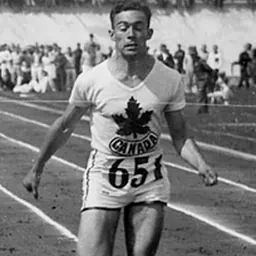

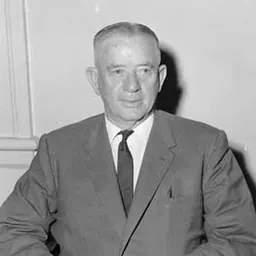

Related people
Same field, nearest in time
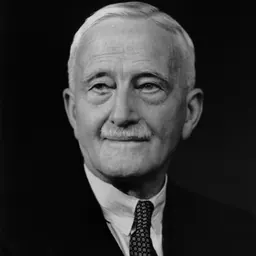
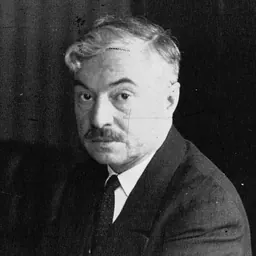


Contemporaries
People whose lives overlapped Leonora O'Reilly's




Frequently asked questions
Who was Leonora O'Reilly?
American activist
When was Leonora O'Reilly born?
Leonora O'Reilly was born on 16 February 1870 in New York City.
When did Leonora O'Reilly die?
Leonora O'Reilly died on 3 April 1927 in Brooklyn.
What was Leonora O'Reilly's occupation?
Leonora O'Reilly was a trade unionist.
What nationality was Leonora O'Reilly?
Leonora O'Reilly was American.
Sources & further reading
Cite this page
APA: Biography.guide. (2026). Leonora O'Reilly. https://biography.guide/leonora-o-reilly/
MLA: "Leonora O'Reilly." Biography.guide, https://biography.guide/leonora-o-reilly/.
Chicago: "Leonora O'Reilly." Biography.guide. https://biography.guide/leonora-o-reilly/.
Data last updated: 2026-09-26 · Spot an error? Report a correction.
Page generated 2026-09-27 05:16 UTC