
About Leonor de Ovando
Lived 1544 – 1611 (aged 66–67). Leonor de Ovando was a poet and cloistered nun.
Leonor De Ovando (1544–c.1610) was a Dominican poet and nun, remembered as the first poet in all the Colonial Americas. She wrote religious sonnets and divine verses.
Life De Ovando was born in Santo Domingo into a wealthy criollo family of Extramadura origins around 1544, and had at least three siblings, according to her correspondence with Eugenio de Salazar.
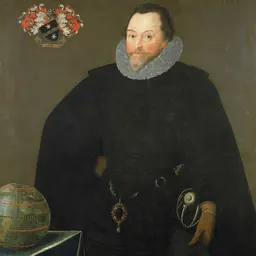
In 1583, Sister De Ovando was elected prioress. Its chapel wasn't even finished when, in 1586 the English privateer Francis Drake's sacking destroyed it. When the corsair left, De Ovando helped lead the restoration efforts of the monastery, whose nuns had to live almost on the charity of the neighbors for several years. Still, in 1599, the walls of the temple were raised at half height. Although we have no other testimonies to date, it is striking that just two years after this religious and secular persecution, Sister Leonor died in the convent of Santa Catalina around 1610.
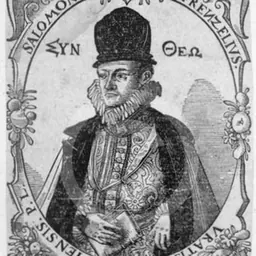
Literary work We know very little about her poetic production: just five sonnets and a few individual verses (los versos blancos). They are related to the love of the divine and some of her sonnets respond to the poetic work of Eugenio de Salazar, who in 1574, she began her poetic exchange with during the first year of his stay in Hispaniola. This literary production had remained unpublished until it was discovered by the Spanish literary critic Marcelino Menéndez Pelayo and included in his Anthology of Hispanic-American Poets. The compositions were the result of correspondence between Ovando and Salazar. Four of the five sonnets correspond to special festivals on the Catholic calendar: Christmas, Epiphany, Easter and Pentecost.
According to Justo Planas, Ovando's surviving works are indicative of early culture on the island.Her poems, in dialogue with the Spanish [writer] Eugenio de Salazar, are evidence that there was a literate community in Hispaniola. The only one that has survived today of her poetic voice was part of a concert. This is made evident by the fluency of her verse that comes from a habitual practice and a context of critical readers and writers to emulate.
Don’t just read it —
keep it.
Full-length biographies made to live with: read them, listen on the way to work, watch them tonight.
- E-book
- Audio
- Video
Instant download · yours to keep · every purchase keeps this site free
Important facts
People in Leonor de Ovando's life
Named in this biography and alive at the same time

Related people
Same field, nearest in time


Contemporaries
People whose lives overlapped Leonor de Ovando's





Frequently asked questions
Who was Leonor de Ovando?
Dominican poet and cloistered nun
When was Leonor de Ovando born?
Leonor de Ovando was born in 1544 in Santo Domingo.
When did Leonor de Ovando die?
Leonor de Ovando died in 1611 in Dominican Republic, Santo Domingo.
What was Leonor de Ovando's occupation?
Leonor de Ovando was a poet and cloistered nun.
Sources & further reading
Cite this page
APA: Biography.guide. (2026). Leonor de Ovando. https://biography.guide/leonor-de-ovando/
MLA: "Leonor de Ovando." Biography.guide, https://biography.guide/leonor-de-ovando/.
Chicago: "Leonor de Ovando." Biography.guide. https://biography.guide/leonor-de-ovando/.
Data last updated: 2026-09-22 · Spot an error? Report a correction.
Page generated 2026-09-27 04:59 UTC