
About Leonie Brandt
Lived 1901 – 1978 (aged 76). Leonie Brandt was a Dutch and German actor and double agent.
Leonie Brandt (28 October 1901 – 27 January 1978), born as Gertrud Franziska Pütz and also known by the stage name Leonie Reiman, was a German-Dutch actress and double agent. Before and during World War II, she spied for both the Netherlands and Germany. She gained post-war notoriety due to Pieter Menten and the . Many stories about her life are questionable, as she was often the sole source.
Biography Youth Gertrud Franziska Pütz, known as Leonie, was born in 1902 in Bissen, a district in the German city of Würselen. She was the daughter of miner Johann Paul Pütz (1877–?) and Johanna Hubertina Hermanns (1881–?). She was the oldest of four children, having one sister and two brothers. Her maternal grandparents had a Dutch background and lived in the same building, with whom Pütz spent much of her time.
During World War I, Pütz smuggled food from neutral Netherlands, five kilometers away. In December 1915, she was caught by German customs officers on one of her smuggling trips. They recruited her to carry information across the border, hidden in the linings of coats that she had to exchange.
After World War I, Pütz became a nurse. According to herself, she worked in Paris, Aachen, and Metz, where she allegedly carried out tasks for the military intelligence service. On 4 April 1921, Brandt married customs officer Karl Walter Reuber (1891–?) from Aachen. They divorced on 18 November 1923.
Moving to the Netherlands Brandt (right) in the comedy "My father and I" by Gustaaf Esmann in 1928. Afterwards, Pütz moved to the Netherlands, first to 's-Hertogenbosch and then registered in Amsterdam on 25 April 1925. A year after arriving, Pütz already played in theatre groups. From 1926, she performed with Het Schouwtooneel. She occasionally played lead roles, with Ko van Dijk Sr. as her co-star. She left Het Schouwtooneel after an elderly patron made "indecent proposals" to her.
Brandt (right) in the comedy "Zijne Hoogheid De Prins" in 1928. On 12 February 1929, Pütz married baker Karl Ludwig Wilhelm Brandt (1884–1949), taking his surname. With him, she had two children: Marie Louise (Loek) (1932–2019) and a son (1935). After the marriage, she temporarily stopped acting to help out in his bakery, which was short-staffed.
In 1929, Brandt traveled to Bad Godesberg near Bonn to meet writer . She stayed at Rheinhotel Dreesen, where Adolf Hitler, a frequent guest, gave a presentation about his party's program to Von Hatzfeld and others. Brandt asked him about the role of women in his envisioned state, to which Hitler responded that women had yet to earn their place in his state.
During this time, she met Public Prosecutor Johan van Thiel, with whom she was rumored to have been romantically involved. He was head of the intelligence apparatus in the arrondissement of Amsterdam. Brandt performed tasks for this network. She wrote the play The Public Prosecutor , supposedly based on her experiences with Van Thiel. The play was performed once in 1931. She later wrote two more plays, Becoming mother (1933) and Madame Polenska (1936).
Espionage In the 1930s, she reportedly worked on behalf of the intelligence service of the Rijksrecherche and GS III. She traveled to Germany for this purpose and gathered information on the Dutch National Socialist Movement (NSB). She maintained contacts with Dutch Minister of Justice Carel Goseling and German General Eduard Wagner.
From 1939, Brandt also worked for the German Sicherheitsdienst. That year, she opened the "Paneelclub" in the Hirschgebouw, which both the German and Dutch governments had funded. In March 1940, she was arrested by the Gestapo during a visit to Germany, suspected of treason. Months later, she was released after promising not to contact Dutch agents or the Abwehr. By then, the Netherlands had been occupied by Germany, and the "Paneelclub" was closed. The book was reissued by Just Publishers in 2019. A year later, the documentary by Annette Apon, based on Aalders' book, was released.
Since 2022, the dossier of the Domestic Security Service (BVD) on Brandt has been available for inspection at the National Archive. One of the four folders is missing, the one covering the period before 1948. The missing folder is marked "Reference=C (Pr. B. espionage)". The dossier was presumably never transferred by the BVD's successor, the AIVD, and that service has also been unable to locate it.
Don’t just read it —
keep it.
Full-length biographies made to live with: read them, listen on the way to work, watch them tonight.
- E-book
- Audio
- Video
Instant download · yours to keep · every purchase keeps this site free
Important facts
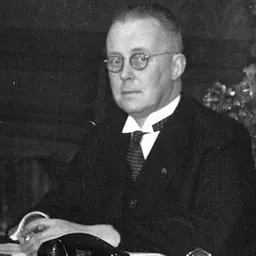
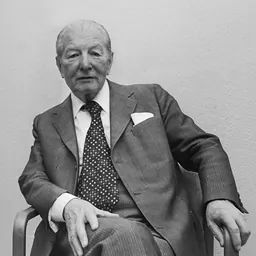
People in Leonie Brandt's life
Named in this biography and alive at the same time



Related people
Same field, nearest in time



Contemporaries
People whose lives overlapped Leonie Brandt's


Frequently asked questions
Who was Leonie Brandt?
German-Dutch actress and double agent (1901-1978)
When was Leonie Brandt born?
Leonie Brandt was born on 28 October 1901 in Bissen.
When did Leonie Brandt die?
Leonie Brandt died on 27 January 1978 in Amsterdam.
What was Leonie Brandt's occupation?
Leonie Brandt was an actor and double agent.
What nationality was Leonie Brandt?
Leonie Brandt was Dutch and German.
Sources & further reading
Cite this page
APA: Biography.guide. (2026). Leonie Brandt. https://biography.guide/leonie-brandt/
MLA: "Leonie Brandt." Biography.guide, https://biography.guide/leonie-brandt/.
Chicago: "Leonie Brandt." Biography.guide. https://biography.guide/leonie-brandt/.
Data last updated: 2026-09-20 · Spot an error? Report a correction.
Page generated 2026-09-27 05:25 UTC