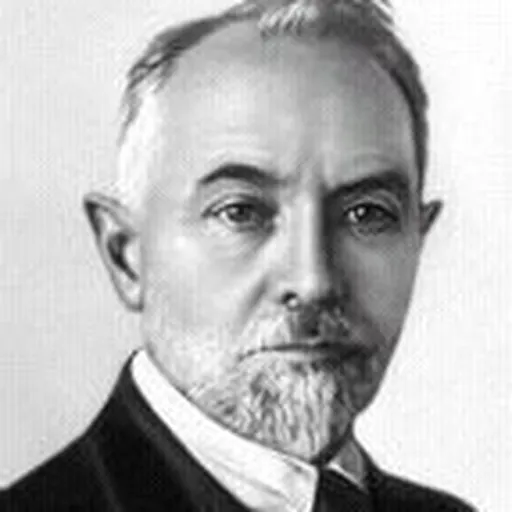
About Leonid Krasin
Lived 1870 – 1926 (aged 56). Leonid Krasin was a Russian diplomat, journalist, politician, businessperson, engineer and revolutionary.
Leonid Borisovich Krasin (; – 24 November 1926) was a Russian Soviet politician, engineer, social entrepreneur, Bolshevik revolutionary and a Soviet diplomat. In 1924 he became the first Soviet ambassador to France. A year later, he left Paris to become ambassador to London, where he remained until his death. He was an early and close associate of Vladimir Lenin and his financier and the first finance wizard of the Communist Party. Krasin died suddenly in London after having contracted pernicious anemia.
Early years Krasin was born on in Kurgan, Kurgansky Uyezd, Tobolsk Governorate, in the West-Siberian Governorate-General of the Russian Empire.
His father, Boris Ivanovich Krasin (1846–1901), was the local chief of police. The composer and Proletkult activist Boris Borisovich Krasin (1884–1936) was one of his younger brothers. He was educated at a technical school in Tyumen. He was a star pupil at school, and met the American explorer George Kennan when he visited Siberia.
In 1887, Krasin enrolled at the Petersburg Technological Institute, to study chemistry. He was briefly expelled from Saint Petersburg for his part in a student demonstration in 1890. On his return, in October, he joined a Marxist circle founded by Mikhail Brusnev, which was one of the first social democratic groups to make contact with factory workers. He was expelled from the Institute and banished from Petersburg again in 1891, for taking part in a student demonstration. He moved to Nizhny Novgorod where he started military service, only to be arrested in 1892 because of his link with Brusnev, and taken to Moscow, where he spent ten months in prison. After his release, he resumed military service in Tula. During a visit to St Petersburg, he delivered a talk to a Marxist circle organised by Stepan Radchenko, and was aggressively challenged by Vladimir Ulyanov, later known as Lenin, who was in the audience.
In 1893, Krasin visited Leo Tolstoy, the author of War and Peace, who lived nearby, but, according to Krasin's wife, Liubov, who was present, they argued so furiously about revolutionary politics that Tolstoy "began to stamp with rage." Later, Krasin also became friendly with the writer Maxim Gorky, who described Krasin as:
Arrested again in January 1895, he spent three months in prison before being deported to Irkutsk, where he worked as a draughtsman on the Trans-Siberian Railway. He graduated from Kharkov Technological Institute in 1901. although, unlike Lenin, Krasin was a 'conciliator' who hoped to re-unite the opposing factions of the RSDLP. He lived his double life as an apparently law-abiding factory-manager so convincingly that the workers at one point called for his dismissal, unaware that he was secretly helping produce the literature that encouraged them to resist.
Krasin raised the money from wealthy liberals that made it possible for the RSDLP to organise its first clandestine printing-press in Baku, a huge underground operation accessed by a disappearing trap-door designed by Krasin. This Nina Printing House, whose main operators were Lado Ketskhoveli and Avel Yenukidze, became for a period the main vehicle for Vladimir Lenin's newspaper Iskra.
After contracting malaria, Krasin left Baku in 1904 for the sake of his health. He obtained a job as the chief engineer for the industrialist, Savva Morozov who owned textile works in Orekhovo-Zuyevo, near Moscow, and to whom he had been introduced by Maxim Gorky. Morozov gave Krasin 2000 rubles per month to support the Bolsheviks and for other needs.
In April 1905 in London, Krasin chaired the Third Congress of the RSDLP, called to create a Bolshevik organisation that excluded Mensheviks and others, and was re-elected to the Central Committee. He was also the Bolsheviks' leading technical expert. His activities were a tight secret at the time. His wife, Liubov, whom he married in 1904, appears to have known nothing about them. In her memoirs, she wrote that Krasin went to Moscow on party business "quite frequently" but was "reticent" about what he was doing there. "It was only many years afterwards that I found out from his friends something about the personal dangers he used to run."
Martyn Liadov, who led the Moscow Bolsheviks in 1905–06, said in memoirs published in 1928 that Krasin organised the bank robberies conducted by Bolsheviks to raise funds, and participated in planning the 1907 Tiflis bank robbery, in Yerevan Square, during which forty people were killed and fifty injured. Liadov also said that the bomb used to blow up the home of the Russian Prime Minister, Pyotr Stolypin in 1906 was made under Krasin's direction.
Yuri Felshtinsky identified Leonid Krasin as the most likely assassin of Savva Morozov, who died on 26 May 1905 in Cannes, France, by gunshot wound.
In summer 1907, Krasin clashed with Lenin over whether the Bolsheviks should participate in elections to the Third Duma. During a conference near Vyborg, in July 1907, Krasin and Alexander Bogdanov led the call for a boycott. Lenin refused to concede, and the Bolshevik faction split, with Krasin supporting the Vpered faction. Lenin, who was usually acerbic in such circumstances, remained complimentary towards Krasin, and continued to exhort him to rejoin the Party.
In 1908, Krasin was arrested in Russian-controlled Finland and held in Vyborg for 30 days. Released due to the lack of evidence against him, he emigrated to Berlin, gave up revolutionary activity and focused on his career as an engineer, working for Siemens. In 1912, he was appointed manager of their Moscow office, and in 1914 was made managing director of the Russian subsidiary, based in Saint Petersburg. By now a wealthy man, he was approached by a mutual friend, George Soloman, who asked for a donation for Lenin. Krasin reportedly told him: "Lenin doesn't deserve help. He's a destructive type and you can never tell what wild scheme will suddenly emanate from his Tatar skull. To hell with him!"
During 1917, Krasin supported the Provisional Government, predicting that a Bolshevik revolution would bring a "rush headlong into anarchy", but early in 1918 he returned to the fold and rejoined the Bolsheviks. He was appalled by the Red Terror in September 1918, telling his wife that it was "one of the most disgusting acts of neo-Bolsheviks ... I had to fight for the release of at least thirty engineers - not a pleasant or easy job."
In the Russian Bolshevik government Krasin served as People's Commissar of Foreign Trade from 1920 to 1924.
Diplomatic career
Krasin met E. F. Wise in Copenhagen in April 1920. Wise was representing the Entente's Supreme Economic Council; with him Krasin negotiated the Anglo-Soviet Trade Agreement, signed in March 1921. In 1924 Krasin was elected to the Communist Party's Central Committee, an office he held until his death in 1926.
In Paris in 1921, he established the second Soviet overseas bank as the Commercial Bank for Northern Europe or BCEN-Eurobank.
After Krasin's organized Bolshevik supporters obtained BCEN-Eurobank in Paris as the first overseas Soviet bank, which was known as the All-Russian Cooperative Limited Liability Company "ARCOS" . It supported Bolshevik control of the Moscow Narodny Bank in London, which had formed in October 1919, through Centrosoyuz as the next Soviet bank located overseas.
Lenin died in January 1924. Shortly afterwards Krasin wrote an article on "The Immortalization of Lenin" and proposed a monument containing Lenin's corpse that would become a center of pilgrimage like Jerusalem or Mecca. Krasin, along with Anatoly Lunacharsky, announced a contest for designs of the permanent monument/mausoleum. Krasin also attempted - unsuccessfully - to preserve Lenin's body cryogenically.
Personal life
Despite his Siberian upbringing, Krasin was considered one of the most urbane and westernised of the leading Bolsheviks. The Menshevik Simon Liberman, who worked with Krasin in Russia in the 1920s, wrote that:
He and his wife were the parents of three daughters, including:
Liubov Krasin, who married French politician and diplomat Gaston Bergery, founder of the Frontist Party, from whom she was divorced in 1928. After the Second World War she married French politician and journalist Emmanuel d'Astier de La Vigerie. They were an acquaintance of Svetlana Alliluyeva. Ludmilla Krasin, who was reportedly engaged to the Duc de La Rochefoucauld in 1927. She married John Mathiessen Mathias (1906–1963), a son of Robert Moritz Mathias.
While Krasin was negotiating formal recognition of the Bolshevik government by the United Kingdom and France, and despite remedies proposed by his old friend, the physician Alexander Bogdanov, he died from a blood disease. Krasin's funeral procession three days later included 6,000 mourners, many of them Bolshevik sympathizers; he was cremated at Golders Green Crematorium before being buried at the Kremlin Wall Necropolis in Moscow.
Honors and legacy
During the Great Purge and until Stalin's death in 1953, he was largely omitted from the history of the Communist Party and the Soviet government.
Two icebreakers (one launched in 1917 and one in 1976) commemorated Krasin.
Texts "Our Trade Policy", Labour Monthly, Vol II, No.1, January 1922 Archive of Leonid Borisovič Krasin Papers at the International Institute of Social History
Don’t just read it —
keep it.
Full-length biographies made to live with: read them, listen on the way to work, watch them tonight.
- E-book
- Audio
- Video
Instant download · yours to keep · every purchase keeps this site free
Important facts
People in Leonid Krasin's life
Named in this biography and alive at the same time

Related people
Same field, nearest in time

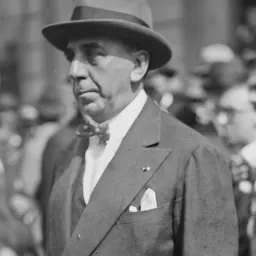
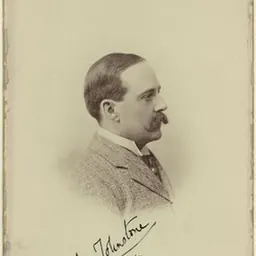
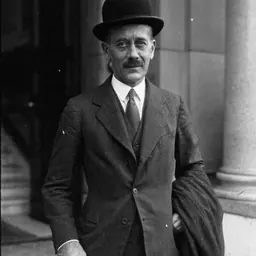
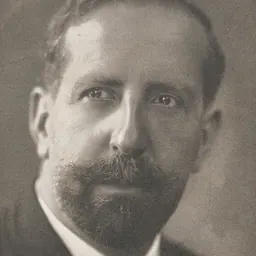
Contemporaries
People whose lives overlapped Leonid Krasin's



Frequently asked questions
Who was Leonid Krasin?
Russian revolutionary (1870-1926)
When was Leonid Krasin born?
Leonid Krasin was born on 15 July 1870 in Kurgan.
When did Leonid Krasin die?
Leonid Krasin died on 24 November 1926 in London.
What was Leonid Krasin's occupation?
Leonid Krasin was a diplomat, journalist, politician, businessperson, engineer and revolutionary.
What nationality was Leonid Krasin?
Leonid Krasin was Russian.
Sources & further reading
Cite this page
APA: Biography.guide. (2026). Leonid Krasin. https://biography.guide/leonid-krasin/
MLA: "Leonid Krasin." Biography.guide, https://biography.guide/leonid-krasin/.
Chicago: "Leonid Krasin." Biography.guide. https://biography.guide/leonid-krasin/.
Data last updated: 2026-09-23 · Spot an error? Report a correction.
Portrait: Wikimedia Commons · author & licence
Page generated 2026-09-27 05:07 UTC