
About Leonard Owen
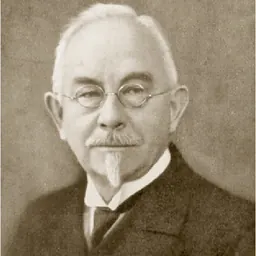
Lived 1897 – 1971 (aged 74). Leonard Owen was a civil engineer, known for Calder Hall.
Sir William Leonard Owen (3 May 1897 – 25 March 1971) was a British civil engineer and nuclear engineer. As Director of Engineering at the British Atomic Energy Project, he oversaw the construction of the Springfields Chemical and Fuel Element Plants, the Windscale Piles, Windscale plutonium extraction plant, Capenhurst gaseous diffusion plant and the Calder Hall nuclear power station.
Biography Owen was born in 1897 in Walton, Liverpool, England, He was educated at Liverpool Collegiate School. The First World War broke out while he was there, and he joined the 6th Liverpool Regiment, and served on the Western Front.
After the war he entered the University of Liverpool, where he studied engineering. He was awarded his Bachelor of Engineering degree with honours in 1922, and a Master of Engineering degree in 1924.
Owen took a position with the Brunner Mond Company in Northwich in 1922, and became a project engineer at one of its chemical plants. After the war began, Hinton and Owen were seconded to the Ministry of Supply, with Owen serving under Hinton as a director of the Royal Filling Factories. In this role he was responsible for their plant and equipment.
With the establishment of the United Kingdom Atomic Energy Authority (UKAEA) in 1954, Owen became the Director of Engineering and Deputy Managing Director of its Industrial Group. When Hinton moved on to become the chairman of the Central Electricity Generating Board in 1957, Owen became the managing director. and awarded an honorary Doctor of Science degree by the University of Manchester in 1960. He was on the Council of the University of Liverpool, and was chairman of the committee responsible building the new Mechanical Engineering Building and the Oliver Lodge Laboratory. He was chairman of the British Nuclear Energy Society and a member of the Institution of Civil Engineers, serving on its Publications Committee and its General Purposes Committee. Owen died at his home, in Beaumaris, Anglesey, in north Wales on 25 March 1971. His papers are in the University of Liverpool.
Don’t just read it —
keep it.
Full-length biographies made to live with: read them, listen on the way to work, watch them tonight.
- E-book
- Audio
- Video
Instant download · yours to keep · every purchase keeps this site free
Important facts
People in Leonard Owen's life
Named in this biography and alive at the same time


Related people
Same field, nearest in time



Contemporaries
People whose lives overlapped Leonard Owen's



Frequently asked questions
Who was Leonard Owen?
Owen, Sir (William) Leonard (1897–1971), atomic engineer
When was Leonard Owen born?
Leonard Owen was born on 17 January 1897 in Walton.
When did Leonard Owen die?
Leonard Owen died on 17 January 1971 in Beaumaris.
What was Leonard Owen's occupation?
Leonard Owen was a civil engineer.
What was Leonard Owen known for?
Leonard Owen was known for Calder Hall.
Sources & further reading
Cite this page
APA: Biography.guide. (2026). Leonard Owen. https://biography.guide/leonard-owen/
MLA: "Leonard Owen." Biography.guide, https://biography.guide/leonard-owen/.
Chicago: "Leonard Owen." Biography.guide. https://biography.guide/leonard-owen/.
Data last updated: 2026-09-20 · Spot an error? Report a correction.
Page generated 2026-09-27 04:57 UTC