
About Leonard Digges
Lived 1588 – 1635 (aged 46–47). Leonard Digges was a poet and translator.
Leonard Digges (; 1588 – 7 April 1635) was a Hispanist and minor poet, a younger son of the astronomer Thomas Digges (1545–95) and younger brother of Sir Dudley Digges (1583–1639). After his father's death in 1595, his mother married Thomas Russell of Alderminster, now in Warwickshire, who was named by William Shakespeare as one of the two overseers of his will. There are varying opinions about the extent to which the young Leonard Digges might have been influenced in his choice of profession by his stepfather's association with Shakespeare; disagreements about whether he was or was not personally acquainted with the playwright have in recent years eclipsed discussion of the work of Digges himself.
Life Leonard Digges matriculated at University College, Oxford in 1603, the year of his mother's remarriage, and graduated BA in 1606.
Anthony à Wood said of Leonard Digges that he "was esteemed by those who knew him in Univ.coll. a great master of the English language, a perfect understander of the French and Spanish, a good poet, and no mean orator". Wood says also that "upon his supplication made to the venerable convocation" of University College Oxford, Digges was made M.A. in 1626, "in consideration that he had spent many years in good letters in transmarine universities". He lived in the College from then until his death in 1635, and was buried in the College chapel (no longer standing).
Works Digges translated Claudian's The Rape of Proserpine (printed 1617). His translation of Varia fortuna de soldado Píndaro, by Gonzalo de Céspedes y Meneses, was published in 1622 as Gerardo, the Unfortunate Spaniard, and was used by John Fletcher as a source for his plays The Spanish Curate and The Maid in the Mill.
Digges's publisher was Edward Blount, a close friend of Mabbe's and one of the syndicate which published Shakespeare's First Folio in 1623. Digges and Mabbe both contributed prefatory poems to the Folio, as did Ben Jonson – also published by Blount. The previous year, Digges and Jonson had both contributed commendatory verses to a work translated by Mabbe and published by Blount. Commendatory verses by Digges were also included in an edition of Shakespeare's Poems, published by John Benson in 1640, five years after Digges had died. Freehafer suggests that since these verses refer to Shakespeare's plays rather than to his poems, they may have been intended for the Second Folio.
Don’t just read it —
keep it.
Full-length biographies made to live with: read them, listen on the way to work, watch them tonight.
- E-book
- Audio
- Video
Instant download · yours to keep · every purchase keeps this site free
Important facts
People in Leonard Digges's life
Named in this biography and alive at the same time

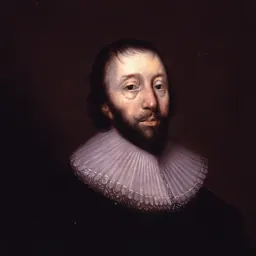
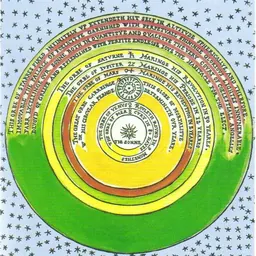




Related people
Same field, nearest in time

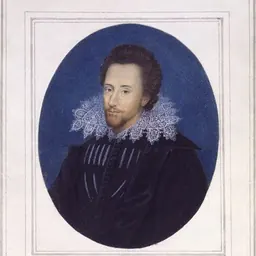
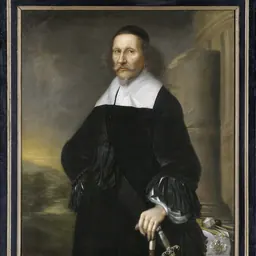
Contemporaries
People whose lives overlapped Leonard Digges's


Frequently asked questions
Who was Leonard Digges?
English Hispanist and poet
When was Leonard Digges born?
Leonard Digges was born in 1588.
When did Leonard Digges die?
Leonard Digges died on 7 April 1635.
What was Leonard Digges's occupation?
Leonard Digges was a poet and translator.
Sources & further reading
· DBpedia: Leonard Digges (writer)
Cite this page
APA: Biography.guide. (2026). Leonard Digges. https://biography.guide/leonard-digges-poet/
MLA: "Leonard Digges." Biography.guide, https://biography.guide/leonard-digges-poet/.
Chicago: "Leonard Digges." Biography.guide. https://biography.guide/leonard-digges-poet/.
Data last updated: 2026-09-20 · Spot an error? Report a correction.
Page generated 2026-09-27 05:01 UTC