
About Leon Underwood
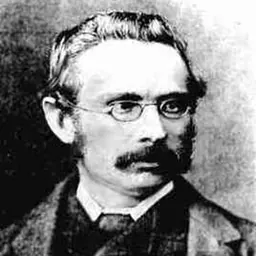
Lived 1890 – 1975 (aged 84). Leon Underwood was a British painter, sculptor and illustrator.
George Claude Leon Underwood (25 December 1890 – 9 October 1975) was a British artist. Although primarily known as a sculptor, printmaker and painter, he was also an influential teacher and promoter of African art. His travels in Mexico and West Africa had a substantial influence on his art, particularly on the representation of the human figure in his sculptures and paintings. Underwood is best known for his sculptures cast in bronze, carvings in marble, stone and wood, and his drawings. His lifetime's work includes a wide range of media and activities, with an expressive and technical mastery. Underwood did not hold modernism and abstraction in art in high regard and this led to critics often ignoring his work until the 1960s when he came to be viewed as an important figure in the development of modern sculpture in Britain.
Biography Early life Underwood was born in the west London suburb of Shepherd's Bush. He was the eldest of the three sons of George Underwood, a fine art dealer and he attended Hampden Gurney School. From 1907 to 1910 he attended the Regent Street Polytechnic in central London before studying at the Royal College of Art for three years. While still a student in 1911, Underwood was commissioned to paint a mural for the Peace Palace in The Hague. In 1913 he visited Russia to study the depiction of horses in traditional Russian art.
World War I
In the First World War, Underwood enlisted in the Royal Horse Artillery before transferring to a field battery unit and then serving as a Captain in the Camouflage Section of the Royal Engineers. Underwood's duties on the Western Front included going into No man's land to make detailed drawings of trees which were later replaced with metal replicas used by military observers. He sketched and painted scenes of this work, notably in his 1919 oil painting Erecting a Camouflage Tree, which was intended for the, never built, British national Hall of Remembrance and was in turn purchased by the Imperial War Museum.
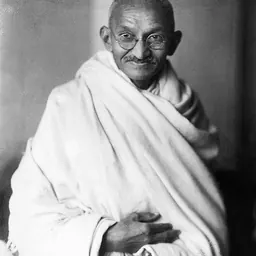
1920s and 1930s After the war Underwood attended the Slade School of Art for a year's refresher course and in 1920 received the British Prix de Rome but chose not to go to Italy, instead using the grant to travel elsewhere later in the decade. In his Hammersmith studio Underwood set up a private art school, the Brook Green School, which he ran, intermittently, until 1938. In 1925, with some of his past pupils, Underwood created the English Wood-Engraving Society to promote the art form. Underwood spent 1926 in the United States where he published an illustrated book of verse, Animalia, illustrated some volumes by others and also painted and made engravings. In Greenwich Village he opened a life-drawing school. In 1927 he went to Mexico, spending five months travelling and studying Aztec and Mayan art forms. With funding from Eileen Agar, Underwood co-founded a graphical quarterly magazine, The Island, in 1931 which, despite contributions from Henry Moore, Agar, CRW Nevinson and Mahatma Gandhi was only published for four issues. From 1932 to 1934, Underwood made a series of sculptures of dancing figures including Herald of New Day, the plaster cast of which is now in the Tate collection. In 1934 he published an artistic manifesto, Art for Heaven's Sake: Notes on a Philosophy of Art. Underwood was always convinced that subject matter formed a fundamental role behind the power of both his own and primitive art, and had no belief in subject-less or purely abstract form in his own work. Underwood's 1935 lignum vitae carving African Madonna, or Black Virgin, was inspired by a Bantu carving and is sited in St George's Cathedral, Cape Town.
Underwood's 1937 bronze sculpture of King George VI, now in the National Portrait Gallery, London, had originally been intended to be of Edward VIII but was reworked after the abdication of December 1936. When first shown in public, the Buckingham Palace authorities asked that it be removed from view. Moore later spoke of his indebtedness to Underwood's teaching. In 1961 Underwood was elected an Honorary Member of the Royal Society of Sculptors and further recognition followed in 1969 when the first full-scale retrospective of his work was held at The Minories in Colchester. However it was to be over forty years before the next major retrospective of his work was held, in 2015 at the Pallant House Gallery.
Underwood was married to Mary Coleman. They first met in 1911 at the Royal College of Art, married in 1917 and their first child was born in 1919. They had two sons, Garth (a zoologist) and John, and one daughter, Jean.
Public commissions the Tate Gallery, London (8 works) the National Portrait Gallery, London, (2 works) the Victoria and Albert Museum, London, archive of 206 drawings and sketches the National Museum Cardiff (two works) the British Council Collection, London, (five works) (15 works) The Victor Batte-Lay Trust Collection at The Minories (two works) The Brooklyn Museum (three works) Leamington Spa Art Gallery & Museum (six works) the Henry Moore Institute in Leeds hold archives of Underwood's correspondence and other material.
Exhibitions Leon Underwood, Mexican Wood engravings. St George's Gallery, 1928 Leon Underwood, Mexican watercolours. St George's Gallery, 1929 Sculpture, Paintings, Drawings and Engravings by Leon Underwood. Leicester Galleries, 1934 Sculpture in the Home. Arts Council, 1946 Leon Underwood. Beaux Arts Gallery, 1953 Bronzes and Wood Engravings by Leon Underwood. Thomas Agnew & Sons, 1973 Leon Underwood, Mexico and After. National Museum of Wales, 1979 Modern British Sculpture. Royal Academy of Arts, 2011 Mexico A revolution in art 1910-1940. Royal Academy of Arts, 2013 The Sensory War 1914-2014. Manchester Art Gallery, 2014 Leon Underwood, Figure and Rhythm. Pallant House Gallery, 2015 Becoming Henry Moore. Henry Moore Foundation, 2017
Don’t just read it —
keep it.
Full-length biographies made to live with: read them, listen on the way to work, watch them tonight.
- E-book
- Audio
- Video
Instant download · yours to keep · every purchase keeps this site free
Important facts
People in Leon Underwood's life
Named in this biography and alive at the same time







Related people
Same field, nearest in time


Contemporaries
People whose lives overlapped Leon Underwood's




Frequently asked questions
Who was Leon Underwood?
British artist (1890-1975)
When was Leon Underwood born?
Leon Underwood was born on 25 December 1890 in Shepherd's Bush.
When did Leon Underwood die?
Leon Underwood died on 9 October 1975 in London.
What was Leon Underwood's occupation?
Leon Underwood was a painter, sculptor and illustrator.
What nationality was Leon Underwood?
Leon Underwood was British.
Sources & further reading
Cite this page
APA: Biography.guide. (2026). Leon Underwood. https://biography.guide/leon-underwood/
MLA: "Leon Underwood." Biography.guide, https://biography.guide/leon-underwood/.
Chicago: "Leon Underwood." Biography.guide. https://biography.guide/leon-underwood/.
Data last updated: 2026-09-20 · Spot an error? Report a correction.
Page generated 2026-09-27 05:15 UTC