
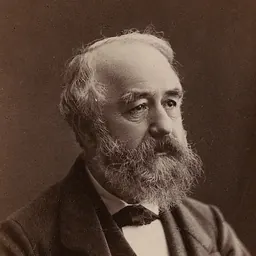
Léon Fiévez
Colonial official
About Léon Fiévez
Lived 1855 – 1939 (aged 84). Léon Fiévez was a Belgian.
Victor Léon Fiévez (30 April 1855 – 27 May 1939) was a Belgian official of the Congo Free State. While employed by the Congo Free State, Fiévez became notorious for his cruel methods of enforcing rubber production in his territory, included the wide-scale oppression and killing of native Congolese. Fiévez's actions accrued significant coverage in the foreign press, forcing his removal from office and return to Belgium.
Biography Fiévez was born to a farming family in Wallonia, Belgium. In 1888 he was recruited into the Force Publique, a military force formed to garrison Leopold II of Belgium's Congo Free State, arriving in the Congo in the town of Boma. Though the conquest of the Congo was well underway by 1888, Fievez quickly became noted as a particular effective soldier, successfully leading military expeditions in the upper Congo. In late 1891 he was forced by illness to return to Belgium, but by 1893 had returned to the Congo. When the commissioner for the crown-controlled district of Équateur, former explorer Charles Lemaire, was wounded in 1893, colonial administrators (who had been dissatisfied with Lemaire's level of rubber production) replaced him with Fiévez. Villages that were unwilling or unable to provide food or rubber were looted and burned.
Fiévez's brutal methods took a large toll on Équateur – in late 1894 alone, over 160 villages were burned and looted by his forces with thousands of Congolese being killed or captured for use as forced labourers. His policy suppressed local resistance, allowed for his district to cut costs, and resulted in Équateur producing the most rubber (650 tons) out of any Free State district in 1895 – a result which a Free State government source described as "unequalled". However, Fiévez's methods were increasingly seen as overly brutal and as a liability to the Free State; this issue was compounded as word of the atrocities in his district spread and were reported on by British and American missionaries working in the Congo. His position as commissioner was not renewed in 1896 and he returned to Belgium in May of that year. In 1897 he returned to the Congo to become commission for Ubangi district, which had previously been abandoned by the Free State authorities.
In 1899, Fiévez was sanctioned by a Free State court for the execution of two men, the deadly assault of another man, and multiple assaults on several women. This case established legal precedent that it was illegal for the Free State to employ Congolese as forced labourers, but Fiévez himself was acquitted. He returned to Belgium in 1900, dying in 1939.
Don’t just read it —
keep it.
Full-length biographies made to live with: read them, listen on the way to work, watch them tonight.
- E-book
- Audio
- Video
Instant download · yours to keep · every purchase keeps this site free
Important facts
People in Léon Fiévez's life
Named in this biography and alive at the same time

Contemporaries
People whose lives overlapped Léon Fiévez's




Frequently asked questions
Who was Léon Fiévez?
colonial official
When was Léon Fiévez born?
Léon Fiévez was born on 30 April 1855 in Havré.
When did Léon Fiévez die?
Léon Fiévez died on 27 May 1939 in Brussels.
What nationality was Léon Fiévez?
Léon Fiévez was Belgian.
Sources & further reading
Cite this page
APA: Biography.guide. (2026). Léon Fiévez. https://biography.guide/leon-fievez/
MLA: "Léon Fiévez." Biography.guide, https://biography.guide/leon-fievez/.
Chicago: "Léon Fiévez." Biography.guide. https://biography.guide/leon-fievez/.
Data last updated: 2026-09-20 · Spot an error? Report a correction.
Page generated 2026-09-27 05:01 UTC