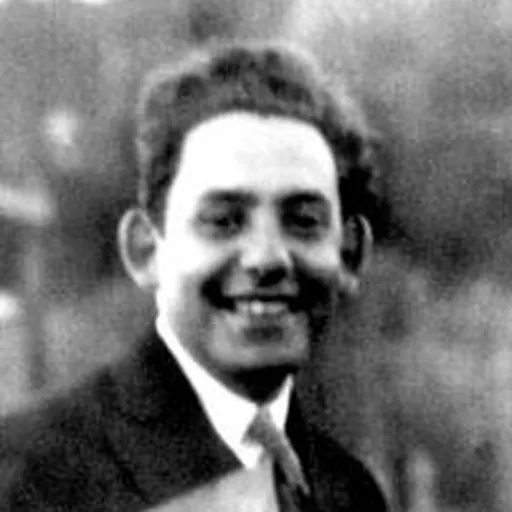
About Leo Smit
Lived 1900 – 1943 (aged 42). Leo Smit was a Dutch composer and pianist.
Leopold "Leo" Smit (14 May 1900 – 30 April 1943) was a Dutch composer, murdered during The Holocaust at the Sobibor extermination camp.
Life He came from a mixed Ashkenazi and Portuguese-Sephardi Jewish family. He was born at 17, Amsterdam, and studied piano at the Conservatorium van Amsterdam with Sem Dresden and Ulfert Schults and then composition with Bernard Zweers and Sem Dresden.
In 1927 he moved to Paris, where the music of Maurice Ravel and Igor Stravinsky made a deep impression on him. Here he was in close contact with the group of composers known as Les Six, which included Darius Milhaud, Arthur Honegger, and Francis Poulenc. He married Lien de Vries in Amsterdam in January 1933. At the end of 1936, Smit moved to Brussels, where he stayed for a year. In late 1937, he returned to Amsterdam, where he completed his last work, the sonata for flute and piano, on February 12, 1943. On April 27, 1943 he was deported to Sobibor, where he was killed three days later.
After his death there was for a time little interest in his music, but since the late 1980s, his work has been performed regularly. A 4-CD box set containing his complete works, Kamermuziek en Orkestwerken (NM 93003) has been issued.
Compositions Sonata for Flute and Piano (1943); orchestrated in 1989 by Willem Strietman String Quartet (1939–1943) Divertimento for Piano 4-Hands (1940); orchestrated in 2008 by Andries van Rossem and in 2022/2025 by Peter Bouma Concerto for Viola and String Orchestra (1940) De bruid (The Fiancée) for Female Chorus (1939); words by Jan Prins Suite for Oboe and Cello (1938) Trio for Clarinet, Viola and Piano (1938) Kleine Prelude van Ravel for Alto and Piano (1938); poem by Martinus Nijhoff La Mort (Death) for Soprano, Alto and Piano (1938); words by Charles Baudelaire Concerto for Piano and Wind Orchestra (1937) Concertino for Cello and Orchestra (1937) Symphonie in C (1936) Sextet for Flute, Oboe, Clarinet, Bassoon, Horn and Piano (1933) Concertino for Harp and Orchestra (1933) Deux hommages for Piano (1928–1930) Schemselnihar, Ballet for orchestra (1929) Quintet for Flute, Violin, Viola, Cello and Harp (1928) Trio for Flute, Viola and Harp (1926) Suite for Piano (1926); Forlane et Rondeau, movements freely orchestrated in 1958 by Godfried Devreese Silhouetten for Orchestra (1925) Voorspel tot Teirlincks "De vertraagde film" (Overture to Teirlinck's "De Vertraagde Film") for Orchestra (1923) Twintig eenvoudige oefeningen (20 Simple Exercises) for Piano Twaalf stukken voor 4 handen (12 Pieces) for Piano 4-Hands
Don’t just read it —
keep it.
Full-length biographies made to live with: read them, listen on the way to work, watch them tonight.
- E-book
- Audio
- Video
Instant download · yours to keep · every purchase keeps this site free
Important facts
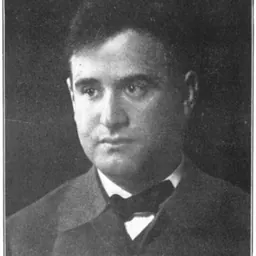
People in Leo Smit's life
Named in this biography and alive at the same time






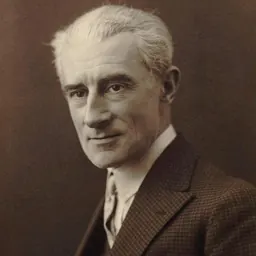
Related people
Same field, nearest in time
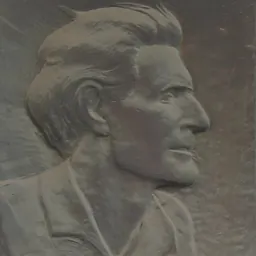



Contemporaries
People whose lives overlapped Leo Smit's


Frequently asked questions
Who was Leo Smit?
Dutch musician (1900–1943)
When was Leo Smit born?
Leo Smit was born on 14 May 1900 in Amsterdam.
When did Leo Smit die?
Leo Smit died on 30 April 1943 in Sobibór Extermination Camp.
What was Leo Smit's occupation?
Leo Smit was a composer and pianist.
What nationality was Leo Smit?
Leo Smit was Dutch.
Sources & further reading
· DBpedia: Leo Smit (Dutch composer)
Cite this page
APA: Biography.guide. (2026). Leo Smit. https://biography.guide/leo-smit/
MLA: "Leo Smit." Biography.guide, https://biography.guide/leo-smit/.
Chicago: "Leo Smit." Biography.guide. https://biography.guide/leo-smit/.
Data last updated: 2026-09-21 · Spot an error? Report a correction.
Portrait: Wikimedia Commons · author & licence
Page generated 2026-09-27 04:59 UTC