
Leo III
Pope of the Catholic Church from 795 to 816 (born 750–816)
About Leo III
Lived 750 – 816 (aged 65–66). Leo III was an Italian catholic priest, writer and catholic bishop.
Pope Leo III (; died 12 June 816) was bishop of Rome and leader of the Papal States from 26 December 795 to his death on 12 June 816.
Protected by Charlemagne from the supporters of his predecessor, Adrian I, Leo subsequently strengthened Charlemagne's position by crowning him emperor. The coronation was not approved by most people in Constantinople, although the Byzantines, occupied with their own defenses, were in no position to offer much opposition.
Rise According to the Liber Pontificalis, Leo was "of the Roman nation, the son of Atzuppius" (natione romanus ex patre Atzuppio). The Chronicon Anianense says, more specifically, that he was "born in Rome to Asupius and Elizabeth" (natus rome ex patre asupio matre helisabeth). Usually considered to be of Greek origin, his father's name may suggest an Arab background. An earlier person of the same name or nickname, Atzypios, was an iconoclast adversary of John of Damascus.
Leo seems to have known Greek.
He was elected on 26 December 795, the day Adrian I was buried, and consecrated on the following day. It is quite possible that this haste may have been due to a desire on the part of the Romans to prevent any interference by the Franks. With the letter informing the Frankish ruler Charlemagne that he had been unanimously elected pope, Leo sent him the keys of the confession of St. Peter, and the standard of the city, and requested an envoy. This he did to show that he regarded the Frankish king as the protector of the Holy See. In return, Charlemagne sent letters of congratulation and a great part of the treasure which the king had captured from the Avars.
Attack on Leo in 799
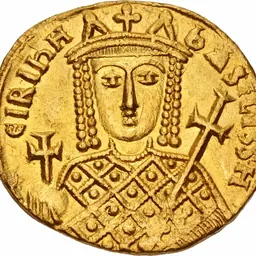
Prompted by jealousy, ambition, or the thought that only someone of the nobility should hold the office of pope, a number of relatives of Adrian I formed a plot to render Leo unfit to hold his office. On the occasion of the procession of the Greater Litanies, 25 April 799, when the pope was making his way towards the Flaminian Gate, he was suddenly attacked by armed men. He was dashed to the ground, and an effort was made to root out his tongue and tear out his eyes which left him injured and unconscious. He was rescued by two of Charlemagne's missi dominici, who came with a considerable force. There is, however, no reason to doubt that for some time previous the elevation of Charlemagne had been discussed, both at home and at Rome, especially since the imperial throne in Constantinople was controversially occupied by a woman, Irene of Athens, and since the Carolingian dynasty had firmly established its power and prestige. on the island. Nonetheless, Corsica, along with Sardinia, would still go on to be occupied by Muslim forces in 809 and 810.
Episcopal policy
Leo helped restore King Eardwulf of Northumbria and settled various matters of dispute between the archbishops of York and Canterbury.
Theological policy Pope Leo III unambiguously supported the current theological position in the West in his time: that Holy Spirit proceeds from both the Father and the Son; he stated on this position: "it is forbidden not to believe such a great mystery of the faith". However, he refused to change the creed which he said was the product of the "divine illumination" of the council fathers, and considered not everything needed for salvation was in the creed. Leo III "placed two silver shields in Rome with the uninterpolated creed in both Greek and Latin." The Liber Pontificalis states Leo III put those shields at the top of St. Peter's entrance "in his love for and as a safeguard for the orthodox and catholic apostolic faith" .
Death and legacy Leo III died in 816 after a reign of more than 20 years. He was originally buried in his own monument. However, some years after his death, his remains were put into a tomb that contained the first four popes named Leo. In the 18th century, the relics of Leo the Great were separated from his namesakes, and he was given his own chapel.
Leo III was canonized by Clement X, who, in 1673, had Leo's name entered in the Roman Martyrology.
Don’t just read it —
keep it.
Full-length biographies made to live with: read them, listen on the way to work, watch them tonight.
- E-book
- Audio
- Video
Instant download · yours to keep · every purchase keeps this site free
Important facts
People in Leo III's life
Named in this biography and alive at the same time

Related people
Same field, nearest in time

Contemporaries
People whose lives overlapped Leo III's



Frequently asked questions
Who was Leo III?
Pope of the Catholic Church from 795 to 816 (born 750–816)
When was Leo III born?
Leo III was born in 750 in Rome.
When did Leo III die?
Leo III died on 12 June 816 in Rome.
What was Leo III's occupation?
Leo III was a catholic priest, writer and catholic bishop.
What nationality was Leo III?
Leo III was Italian.
Sources & further reading
Cite this page
APA: Biography.guide. (2026). Leo III. https://biography.guide/leo-iii/
MLA: "Leo III." Biography.guide, https://biography.guide/leo-iii/.
Chicago: "Leo III." Biography.guide. https://biography.guide/leo-iii/.
Data last updated: 2026-09-20 · Spot an error? Report a correction.
Page generated 2026-09-27 05:23 UTC