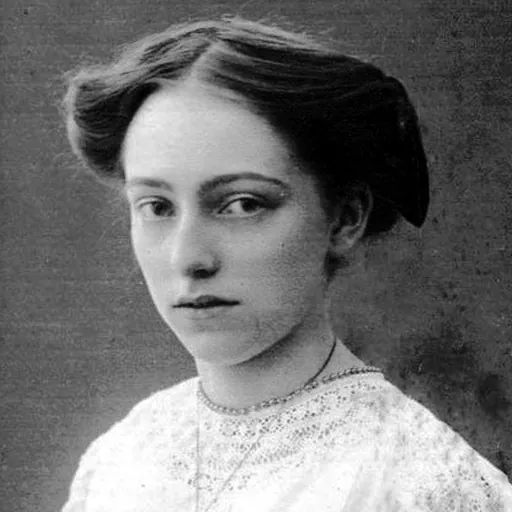
About Lene Voigt
Lived 1891 – 1962 (aged 71). Lene Voigt was a German writer and german language.
Lene Voigt (born Helene Wagner: 2 May 1891 - 16 June 1962) was a German writer and poet. Although some of her earlier work employed standard "Hochdeutsch" German, she is better remembered today for her poetry and prose texts written in the Upper Saxon dialect.
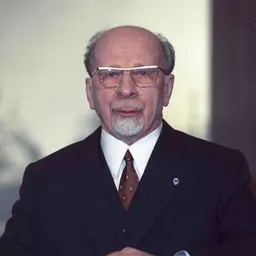
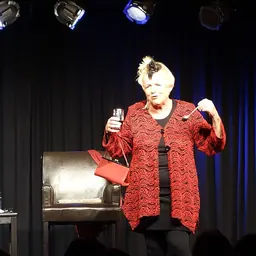
After 1945 her home city of Leipzig found itself in what became, in 1949, the German Democratic Republic (East Germany). For various reasons Voigt's work disappeared from the shelves during the National Socialist years: her hopes that it would return to the magazines and bookshops after 1945 were dashed. It is widely thought that this was, at least in part, because her Upper Saxon dialect writing was seen in some quarters as disrespectful. Walter Ulbricht, the national leader between 1949 and 1971, also came from Leipzig, which meant that the dialect and accent of Saxony were the dialect and accent of the leader. In West Germany, across the internal border, her work was again published during the 1950s, and after Walter Ulbricht left the stage it also experienced a revival in East Germany, where a particularly effective cheer leader was (and post-reunification remains) the cabaret artiste and impresario Gisela Oechelhaeuser.
Life Provenance Helene "Lene" Alma Wagner was born at her grandmother's home in Leipzig. The circumstances of her birth may have contributed to subsequent confusion as to its precise date. Her mother had already given birth in 1887 and again in 1888, but the first son had been born dead and the second died after three hours. The understandable anxiety accompanying Helene's birth meant that she was subjected to an "emergency baptism" on the day she was born. Her godparents were her mother's sister and grandmother along with a theology student who may also have been a maternal relative. The doctors gave the parents little reason to hope that their baby daughter might survive, but survive she did.
Success followed by dictatorship Until the Hitler government took power Lene Voigt now enjoyed a hitherto unfamiliar level of financial security. The rapid transition to one-party dictatorship during 1933 changed that. Even after 1933 her books failed to follow the official orthodoxies. Her humour was not to the liking of the authorities. She became an object of government suspicion and a target for Gestapo surveillance. She herself became increasingly unsettled, relocating to Lübeck in 1934 and to Flensburg in 1935. For a long time she lived only in rented furnished apartments. As part of this mission, the "Heimatwerk Sachsen" banned the Upper Saxon dialect. There was no longer any place for "Saxon comedy, joke makers and jewifying literati" , which had simply led to "mutilation of the language in Saxony" ("Verschandelung der sächsischen Sprache"). Lene Voigt was expressly identified as part of the problem. Upper Saxon dialect literature was "unheroic": it was almost all pulped.
The Ministry of Public Enlightenment and Propaganda placed a nationwide ban on further publication of Voigt's books. The security services were only too well aware that she not only wrote texts using Upper Saxon dialect, but that before 1933 she had also worked with politically left-leaning publications and that she had openly asserted her atheism. Voigt did not react robustly to the increasingly threatening situation in which she now found herself. Intensified surveillance, proscription, the publishing ban and the resulting economic hardship led her to a form of psychosis. Between 18 May and 15 June 1936 she was placed in a mental hospital in Schleswig for the treatment of mental instability and hallucinations. When she was released it was "without mental disorder". She herself diagnosed her illness as stemming from delusions of persecution. That may have been necessary to secure her release, but at least one commentator has questioned her use of the word "delusion" in this context. By this time, however. President Roosevelt, Prime Minister Churchill and Marshal Stalin had already agreed a postwar military settlement for the western two thirds of Germany which would divide the territory into four separate occupation zones. Under the agreement Leipzig was to be administered as part of the Soviet occupation zone. Accordingly, in July 1945 the United States army withdrew from the city and Soviet forces moved in. By this time both the publishing firms who had published Voigt's work before the National Socialists had banned it had moved what remained of their businesses from Leipzig to Munich, which had ended up under American military occupation. Over the next few years she continued to contribute regularly both to "Der Leipziger" and to "Leipziger Hausfrau": her pieces were generally in the entertainment genre, and often used the Upper Saxon dialect. From 1921 she also wrote for "Der Drache" ("... Dragon"), a satirical magazine, and for the "Sächsische Arbeiterzeitung" ("... Workers' Newspaper"). Between 1923 and 1926 she was also writing for the "Proletarische Heimstunden", a short-lived anti-militarist magazine, her work displaying a style of casual inconsequential humorous journalism that rapidly disappeared after 1933 and has never really returned. A first Phonograph record#78 rpm disc developments appeared featuring Voigt's anecdites, poems, skits and parodies - not all of them just in dialect. It proved successful and lucrative. Books were published, collecting her dialect poems and prose texts together: "Säk'sche Balladen" (1925), "Säk'sche Glassigger" (1925), "Mir Sachen. Lauter gleenes Zeich zum Vortragen" (2 volumes, 1928), *In Sachsen gewachsen" (1932), "Die sächsische Odyssee" (1933) and "Leibzcher Lindenblieten" (1935). Alongside these dialect works, she also published the autobiographical narrative "Mally der Familienschreck (1927)" and a travel novel, "Vom Pleißestrand nach Helgoland" (1934) in German before the publication ban came into effect.
Except at the most acute phases of her illness Lene Voigt never stopped writing, even after 1949 when the Soviet occupation zone was relaunched as the German Democratic Republic (East Germany), and she herself moved into the Psychiatric Clinic where she would spend her final thirteen years. However, during those final years she was no longer paid for any of her writing, because with the country under the direction of the relentlessly unamused (and Saxon) First Secretary Ulbricht, any "Saxon utterance" risked being interpreted by the authorities as a form of mockery. During the Ulbricht years just one Lene Voigt poem - which she had sent to a newspaper as a "reader's letter" - was published. Astonishingly, she was never forgotten by people in Saxony, however. Honors On 13 July 2005 a new created park on the refurbished site of the former train station Leipzig Eilenburger Bahnhof was named Lene Voigt Park.
Don’t just read it —
keep it.
Full-length biographies made to live with: read them, listen on the way to work, watch them tonight.
- E-book
- Audio
- Video
Instant download · yours to keep · every purchase keeps this site free
Important facts
People in Lene Voigt's life
Named in this biography and alive at the same time
Related people
Same field, nearest in time


Contemporaries
People whose lives overlapped Lene Voigt's





Frequently asked questions
Who was Lene Voigt?
German writer (1891-1962)
When was Lene Voigt born?
Lene Voigt was born on 2 May 1891 in Leipzig.
When did Lene Voigt die?
Lene Voigt died on 16 July 1962 in Leipzig.
What was Lene Voigt's occupation?
Lene Voigt was a writer and german language.
What nationality was Lene Voigt?
Lene Voigt was German.
Sources & further reading
Cite this page
APA: Biography.guide. (2026). Lene Voigt. https://biography.guide/lene-voigt/
MLA: "Lene Voigt." Biography.guide, https://biography.guide/lene-voigt/.
Chicago: "Lene Voigt." Biography.guide. https://biography.guide/lene-voigt/.
Data last updated: 2026-09-23 · Spot an error? Report a correction.
Portrait: Wikimedia Commons · author & licence
Page generated 2026-09-27 05:05 UTC