
About Lee Saunders Crandall
Lived 1887 – 1969 (aged 82). Lee Saunders Crandall was an American zoologist and ornithologist.
Lee Saunders Crandall (January 26, 1887 – June 25, 1969) was an American ornithologist and General Curator of Bronx Zoo. He worked at the Bronx Zoo from 1908 until his death in 1969.
Biography Born in Sherburne, New York, before moving to Utica aged four, Crandall began breeding and exhibiting Sebright and Cochin Bantams aged fifteen. His father and grandfather being doctors, it was assumed Crandall would follow in their footsteps, and he attended Cornell Medical School in 1907; however, he only stayed for one year before realizing he wanted a career with animals. A chance conversation with his class president, the nephew of the Treasurer of the New York Zoological Society (now the Wildlife Conservation Society), led to an interview with Director of the New York Zoological Park (now the Bronx Zoo), William T. Hornaday.
After this interview, Crandall became a student at the Park in June 1908, with rotating duties in the Mammal, Reptile and Bird departments. A meeting with William Beebe, who at that time was Bird Department Curator, in late summer 1908, saw Crandall become Beebe's assistant and a salaried keeper at the Zoo in the fall of 1908. This led Crandall to attend Columbia University, where he took a variety of zoology courses during 1908 and 1909, returning to full-time work at the Zoo in 1909.
Field Work 1909: Collecting trip to British Guiana with William Beebe, from which he returned with 300 birds of 50 species for the Bronx Zoo.
1912: Returned from a trip to numerous European zoos and animal dealers with a large collection of exhibition specimens.
1914: Expedition to Costa Rica, assisted by T. Donald Carter. After six weeks in the field they returned with 300 living mammals, birds, reptiles, amphibians, fishes, and insects.
1928: Crandall's biggest expedition was to the interior of New Guinea to collect birds of paradise for the Zoo. Crandall left New York on August 9, 1928, and returned on March 21, 1929, with 40 birds of paradise and around 200 other birds and several mammals. He was able to penetrate the Owen Stanley Mountain Range and secured nine species of birds of paradise. He was accompanied by John E. Ward, an Australian field naturalist, and a team of native bearers. On the return voyage, his ship was wrecked on a coral reef between Port Moresby and Sydney. Crandall and his team rode out a storm for six days before they were rescued, and he arrived back in New York after a 44-day voyage, having not lost a single specimen. His collection of birds of paradise was one of the best collections ever to have left New Guinea, and they became the focus of an important series of papers by Crandall, which were mostly published in Zoologica. In 1930 Scribner's published his account of the expedition, entitled Paradise Quest. Work began on it directly after his retirement in 1952, and when it was published in 1964, it immediately became known in the zoo world as "the zoo man's bible". The publication was the culmination of fifty years of observation on the feeding, housing, reproduction and longevity of the animals at the Bronx Zoo, with references also drawn from zoos around the world.
Memberships, professional affiliations and other activities 1909: Became member of American Ornithologists' Union. 1930: Elected to membership of American Ornithologists' Union. 1951: Elected fellow of American Ornithologists' Union.
At the time of his death, Crandall was Secretary-Treasurer of the American Committee for International Wildlife Protection, a position which entailed coordination of American participation in world-wide conservation activities, a fellow of the New York Zoological Society and the New York Academy of Sciences. He was a corresponding member of the Zoological Society of London, an honorary member of the Zoological Society of San Diego, the American Institute of Park Executives, the International Union of Directors of Zoological Gardens and the Avicultural Society.
For many years, Crandall served as Inspector for the Fish and Wildlife Service of the United States Government.
Crandall was awarded the Everly Gold Medal of the American Association of Zoological Parks and Aquariums in 1965.
Personal life In 1910, Crandall married Celia Mary Dowd. They had one daughter together, Sylvia. Crandall's hobbies included bridge, stamp collecting, gardening, and golf.
Don’t just read it —
keep it.
Full-length biographies made to live with: read them, listen on the way to work, watch them tonight.
- E-book
- Audio
- Video
Instant download · yours to keep · every purchase keeps this site free
Important facts
People in Lee Saunders Crandall's life
Named in this biography and alive at the same time
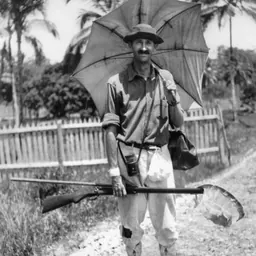


Related people
Same field, nearest in time
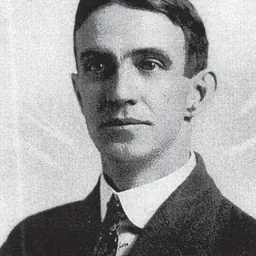
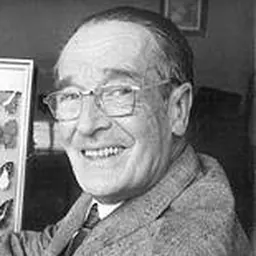


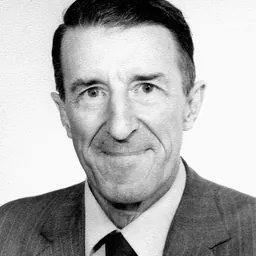

Contemporaries
People whose lives overlapped Lee Saunders Crandall's


Frequently asked questions
Who was Lee Saunders Crandall?
American ornithologist (1887-1969)
When was Lee Saunders Crandall born?
Lee Saunders Crandall was born on 26 January 1887 in Sherburne.
When did Lee Saunders Crandall die?
Lee Saunders Crandall died on 25 June 1969.
What was Lee Saunders Crandall's occupation?
Lee Saunders Crandall was a zoologist and ornithologist.
What nationality was Lee Saunders Crandall?
Lee Saunders Crandall was American.
Sources & further reading
· Wikipedia: Lee Saunders Crandall
Cite this page
APA: Biography.guide. (2026). Lee Saunders Crandall. https://biography.guide/lee-saunders-crandall/
MLA: "Lee Saunders Crandall." Biography.guide, https://biography.guide/lee-saunders-crandall/.
Chicago: "Lee Saunders Crandall." Biography.guide. https://biography.guide/lee-saunders-crandall/.
Data last updated: 2026-09-22 · Spot an error? Report a correction.
Page generated 2026-09-27 05:22 UTC