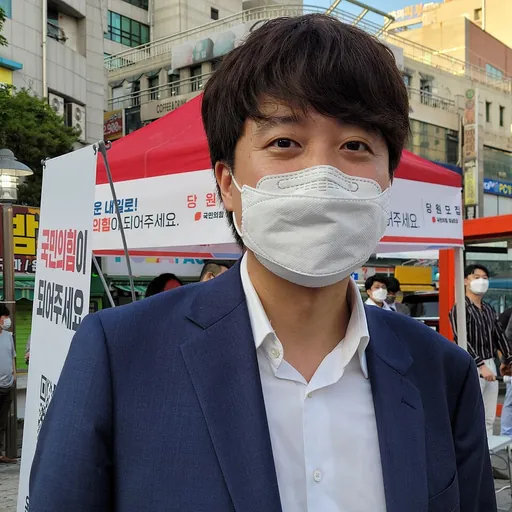
About Lee Jun-seok
Born 1985. Lee Jun-seok is a South Korean politician and businessperson.
Political career
Lee had an interview with Park Geun-hye, the head of Grand National Party's emergency response committee, who visited 'Edushare' in November 2011 for 2 hours. He was introduced as a venture entrepreneur in his 20s who graduated from Harvard University on 29 December. Then, Lee was recruited to the emergency response committee of the Grand National Party.
After being appointed to the committee, Lee attracted attention with his eloquence in debate. He increased his public recognition by appearing on various TV Shows. Then, Lee ran for the National Assembly election in 2016 in Sanggye-dong against Ahn Cheol-soo (the running candidate for Presidential primary) but lost.
Lee was nicknamed as 'Park Geun-hye Kid' but supported Park's impeachment in October 2016. Lee left with Saenuri Party and established a new political party, named the Bareun Party with Yoo Seong-min. In 2018, Lee unsuccessfully ran for the National Assembly election. Before the 21st election of members of the National Assembly, Lee was appointed as a youth supreme representative in United Future Party.
After seeing a taxi driver setting fire to himself in the National Assembly, Lee acquired a taxi driver's license and worked as a taxi driver for 12 hours daily for two months in March and April 2019. Even though Lee never won an election, he lived as a political commentator, media host for 10 years, appearing on both entertainment and political TV Shows.
In the 2021 by-elections, Lee played a role in the Seoul mayoral by-election as the head of the new media division for Oh Se-hoon's campaign and played a leading role in mobilizing young voters by launching the "2030 Citizen Campaign Group," which replaced traditional political speeches with youth-led street rallies and public participation.
Leader of the People Power Party (2021–2022) In 2021, Lee ran for the election to select the leader of the People Power Party. He became popular with people in their 20s and 30s due to his opposing stance against political correctness such as "faux feminism," introducing reforms supporting meritocracy rather than outright equality of outcome. Rather than relying on traditional campaign methods, Lee emphasized direct engagement with the public, eschewing a formal campaign office and instead travelling by subway with a minimal team to convey transparency and relatability. Lee lost the partial election to Na Kyung-won, but won the main election, recording 43.82 percent (93,390 votes) including votes from the Public Opinion Poll. As a result, Lee was elected as the leader of the PPP, the youngest to represent the main conservative bloc in Korean political history. Lee has a negative stance on affirmative action. He is rated as having idaenam as his main support.
Under Lee's leadership, the PPP won the 2022 presidential election, with Yoon Suk Yeol narrowly defeating Lee Jae-myung of the Democratic Party with 48.56% of the vote. In the local elections held in June of the same year, the PPP secured 12 out of 17 mayoral and gubernatorial posts nationwide.
Conflicts with Yoon Suk Yeol On 29 November 2021, Lee posted a Facebook post saying, "If that is the case, this is it," with another post showing a text emoji of a smiling face and a thumbs-down gesture and has refused to answer on the phone and has been avoiding the press until December 3. The move was considered to be a protest against Yoon Suk Yeol ignoring him as leader of the party. The feud was resolved by their meeting in Ulsan on 3 December.
Ethics investigation, suspension, and ouster (2022–2023) In December 2021, far-right think tank Hover Lab alleged that Lee had received sexual favours as bribes in 2013. Lee denied the allegations and announced that he would pursue legal action against Hover Lab. While the PPP had initially declined to commence a disciplinary process against Lee, it reversed its decision after Hover Lab released an audio recording that they alleged confirmed that such sexual favours had taken place.
On 22 April 2022, the PPP opened an ethics violation complaint against Lee. Lee is the first chairman in the history of the country's main conservative party to be referred to the ethics committee for review while still in office.
On 8 July 2022, the PPP's ethics commission sentenced Lee to a six-month suspension of party activities and from his role as party leader until 8 January 2023. The subject of the committee's deliberation was the alleged attempts of Lee and Kim Cheol-keun, the head of the party's political affairs office, to destroy evidence. Kim Cheol-keun was handed a two-year suspension from party activities for destroying evidence of Lee's acceptance of sexual favours and bribery.
On 9 August 2022, Lee was automatically removed from party leadership. Joo Ho-young took over as interim party leader on the following day.
On 26 August 2022, a court decided that Lee's suspended from duty was against the party constitution. On 8 September, the PPP central committee amended the party constitution, and Chung Jin-Seok took over as the new interim party leader instead. On 20 September, police decided not to refer Lee to prosecution over sexual bribery charges. However, it did announce that Lee would be investigated over whether he made false accusations against Hover Lab. This scandal has had a major impact on Lee's political career.
On 7 October 2022, Lee's suspension was extended by another year by the PPP's ethics committee.
On 2 November 2023, Lee's suspension was removed, along with other politicians such as Hong Joon-pyo.
On 27 December 2023, Lee officially declared his departure from the People Power Party and announced the formation of a new political party, stating that he would begin walking his own "NeXTSTEP," a phrase he used to describe his vision.
Reform Party (2024–present)
On 20 January 2024, Lee founded the Reform Party.
On 10 April 2024, he was elected as a member of the National Assembly for the first time. His victory was unexpected, as Lee moved to his new constituency only weeks before the election. Lee was the only candidate to win a constituency seat as a third-party candidate, defeating both major parties, the PPP and the Democratic Party.
On 4 December 2024, amid President Yoon Suk Yeol's declaration of martial law, Lee publicly clashed with police forces that physically barred his entry to the National Assembly.
On 18 March 2025, the party announced that Lee would be its candidate for a potential presidential election to be held in the event that the impeachment of Yoon Suk Yeol was upheld. On 11 April 2025, a week after the termination of Yoon's presidency, Lee began his campaign for the 2025 presidential election.
On 27 May 2025, during a televised presidential debate, Lee asked opponent Kwon Yeong-guk "If someone were to talk about wanting to stick chopsticks in a woman's genitals, would that be considered misogynistic?" Kwon refused to respond. The question referenced a past case in which Lee Jae-myung's son was convicted and fined for posting obscene content online, including expressions similar to the one mentioned in the debate. The remark, which was broadcast live, drew criticism from certain civic groups and politicians for its explicit content, particularly given the family-viewing context of the debate, Lee later apologized for the graphic language but defended his intent, saying he sought to highlight what he viewed as the Democratic Party's double standards of "remaining silent about misconduct within its ranks while labeling him as misogynistic" and characterized the criticisms against him as ad hominem.
On 30 May 2025, a group of 21 lawmakers from the Democratic Party, Rebuilding Korea Party, Progressive Party, Basic Income Party, and Social Democratic Party submitted a disciplinary motion against Lee, arguing that his televised remarks constituted sexual harassment and violated election and ethics regulations by publicly demeaning a specific gender.
During the election on 3 June, Lee placed third, garnering 8.34% of the vote. He conceded following the release of exit polls, stating: "If the current result stands, Lee Jae-myung will take office. Given the immense challenges of national unity and economic recovery, I hope he makes thoughtful and appropriate decisions." He was unanimously reelected as leader of the Reform Party in a convention on 27 July.
Political positions Lee has most often been described as a conservative or centre-right politician. While some critics have described Lee as far-right in the context of generation conflicts and a minority of political opponents have characterized him as left-wing, Lee describes his stance as a "conservative-leaning liberal". His political rise, sometimes referred to as the "Lee Jun-seok phenomenon," has been attributed to his meritocracy and antifeminism Lee said feminism, when used by politicians to provoke conflict, becomes like 'blowfish poison' and criticized that hiring targets for women as reverse discrimination, while gender inequality in South Korea is still recognized to persist including high gender wage gaps and disparities in professional advancement. Lee gained strong support from young male voters through antifeminist rhetoric,
Lee has questioned the narrative that women in South Korea face systemic discrimination, arguing that some gender-based concerns are rooted in what he described as "unfounded victim mentality." These remarks were later classified as hate speech by the National Human Rights Commission of Korea. Lee responded by accusing the commission of "carelessly labeling speech as hate" and attempting to create "untouchable sacred zones."
Lee was an early proponent of the finger pinching conspiracy theory, a claim alleging hidden radical feminist messaging in advertisements. He quoted that an explanation was required after a poster promoting camping was sold by GS25, which has been accused for the intentional reference to the logo of Megalia.
Lee's rhetoric has widely been described as antifeminism, particularly in relation to younger male voters in 20s to 40s, although he has argued that it's not about anti-feminism, but about fair competition. Lee is regarded as a leading role in politicizing gender divisions in South Korea during these elections, particularly by overtly amplifying anti-feminist sentiment and positioning gender backlash as a core campaign issue, and it is argued that support for Lee is, in part, rooted in misogyny, as he amplified voices within the anti-feminist movement and validated their concerns.
Lee has been alleged to engage in divisive political tactics, particularly by focusing on issues that generate media attention and resonate with specific voter demographics. Critics, including political scientists and members of opposing parties, have argued that Lee's rhetoric disproportionately targets older generations and feminist movements, and is aimed at consolidating support among younger male demographics at the expense of broader coalition-building. In response to such criticisms, Lee has maintained that his policy proposals reflect legitimate reform efforts and should not be dismissed as divisive or hate-driven. He has stated that "new perspectives may be uncomfortable to some, but they are necessary for real change."
Meritocracy Lee has advocated for what he describes as meritocracy As an alternative, he introduced the People Power Aptitude Test (PPAT), a standardized exam intended to assess the basic competencies required of political candidates and reduce the influence of subjective selection by local party chapter heads.
Supporters and some commentators describe Lee's appeal as reflective of a generational desire for "fair competition" based on individual capability. Lee's perspective gained momentum amid public frustration over "fairness" controversies under the Moon Jae-in administration, including Cho Kuk scandal During his tenure at Edushare, he argued that lack of access to quality education due to poverty makes a society "hopeless." He has proposed targeted state interventions in public education similar to No Child Left Behind Act or Every Student Succeeds Act raise baseline achievement levels. He argues that claiming stigma effect of such education system as policies to keep the people ignorant.
Social issues As part of the Reform Party platform, Lee proposed that starting in 2030, mandatory military service be included as a qualification requirement for both men and women in certain public sector roles.
Lee has expressed support for protecting individuals from discrimination based on personal characteristics such as sexual orientation, stating that there should be no discrimination against personal traits like gender identity. However, he opposed the immediate passage of the anti-discrimination law, describing it as "premature" and citing lack of public and party-wide consensus. This approach has drawn criticism from political opponents, who argue that Lee offers reformist rhetoric without showing willingness to act on major policy issues. Some critics interpret his position as effectively opposing the bill.
Climate policy Lee has expressed support to increasing reliability on nuclear power, due to concerns such as oil price. He treats nuclear energy sources as affordable, safe, and clean. While supportive of renewable energy, Lee has pointed out contradictions in relying on liquefied natural gas (LNG) as a backup for solar and wind, citing its higher carbon emissions. He advocated for a more energy mix that considers carbon output and energy reliability.
Lee has emphasized feasibility and public acceptance of climate policies. He has expressed scepticism toward the disposable cup deposit system, arguing that implementation should not place undue burdens on small businesses. He has also advocated for incentive-based approaches to electric vehicle adoption, emphasizing that environmental policies should focus on tangible benefits rather than shifting costs onto the public. Lee argues that the current exemption system is no longer financially sustainable due to South Korea's aging population and rising public transit deficits and emphasizes the regional inequality of the current system, pointing out that seniors in rural areas without subways receive no comparable benefits. He argued that the new policy is more equitable and efficient, ensuring that benefits reach all seniors, including those outside major cities. The chairman of Korean Senior Citizens Association has criticized Lee's proposal. He argued that fare exemptions, 815.9 billion wons a year, are not a significant cause of transit deficits and raised concerns that the proposed transit card would limit mobility and negatively affect seniors' health, resulting in greater financial burden. In 2025 election, he has pledged to suggest an unconditional meeting with Kim Jong Un if elected. He also proposed a partnership with Japan in aerospace research and shared infrastructure. Following the Russian invasion of Ukraine, Lee has visited Ukraine and expressed support for international pro-democracy and humanitarian efforts.
Government restructuring Lee has supported restructuring the government into a small government. In the presidential election in 2022, he supported abolishing the Ministry of Gender Equality and Family, proposing that its functions be transferred to the Ministry of Employment and Labor, while suggesting the Ministry of Unification be integrated into the Ministry of Foreign Affairs. He argued these ministries are either "past their expiration date" or "never had a meaningful role to begin with."
In 2025, he named "building a government that works well by reducing presidential power" as his first campaign pledge, stating that he would create a small, function-centered government that prioritizes administrative expertise over formal structure by reducing the number of ministries from 19 to 13 and introducing three deputy prime ministers overseeing national security, strategic affairs, and social affairs. He reaffirmed plans to abolish the Ministry of Gender Equality and Family, transferring its functions to the Ministry of Health and Welfare and the National Human Rights Commission of Korea, and to merge the Ministry of Unification into a restructured Ministry of Foreign Affairs and Unification. Other proposed changes include renaming the Ministry of Economy and Finance and transferring its budgeting authority to the Prime Minister's Office, as well as simplifying ministry names, including renaming the Ministry of the Interior and Safety to Ministry of Home Affairs. Several ministries would be consolidated: Ministry of Land, Infrastructure and Transport, Ministry of Oceans and Fisheries, and Ministry of Environment into a Ministry of Construction and Transportation; Ministry of Trade, Industry and Energy and Ministry of SMEs and Startups into a Ministry of Industrial and Energy Affairs; and Education and Ministry of Science and ICT into a Ministry of Education and Science. The Ministry of Health and Welfare would be split into separate ministries for health and welfare. Lee also proposed abolishing the Office of National Security and the Corruption Investigation Office for High-ranking Officials.
Impeachments of South Korean presidents Lee has stated that the impeachment of Park Geun-hye was justified. Regarding the "economic community" theory cited during her trial, he noted that it was unusual for a president to face direct criminal liability, but said he respected the court's judgment.
Following Yoon Suk Yeol's 2024 South Korean martial law crisis, Lee condemned the move as unconstitutional and likened it to an attempted insurrection, stating that it constituted grounds for impeachment and that those who aided it could be guilty of rebellion.
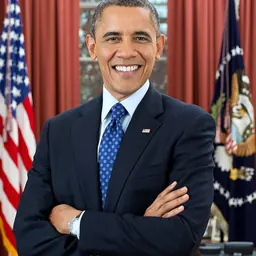
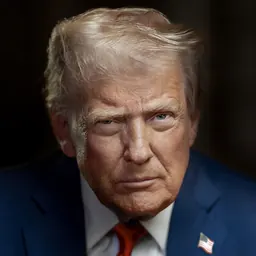
Comparisons to US politicians Na Kyung-won, a former politician leader in the PPP, described Lee's politics as "Trumpism". South Korean liberal newspaper The Hankyoreh also compared Lee Jun-seok to Donald Trump. It wrote that there may be many differences in the political positions of the two, but the background of their dissatisfaction with the established system is similar. Lee stated that he fashions himself more after Barack Obama in terms of policy. He has also cited Elon Musk as an inspiration, particularly for his approach to cutting inefficiencies in the public sector, referencing Department of Government Efficiency.
Authored books
Election results Legislative elections
Presidential elections
Filmography Television shows
Don’t just read it —
keep it.
Full-length biographies made to live with: read them, listen on the way to work, watch them tonight.
- E-book
- Audio
- Video
Instant download · yours to keep · every purchase keeps this site free
Important facts
People in Lee Jun-seok's life
Named in this biography and alive at the same time



Related people
Same field, nearest in time


Contemporaries
People whose lives overlapped Lee Jun-seok's


Frequently asked questions
Who is Lee Jun-seok?
South Korean politician (born 1985)
When was Lee Jun-seok born?
Lee Jun-seok was born on 31 March 1985 in Seongdong District, Hanyang University Seoul Hospital.
What is Lee Jun-seok's occupation?
Lee Jun-seok is a politician and businessperson.
What nationality is Lee Jun-seok?
Lee Jun-seok is South Korean.
Sources & further reading
Cite this page
APA: Biography.guide. (2026). Lee Jun-seok. https://biography.guide/lee-jun-seok/
MLA: "Lee Jun-seok." Biography.guide, https://biography.guide/lee-jun-seok/.
Chicago: "Lee Jun-seok." Biography.guide. https://biography.guide/lee-jun-seok/.
Data last updated: 2026-09-23 · Spot an error? Report a correction.
Portrait: Wikimedia Commons · author & licence
Page generated 2026-09-27 05:05 UTC