
About Lee Haring
Born 1930. Lee Haring is an American folklorist and university teacher.
Lee Haring (born 1930) is an American folklorist and literary scholar known for his research, translations, and theorization of the oral literatures of Madagascar and the islands of the southwest Indian Ocean. He is professor emeritus of English at Brooklyn College of the City University of New York.
Haring's major publications include the comprehensive Malagasy Tale Index (1982), the monograph Verbal Arts in Madagascar: Performance in Historical Perspective (1992), an English translation of the epic Ibonia (1994), the collection-and-study Stars and Keys: Folktales and Creolization in the Indian Ocean (2007), and two open-access volumes with Open Book Publishers: How to Read a Folktale (2013) and Folktales of Mayotte, an African Island (2023).
Early life and education Haring earned the A.B. at Haverford College and the A.M. and Ph.D. at Columbia University.
Academic career Haring taught at Guilford College (1953–1956) and then at Brooklyn College from 1957 until his retirement in 1999 (lecturer to full professor; emeritus thereafter). He also taught in graduate folklore programs at the University of California, Berkeley, the University of Pennsylvania, and the University of Connecticut.
Research themes and contributions Haring’s research foregrounds performance, translation, and the historical circulation of genres across the southwest Indian Ocean. His Malagasy Tale Index provides a comprehensive analytic catalogue for Madagascar’s folktales and is cited for its theoretical and methodological implications of tale-type indexing.
In Verbal Arts in Madagascar (1992) he analyzes four genres (riddles, proverbs, hainteny, and oratory) within colonial and postcolonial histories and provides English translations of many texts. The book Stars and Keys (2007) extends this analysis through translations and commentary on a hundred folktales originating from Madagascar, Mauritius, Seychelles, Réunion, and the Comoros.
Major publications Malagasy Tale Index. Helsinki: Academia Scientiarum Fennica, Folklore Fellows’ Communications 231, 1982. 505 pp. Anu koleksyonn folklor Moris = Collecting Folklore in Mauritius (bilingual field manual). Port Louis: Ledikasyon pu Travayer, 2001. Earlier manual: Collecting Folklore in Mauritius. Moka: Mahatma Gandhi Institute, 1992.
Selected articles “The Classification of Malagasy Narrative.” Research in African Literatures 11(3): 342–355 (1980). “Techniques of Creolization.” Journal of American Folklore 116(459): 19–35 (2003). “Framing in Oral Narrative.” Journal of Folklore Research 41(2/3): 125–155 (2004). “African Folktales and Creolization in the Indian Ocean Islands.” Research in African Literatures 33(3): 182–199 (2002).
Honors and recognition Guggenheim Fellowship in Folklore & Popular Culture (1998). American Folklore Society Lifetime Scholarly Achievement Award (2013).
Don’t just read it —
keep it.
Full-length biographies made to live with: read them, listen on the way to work, watch them tonight.
- E-book
- Audio
- Video
Instant download · yours to keep · every purchase keeps this site free
Important facts
People in Lee Haring's life
Named in this biography and alive at the same time
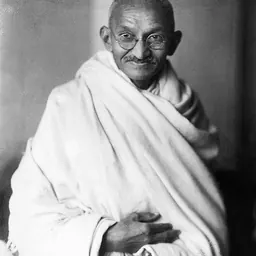
Related people
Same field, nearest in time




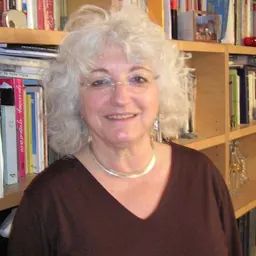

Contemporaries
People whose lives overlapped Lee Haring's


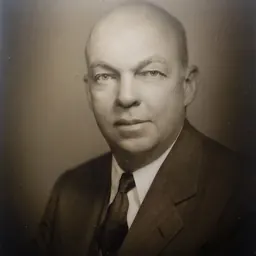

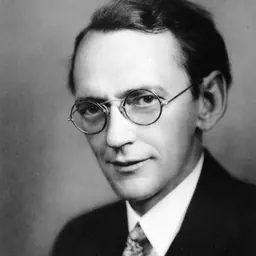
Frequently asked questions
Who is Lee Haring?
American folklorist
When was Lee Haring born?
Lee Haring was born in 1930.
What is Lee Haring's occupation?
Lee Haring is a folklorist and university teacher.
What nationality is Lee Haring?
Lee Haring is American.
Sources & further reading
Cite this page
APA: Biography.guide. (2026). Lee Haring. https://biography.guide/lee-haring/
MLA: "Lee Haring." Biography.guide, https://biography.guide/lee-haring/.
Chicago: "Lee Haring." Biography.guide. https://biography.guide/lee-haring/.
Data last updated: 2026-09-20 · Spot an error? Report a correction.
Page generated 2026-09-27 05:01 UTC