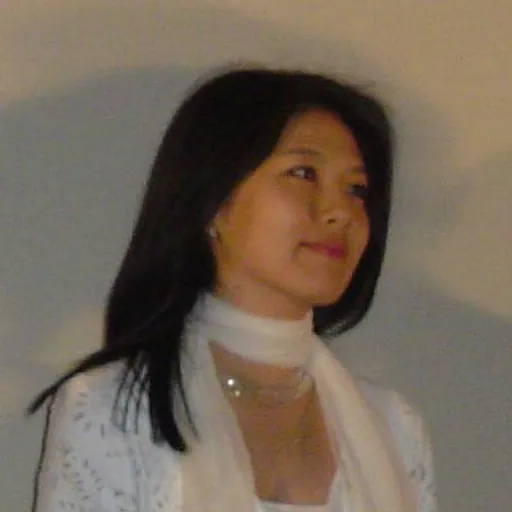
About Lee Eun-ju
Lived 1980 – 2005 (aged 24). Lee Eun-ju was a South Korean actor, film actor and singer.
Lee Eun-ju (Korean: 이은주; December 22, 1980 – February 22, 2005) was a South Korean actress. She was best known for the films Oh! Soo-jeong, Bungee Jumping of Their Own (2001), Lovers' Concerto (2002), Taegukgi: The Brotherhood of War (2004) and The Scarlet Letter (2004) and for the television series KAIST (1999) and Phoenix (2004). Despite a brief career spanning six to eight years, she amassed a filmography of acclaimed performances, quickly becoming one of South Korea's most promising and celebrated young talents. Highly regarded by filmmakers, Lee was considered as a leading actress of the next generation of Chungmuro. Renowned for her emotional depth, versatile acting range and distinctively mysterious aura, she was one of the defining actresses of early-to-mid 2000s South Korean cinema and television. She died by suicide at age 24.
Early Life and Beginnings Lee was born in Gunsan, North Jeolla, South Korea, as the younger of two children. Raised in relative affluence, she engaged in various extracurricular activities from a young age, including dance, violin, swimming, bowling, and piano. Lee primarily studied music in her youth, without giving much thought to becoming an actress. Her childhood dream was to become a professional pianist, a path she pursued diligently for 14 years, starting from when she was five years old. She would later contribute a piano track to the soundtrack of the 2002 film Lovers' Concerto.
In July 1996, while attending Gunsan Yeonggwang Girls' High School, Lee entered the Sunkyung Smart Uniform Model Contest. Her path to the contest was largely accidental; while shopping for school uniforms with her mother, the store owner suggested she enter. According to Lee, she had little interest in modeling and entered only after her mother secretly submitted her application accompanied by a photograph. Lee passed the preliminary rounds and advanced to the finals. Expecting only to attend as a spectator to see invited celebrities, she was surprised to win the Silver Prize. Notable fellow contestants include future actress Song Hye-kyo and Ahn Mi-jung (later of the hip-hop group O-24). Shortly after winning, Lee appeared in her first television commercial for Smart Uniforms in late 1996."I went into the competition with absolutely no expectations and felt completely relaxed. About 2,500 people applied, 50 made it to the finals, and they were choosing seven winners. They asked me to introduce myself, so I did. Then they told me to dance, so I danced. After that, I was backstage watching the singers perform. Thinking it was time to go home, I had already taken off the sash I was wearing when suddenly I heard them call my name. I walked up looking completely bewildered, and received my award. I won the Silver Prize, and the person who won the Gold Prize was Hye-kyo—Song Hye-kyo. After that, I filmed a school uniform commercial and went back to Gunsan, where I returned to studying and playing the piano. Then I received an offer to appear in a drama. Little by little, I found myself getting deeper into acting, and before I knew it, here I am."
Career
1997-1999: Early Television Roles and Breakthrough After finding work as a model, Lee officially made her debut in January 1997 on the KBS comedy show Comedy Outlook (코미디 전망대). Later that year, she entered standard broadcast drama acting with the KBS2 TV youth series Start, as class president Jeong Nam-young. Unlike her later serious image, her early television appearances featured her playing lively, typical high school characters. In August 1998, she appeared briefly in the SBS horror anthology Horror Special 8-Part Series (납량특선 8부작) in the two episodes of One Day Suddenly (어느날 갑자기), followed by a notable supporting performance in the SBS drama White Nights 3.98 (백야 3.98), playing the younger counterpart of Shim Eun-ha's character.
Her public breakthrough came in 1999 with the hit SBS drama KAIST by famed screenwriter Song Ji-na. The series followed the lives of engineering students at the prestigious university. Lee played Gu Ji-won, a cold, pragmatic student who balances her harsh exterior with deep loyalty to her team. Although it became one of her most recognizable early performances, Lee later admitted in interviews that she initially disliked playing Ji-won due to the sharp contrast between the character's personality and her own. Ji-won's detached demeanor and sharp wit earned her the nickname "Ice Princess" and the image continued to be associated with Lee even after her successful transition to film. The series became a commercial success and her character's immense popularity significantly raised Lee's public profile. Lee was the youngest member of the main cast despite portraying a senior university student. Following KAIST, she was frequently cast in roles depicting women older than her actual age. This trend stemmed from a level of artistic maturity and compelling screen presence rarely seen among peers in her generation. Her nuanced performances at a young age earned her widespread acclaim and established her public image as a mature, sophisticated actress.
1999–2002: Rise in Korean Cinema and Critical Acclaim While filming KAIST, Lee transitioned to film. Her film debut was in 1999, when she played the younger sister Se-hwa in Park Jong-won's award-winning feature Rainbow Trout. This proved to be a turning point in her career, leading her to pursue acting professionally. Until then, Lee had intended to attend a music conservatory and become a concert pianist. After initially rejecting the role six months prior citing difficulties in balancing acting with her studies, Lee finished high school and accepted the second time the role was offered to her. During the early stages of filming, she continued to practice the piano at a music academy after completing her schedule. Ultimately, the role prompted her to pivot her academic focus from music to acting. She later enrolled in the Department of Theatre and Film at Dankook University. Lee earned praise for holding her own alongside veteran actors Kang Soo-yeon and Sul Kyung-gu. Her performance in Rainbow Trout caught the attention of acclaimed director Hong Sang-soo, who cast her as the lead in his third feature Virgin Stripped Bare by Her Bachelors [Oh! Soo-jeong] (2000). Lee delivered one of the most memorable performances in all of Hong's films and in what was South Korea's first black-and-white film in 30 years. Following its release, the film received widespread critical acclaim. It won the Best Film Award at the Busan Film Critics Association, the Special Jury Prize at the Tokyo International Film Festival, was selected for the Un Certain Regard section of the Cannes Film Festival and served as the opening film of the inaugural Jeonju International Film Festival. Lee's performance also earned her the Best New Actress award at the 38th Grand Bell Awards in 2001.
In film, Lee quickly established herself as a leading actress. In late 2000 she was cast in director Kim Dae-sung's directorial debut, the hit film Bungee Jumping of Their Own (2001) where she starred opposite actor Lee Byung-hun. Her portrayal of In Tae-hee—an art student whose tragic destiny spans lifetimes—solidified her as a rising Chungmuro leading lady. Critics regarded her portrayal of the wistful yet poignant first love as central to the emotional impact of the story. The film won the Audience Award at the 10th Hamburg Film Festival in the feature debut competition. Bungee Jumping of Their Own remains one of the defining romantic films in Korean cinema and has spawned multiple adaptations even decades after its release. Its enduring popularity has kept it in the public consciousness, leading to theatrical re-releases in 2017 and 2021. The sunset waltz scene between Lee and Lee Byung-hun is considered one of the most iconic moments in Korean romance film history. Lee later described Tae-hee as the role to which she felt the strongest personal attachment among all of her film performances.
In 2002, Lee starred alongside Cha Tae-hyun and Son Ye-jin in the melodrama Lovers' Concerto. Playing the outgoing, tomboyish Kim Kyung-hee, Lee was able to portray a persona closer to her real-life self. Lee also noted that the film marked her first opportunity to work comfortably with co-stars of a similar age, after previously appearing primarily opposite older actors. Lively and warm-hearted Kyung-hee later displays a more tragic side, and Lee's performance was positively received by critics. She personally performed the film's main theme "Kyung-hee's Theme" on the piano after production staff watched her play on set and suggested she record the track herself. The film was a commercial success, and earned Lee her first nomination for Best Actress at the 23rd Blue Dragon Film Awards.
2003–2004: Taegukgi, Phoenix, and The Scarlet Letter In 2003, Lee was cast in the melodrama film Garden of Heaven alongside Ahn Jae-wook in what would be Ahn's return to the big screen after five years. This also marked Lee's second collaboration with film director and screenwriter Lee Han, after Lovers' Concerto (2002). Later that year, Lee was cast alongside Han Suk-kyu in the thriller film Salt Doll (소금인형). However, internal conflicts between the production crew and director led to severe production delays. In early 2004, investor CJ Entertainment halted production indefinitely after only about 20% of the movie had been shot, leaving it permanently unreleased. During this period, Lee starred in Au Revoir, UFO (2004) as a visually impaired woman. She reportedly prepared for the role by observing the daily lives of blind individuals and practicing everyday tasks with her eyes closed. Her performance received praise, though the film itself will be overshadowed by her later works.
Despite the suspension of Salt Doll, 2004 proved to be a milestone year for Lee. During the same period, Lee was cast as Kim Young-shin, the fiancée of Lee Jin-tae (played by Jang Dong-gun), in Kang Je-gyu's record-breaking Korean War film Taegukgi: The Brotherhood of War (2004). Retrospectives noted that Taegukgi is a film where Lee demonstrated that her range extended to period pieces through her portrayal of the tragic heroine.
The suspension of Salt Doll also opened the opportunity for Lee to return to television in MBC's Phoenix (2004). Preferring film over television, she repeatedly turned down drama roles and took a prolonged break from the small screen. Initially declining the role due to her film commitments, Lee eventually accepted after finding herself available to film a drama. She returned to television after four years and starred in her first drama lead role alongside Lee Seo-jin and Eric Mun. She portrayed Lee Ji-eun, a spoiled heiress whose privileged life collapses before she grows into a resilient adult. Phoenix became one of the most successful dramas of the year, reaching a peak nationwide viewership of 31.7% and spawning a dedicated fanbase. Lee delivered arguably her finest performance on television and received universal acclaim in her role. Critics particularly praised her ability to portray the dynamic of youthful impulsiveness and later emotional maturity of her character, navigating a ten-year character arc with profound emotional range. Director Oh Kyung-hoon noted that while Lee naturally commanded a calm atmosphere, she could effortlessly portay lively, energetic characters and possessed an intellectual screen presence. The drama significantly expanded her popularity throughout East Asia and established her as one of Korea's leading television actresses.
Later that year, while completing Phoenix, Lee began production on The Scarlet Letter (2004). Directed by Daniel H. Byun, the erotic thriller is to be her last feature. She was cast as Choi Ga-hee, a jazz singer involved in an extramarital affair with a detective, in a role that drew substantial media attention prior to the film's release. The role represented one of the most psychologically demanding performances of her career and departed significantly from the sympathetic characters for which she had been known. The film screened as the Closing Film at the 2004 Busan International Film Festival. Lee's performance as the alluring and tragic Ga-hee remains one of the most intensely discussed acting feats in modern South Korean cinema. In a review, Variety praised her screen presence, noting that she completely overshadowed the rest of the female cast and provided a genuine "noirish stride" to the film. A skilled piano player in real life, Lee performed her own vocals for the film's jazz sequences. She was nominated for Best Actress at the 25th Blue Dragon Film Awards, 41st Baeksang Arts Awards, and 42nd Grand Bell Awards for her stellar performance. "[The most difficult scene] is definitely the trunk scene. It was so difficult that I wondered if it was even okay for a person to suffer this much; I felt exactly like I wanted to die. It will probably remain the most memorable scene out of my entire filmography so far—and likely throughout the rest of my career."
Final Engagements
In October 2004, Lee participated in a Vogue photoshoot alongside Hong Kong actor Tony Leung. The collaboration was arranged in connection with the 9th Busan International Film Festival, where Leung and Lee starred in the opening and closing films, respectively. Leung praised Lee's performance in Virgin Stripped Bare by Her Bachelors, highlighting her charm and subtlety. On-set staff also noted Lee's fluency in English during her interactions with Leung. In December 2004, Lee attended the Beijing Korean Film Festival, hosted jointly by China's Overseas Film Promotion Center and the Korean Film Council. Specially invited by the organizing committee, she represented South Korean cinema through media interviews, local press conferences and television appearances. Lovers' Concerto (2002) premiered during the festival, further expanding her profile in China following the success of Phoenix. Later that month, Lee was invited to serve as a jury member in the 16th Yubari International Film Festival to be held in Japan in February 2005, after impressing festival officials with her performance in The Scarlet Letter. However, she declined the offer, stating that she lacked the experience and seniority required to evaluate works. "I'm called a new generation star, but I don't want to be the kind of person who achieves instant fame and then is quickly forgotten. I want to learn step-by-step how to become a good actress, and gradually work my way up. A star achieves brilliance, but is soon forgotten; to become an actress takes more time." [Interview Excerpt, 2000]
Personal Life During her high school years, faculty members described Lee as an exemplary student who maintained regular attendance despite her early entertainment activities. She played the piano and performed prominently in her school's historic Yeonggwang Missionary Choir, participating in regional events and military base performances.
Lee completed her primary and secondary education in her hometown before relocating to Seoul. She balanced her acting career with her studies, enrolling in the Department of Theater and Film at Dankook University. She officially graduated with her bachelor's degree on February 18, 2005. Outside of her professional life, her hobbies centered largely around music, film, books, and sports; she was an avid skier, a skill listed as one of her specialties, and regularly enjoyed water sports in the summer and snowboarding in the winter. Originally broadcast as a standard television health-check segment, it was widely revisited by media and fans as an overlooked early indication of her mental health struggles prior to filming her final project. Interviews from 2004 perfunctorily mentioned her sleeping only 2-3 hours a day due to her gruelling schedule while filming Phoenix. They remained with her until her passing, after which investigators recovered final letters expressing deep remorse and affection for her family. Lee's inner circle was reportedly aware of her condition, and how she "struggled with all her might" to overcome it.
A devout Christian during her lifetime, Lee regularly attended Hyundai Church in Samseong-dong, Seoul.
Death and subsequent tributes On February 22, 2005, days after her graduation from Dankook University, Lee died by suicide at her apartment in Bundang. Investigation ruled severe depression as the cause. She was twenty-four years old. Her family attributed her mental decline and insomnia to the psychological toll of filming The Scarlet Letter, a role she reportedly had difficulty detaching from. Police stated that Lee had been talking with her older brother and mother, with whom she lived, until 6 am before going into her room. When her brother became concerned after there was no sign of her even after 1 pm, he entered her room and found his younger sister lifeless. Lee was formally diagnosed with depression on February 3 and received psychiatric treatment. Doctors recommended hospitalization for further testing, but she declined and missed her follow-up appointment.
She left a note, in which she wrote, "Mom, I am sorry and I love you." A separate note said, "Even though I live, I'm not really alive. I didn't want to resent anyone... I have no emotions… because I’m not myself anymore." Undated writings found in her room detailed her feelings of being trapped and struggle with chronic insomnia: "My head feels like it's going to split open too... If only I could sleep deeply..." Analysts attributed the intensity of the public's shock and grief to Lee's professional reputation, noting that she was regarded as a highly promising young talent who had maintained a positive public image devoid of industry controversies. Adding to the shock was its unexpected timing; Lee was coming off arguably her most successful year. She was reviewing potential domestic and international projects, was seemingly upbeat on her graduation four days prior, had recently signed two lucrative endorsement deals so far in 2005, and was set to begin work on a feature film in the spring and a television series later in the year.
Her friends and colleagues have held memorials for Lee every year since her death. The 2007 event was marked by a music CD released in her name, featuring remastered versions of her cover performance of The Corrs ''' "Only When I Sleep" from The Scarlet Letter, as well as tribute performances by her friends in the entertainment industry. Namoo Actors partnered with CGV Arthouse for the 10th anniversary event in 2015 which featured free public screenings of her films and an invitation-only screening for fan club members and close acquaintances in the film industry.
Aftermath Because high-profile celebrity suicides were virtually unprecedented at the time, South Korean media outlets engaged in intense, graphic reporting on the details of her death. This extensive coverage was followed by a documented surge in copycat suicides. A study published in the Journal of Affective Disorders confirmed an estimated 331 excess deaths during the four weeks following her death, heavily concentrated among young women of similar demographics. A significant portion of these deaths utilized similar methods as Lee, showing a direct link to the detailed media reporting. Lee’s passing is also recognized as a catalyst for the country's first major public discourse on the deep-seated stigma surrounding mental illness. As the first major celebrity suicide in modern Korean history, it altered the public perception of the entertainment industry and exposed the high-pressure environments endured by public figures.
Critical Re-evaluation and Legacy Although initial media reports heavily linked Lee's mental health struggles to her final role in The Scarlet Letter'', subsequent analyses and members of the South Korean film community have largely rejected the sensationalized framing. Instead, contemporary critics and industry peers view her final performance as a testament to her uncompromising artistic dedication. As one of the industry's most prominent actresses at the time of her death shortly after turning 24, film retrospectives frequently characterized her career as one of unfulfilled artistic potential—an acting trajectory cut short at its peak—while noting that her existing body of work secured an enduring legacy within modern Korean entertainment. Critics and film historians frequently highlighted her emotional subtlety, naturalistic performance style, and ability to portray psychologically complex characters at a young age. Today, Lee is widely remembered as one of the most naturally gifted and versatile acting talents of her generation.
Filmography Film Year English Title Hangul Romanization Role Notes 1999 Rainbow Trout 송어 Song-eo Se-hwa 2000 Yeca 예카 Yeka Internet short film Virgin Stripped Bare by Her Bachelors 오! 수정 Oh! Soo-jeong Yang Su-jeong First lead role Bloody Beach 해변으로 가다 Haebyeoneuro gada PC 통신하는 여자 Cameo appearance 2001 Bungee Jumping of Their Own 번지 점프를 하다 Beonjijeompeureul hada In Tae-hee Ahmijimong 아미지몽 Ahmijimong Ah-mi Internet short film 2002 Lovers' Concerto 연애소설 Yeonae soseol Kim Kyung-hee Unborn But Forgotten 하얀방 Hayanbang Han Su-jin 2003 Garden of Heaven 하늘정원 Haneul jeongwon Kim Young-ju 2004 Au Revoir, UFO 안녕! 유에프오 Annyeong UFO Choi Kyeong-woo Taegukgi 태극기 휘날리며 Taegukgi Hwinalrimyeo Kim Young-shin The Scarlet Letter 주홍글씨 Juhong geulshi Choi Ga-hee
Television series Year English Title Hangul Romanization Role Notes 1997 Start 스타트 Jeong Nam-young 1998 Horror Special 8-Part Series 납량특선 8부작 Park Seong-ju Appeared in episodes 1 and 2 White Nights 3.98 백야 3.98 Baekya 3.98 young Anastasia 1999 KAIST 카이스트 Kaiseuteu Gu Ji-won Ensemble cast 2000 Look Back in Anger 성난 얼굴로 돌아보라 Seongnan Eolgulro Dorabora Jeong Su-jin 2004 Phoenix 불새 Bulsae Lee Ji-eun First lead role
Music video
Discography Year Title Hangul Notes 2001 End Title: Oh! You Are a Beautiful Woman (Variation) - Narration End Title 오 그대는 아름다운 여인 - 에 내레이션 참여 from Bungee Jumping of Their Own OST 2002 Lovers' Concerto Main Theme: Piano performance 연애소설 Main Theme: 피아노 연주 from Lovers' Concerto OST Hi Ji-hwan, I'm Gyung-hee - Narration 지환아 안녕 나 경희야 - 내레이션 2004 Only When I Sleep from The Scarlet Letter OST 2007 Lee Eun-ju: Only One 이은주 Only One Lee Eun-joo tribute album
Awards and nominations Year Award Category Nominated work Result 1996 Sunkyung Smart Student Uniform Model Contest Silver Award 2000 21st Blue Dragon Film Awards Best New Actress Virgin Stripped Bare by Her Bachelors 2001 38th Grand Bell Awards Best New Actress 2002 23rd Blue Dragon Film Awards Best Actress Lovers' Concerto 2004 25th Blue Dragon Film Awards Best Actress The Scarlet Letter MBC Drama Awards Best Couple Award with Lee Seo-jin Phoenix Top Excellence Award, Actress 2005 41st Baeksang Arts Awards Best Actress (Film) The Scarlet Letter 42nd Grand Bell Awards Best Actress Korea Broadcasting Awards Person of the Year in Broadcasting (TV Actress category) Phoenix 8th Director's Cut Awards Special Acting Award
Don’t just read it —
keep it.
Full-length biographies made to live with: read them, listen on the way to work, watch them tonight.
- E-book
- Audio
- Video
Instant download · yours to keep · every purchase keeps this site free
Important facts
People in Lee Eun-ju's life
Named in this biography and alive at the same time




Related people
Same field, nearest in time




Contemporaries
People whose lives overlapped Lee Eun-ju's


Frequently asked questions
Who was Lee Eun-ju?
South Korean actress (1980-2005)
When was Lee Eun-ju born?
Lee Eun-ju was born on 16 November 1980 in Gunsan.
When did Lee Eun-ju die?
Lee Eun-ju died on 22 February 2005 in Bundang.
What was Lee Eun-ju's occupation?
Lee Eun-ju was an actor, film actor and singer.
What nationality was Lee Eun-ju?
Lee Eun-ju was South Korean.
Sources & further reading
Cite this page
APA: Biography.guide. (2026). Lee Eun-ju. https://biography.guide/lee-eun-ju-actor/
MLA: "Lee Eun-ju." Biography.guide, https://biography.guide/lee-eun-ju-actor/.
Chicago: "Lee Eun-ju." Biography.guide. https://biography.guide/lee-eun-ju-actor/.
Data last updated: 2026-09-22 · Spot an error? Report a correction.
Portrait: Wikimedia Commons · author & licence
Page generated 2026-09-27 05:02 UTC