
About Leander Clark
Lived 1823 – 1910 (aged 87). Leander Clark was an American lawyer, politician and judge.
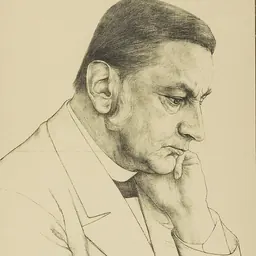
Leander Clark (July 17, 1823 - December 22, 1910) was an American businessman, Iowa state legislator, Union Army officer during the Civil War, and Indian agent who was the namesake for Leander Clark College.
Clark was born July 17, 1823, in Wakeman, Ohio, where he spent his childhood on his family's farm. He was educated in the public schools and at the Academy of Oberlin College. In 1846, he moved from Ohio to Port Washington, Wisconsin, where he worked as a surveyor, in a drug store owned by an older brother, and as deputy sheriff. In 1849, he undertook an overland journey to California to join the Gold Rush there. In California, he engaged in mining, packing, and trading, principally in the vicinity of Shasta and Yreka. He returned east via sea and the isthmus of Panama in 1852 after accumulating between $3,000 and $4,000.
In 1852, after his sojourn in California, he settled in Tama County, Iowa. In 1855 he became a justice of the peace in Tama County, in 1857 he began a four-year term as county judge, and in 1861 he began a term as the county's representative in the Iowa General Assembly.
After the outbreak of the Civil War in 1862, he resigned his legislative seat to enlist in the 24th Iowa Volunteer Infantry Regiment. He enlisted as a private but was elected captain of his company. He remained in the Army throughout the war, receiving minor wounds at the battles of Champion Hill (Mississippi) and Winchester (Virginia). He was promoted to major in September 1864 and lieutenant colonel in January 1865 and mustered out in August 1865.
Clark became wealthy through the buying and selling of land, first in Iowa and later also in the Dakotas and Missouri. He also served for many years as president of the Toledo Savings Bank in Toledo, the county seat of Tama County where he made his home. After the merger, one of Clark's heirs filed a lawsuit asking for return of the funds that Clark had provided to the college. The lawsuit asserted that the college had agreed to operate as an educational institution named for Leander Clark, and that the college breached its contract with Clark when it ceased to exist under his name. In 1922, the Supreme Court of Iowa decided the case in favor of the college, finding that the primary purpose of Clark's gift was not to perpetuate his name, but to support education.
Don’t just read it —
keep it.
Full-length biographies made to live with: read them, listen on the way to work, watch them tonight.
- E-book
- Audio
- Video
Instant download · yours to keep · every purchase keeps this site free
Important facts
Related people
Same field, nearest in time




Contemporaries
People whose lives overlapped Leander Clark's




Frequently asked questions
Who was Leander Clark?
American politician (1823-1910)
When was Leander Clark born?
Leander Clark was born on 17 July 1823.
When did Leander Clark die?
Leander Clark died on 22 December 1910.
What was Leander Clark's occupation?
Leander Clark was a lawyer, politician and judge.
What nationality was Leander Clark?
Leander Clark was American.
Sources & further reading
Cite this page
APA: Biography.guide. (2026). Leander Clark. https://biography.guide/leander-clark/
MLA: "Leander Clark." Biography.guide, https://biography.guide/leander-clark/.
Chicago: "Leander Clark." Biography.guide. https://biography.guide/leander-clark/.
Data last updated: 2026-09-20 · Spot an error? Report a correction.
Page generated 2026-09-27 05:03 UTC