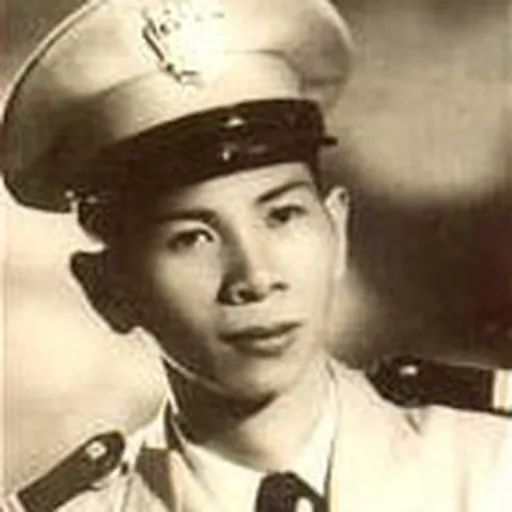
About Lê Quang Vinh
Lived 1923 – 1956 (aged 32–33). Lê Quang Vinh was a military personnel.
Lê Quang Vinh ( – 13 July 1956), popularly known as Ba Cụt , was a Vietnamese military commander of the Hòa Hảo religious sect, which operated from the Mekong Delta and controlled various parts of southern Vietnam during the 1940s and early 1950s.
Ba Cụt and his forces fought the Vietnamese National Army (VNA), the Việt Minh, and the Cao Đài religious movement from 1943 until his capture in 1956. Known for his idiosyncrasies, he was regarded as an erratic and cruel leader who fought with little ideological purpose. His sobriquet came from the self-amputation of his left index finger (although it was erroneously reported that it was his middle or "third cut finger"). He later swore not to cut his hair until the communist Việt Minh were defeated. Ba Cụt frequently made alliances with various Vietnamese factions and the French. He invariably accepted the material support offered in return for his cooperation, and then broke the agreement—nevertheless, the French made deals with him on five occasions. The French position was weak because their military forces had been depleted by World War II, and they had great difficulty in re-establishing control over French Indochina, which had been left with a power vacuum after the defeat of Japan.
In mid-1955, the tide turned against the various sects, as Prime Minister Ngô Đình Diệm of the State of Vietnam and his VNA began to consolidate their grip on the south. Ba Cụt and his allies were driven into the jungle, and their position was threatened by government offensives. After almost a year of fighting, Ba Cụt was captured. He was sentenced to death and publicly beheaded in Cần Thơ.
Early life and background alt=A young slim man aged around 20, with sharp eyes and nose, wearing a cylindrical traditional Vietnamese cloth headpiece and tunic. Both the headpiece and tunic are black.
Ba Cụt was born circa 1923 in Long Xuyên, the father of Nguyễn Ngọc Thơ. This caused a lifelong and fanatical hatred towards landowners. An aura of mystery surrounded Ba Cụt during his life, and foreign journalists incorrectly reported that he had severed his finger as part of a vow to defeat the French. As Ba Cụt became more fanatical in his religious beliefs and spent increasing time with local holy men, his father demanded that he work more in the family's rice fields. A defiant Ba Cụt severed his index finger, which was necessary for work in the rice paddies.
Vietnam was a tumultuous place during Ba Cụt's youth, particularly in the Mekong Delta. In 1939, Huỳnh Phú Sổ founded the Hòa Hảo religious movement, and within a year had gained more than 100,000 followers. He drew adherents for two reasons: the prophecies he made about the outbreak of World War II and the conquest of South-East Asia by Japan, which proved to be correct; and his work as a mystical healer—his patients claimed to have been miraculously cured from all manner of serious illnesses after seeing him, when Western medicine had failed. Sổ's cult-like appeal greatly alarmed the French colonial authorities. During World War II, Imperial Japan invaded and seized control of Vietnam from France; its defeat and withdrawal at the end of the war in 1945 left a power vacuum in the country.
The Hòa Hảo formed their own army and administration during the war, and started a de facto state in their Mekong Delta stronghold. They came into conflict with the Cao Đài, another new religious movement, which also boasted a private army and controlled a nearby region of southern Vietnam around Tây Ninh. Meanwhile, in Saigon, the Bình Xuyên organised crime syndicate ruled much of the city through its gangster militia. These three southern forces vied for control of southern Vietnam with the main protagonists: the French, who were attempting to re-establish colonial control across the entire nation; and the communist-dominated Việt Minh, who sought Vietnamese independence.
At the time, the many groups vying for power—including their respective factions—engaged in alliances of convenience that were frequently broken. Historian David Elliott wrote: "he most important eventual cause of the French decline was the inherently unstable nature of the political alliances they had devised ... he history of the French relations with the Hoa Hao sect is a telling illustration of the pitfalls of short-term political deals between forces whose long-term interests conflict."
Career Ba Cụt joined the Hòa Hảo militia when it was formed in 1943–44, and became a commander within a year. who claimed to be immortal. American journalist Joseph Alsop described Ba Cụt as "war-drunk". Ba Cụt was famous for inventing a torture contraption that drilled a steel nail through the victim's ear, a device he used to extort villagers and wealthy landlords to fund his forces. He was said to have arranged "temporary marriages" of his men with village girls.
In 1947, he led his own faction of the sect after its various military leaders pursued their own policies towards the French and Hồ Chí Minh's Việt Minh in the wake of Sổ's death. At the time, France was in a ruinous financial state following World War II and was experiencing great difficulty in its attempts to re-establish control over its colonies. Ba Cụt had only 1,000 men in five battalions at the time, fewer than 5% of Hòa Hảo forces, whereas Trần Văn Soái had 15,000 men. They coaxed Soái into joining with them and recognised him as the leader of the Hòa Hảo. In 1948, Ba Cụt rallied to the French and Soái, but broke away again soon after, relocating to Đồng Tháp Province and resuming his military activities against the French. It was said that Ba Cụt sometimes broke away with the encouragement of Soái, who was still allied to the French, but nevertheless is believed to have given Ba Cụt weapons to fight the French. The French continued to furnish him with supplies despite his disloyalty and unreliability because they lacked the personnel to patrol all of Vietnam but had spare equipment. The other Hòa Hảo commanders generally had the same general outlook as Ba Cụt; they were stridently opposed to the Việt Minh due to Sổ's assassination, and sometimes fought alongside and received supplies from the French, but at times they lapsed into apathy and refused to attack.
The most notable instance of Ba Cụt's abandoning the fight against the Việt Minh came in mid-1953. At that time, his forces had been helping to defend the regional Mekong Delta town of Mỹ Tho, but the French decided to transfer more of the military power to their more mainstream allies, the Vietnamese National Army (VNA). As the French tried to undermine his position, tensions with Ba Cụt increased. On 25 June, the Hòa Hảo leader ordered his men to evacuate their French-supplied bases; they took their weapons with them and razed the camps. As a result, the French-aligned presence in the Mekong Delta was severely dented and the Việt Minh made substantial gains in the area. Eventually, the French defeat at Điện Biên Phủ in May 1954 signaled the end of French Indochina.
When the Geneva Conference in July 1954 ended the First Indochina War, it handed North Vietnam to Hồ Chí Minh's Việt Minh, and the south to the State of Vietnam. To reunify the country, national elections were scheduled for 1956, following which the French would withdraw from Indochina. The partition of Vietnam angered Ba Cụt and he vowed not to cut his hair until the nation was reunified. Having fought against the Việt Minh since 1947, Ba Cụt's principal criticism of Prime Minister Ngô Đình Diệm's State of Vietnam government stemmed from his belief that Diệm had been too passive in rejecting the partition, and that half of the country should not have been yielded to the communists.
In mid-1954, General Nguyễn Văn Hinh, the head of the State of Vietnam's VNA, announced that he did not respect the leadership of Prime Minister Diệm, and vowed to overthrow him. The coup never materialised and Hinh was forced into exile, but not before appointing Ba Cụt to the rank of colonel in the VNA in an attempt to undermine Diệm, as the Hòa Hảo warlord was openly contemptuous of the prime minister. In August, Ba Cụt and his 3,000 men broke from the VNA and left their Thốt Nốt base for the jungle, and fought against those who had briefly been their comrades; this put him at odds with most Hòa Hảo leaders, who accepted government payments to integrate their forces into the VNA. Operation Ecaille, the initial military offensive by the VNA against Ba Cụt was a failure, possibly because the details of the planned attack on his forces were leaked to him by Soái, a Hòa Hảo member of the National Defense Committee.
During the transition period between the signing of the Geneva Accords and the planned reunification elections, South Vietnam remained in chaos as the VNA tried to subdue the remaining autonomous factions of the Hòa Hảo, Cao Đài, and Bình Xuyên militias. In early 1955, during a battle with the Cao Đài forces of Trình Minh Thế, after a dispute over control of the That Son region, Ba Cụt was wounded in a disputed incident. Thế claimed to have tried initiating peace talks with Ba Cụt, but received no reply, so he decided to try to capture his rival. He sent some of his militant disciples to infiltrate Ba Cụt's forces and try to capture the Hòa Hảo leader. When they located Ba Cụt and surrounded him, he refused to surrender but instead tried to shoot his way out. Another account claims the two military leaders had been on good terms and exchanging diplomatic missions, but that the skirmish was caused by one of Ba Cụt's aides addressing the envoy in an abrasive and rude manner, and that the injuries were minor. The VNA later implicated the French in the organisation of weapons air drops to Ba Cụt, prompting a protest from Diệm's government. Diệm complained to a French general, alleging that Ba Cụt's men were using French equipment that was of higher quality than that given to the VNA. The Hòa Hảo accused Diệm of treachery in his negotiations with various groups. They charged the prime minister with integrating Thế's forces into the VNA in return for them being allowed to attack Ba Cụt with the aid of the VNA, and that this part of the deal had been kept secret. They warned that other Hòa Hảo leaders who had stopped fighting could join Ba Cụt, and appealed to Diệm's U.S. sponsors. In response, Ba Cụt ambushed a VNA unit in Long Mỹ, killing three officers and injuring some thirty men.
War with Diệm
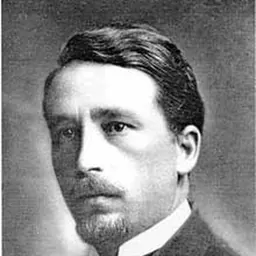
alt=A portrait of a middle-aged man, looking to the left in a half-portrait/profile. He has chubby cheeks, parts his hair to the side and wears a suit and tie.
In 1955, Diệm tried to integrate the remaining Hòa Hảo armies into the VNA. Ba Cụt was one of four Hòa Hảo military leaders who refused the government offer on 23 April, and continued to operate autonomously. At one stage, the Cao Đài, Hòa Hảo and Bình Xuyên formed an alliance called the United Front, in an attempt to pressure Diệm into handing over power; Ba Cụt was named senior military commander. However, this had little meaning as the various units were still autonomous of each other, and the United Front was more a showpiece than a means of facilitating coordinated action, and did not in any way strengthen any military threat to Diệm. The leaders were suspicious of one another and often sent subordinates to meetings. Initially, American and French representatives in Vietnam hoped that Diệm would take up a ceremonial role and allow the sect leaders—including Ba Cụt—to hold government positions. However, Diệm refused to share power and launched a sudden offensive against Ba Cụt in Thốt Nốt on 12 March, shelling the area heavily. The battle was inconclusive and both sides blamed the other for causing instability and disrupting the situation. Diệm then attacked the Bình Xuyên's Saigon headquarters in late April, quickly crushing them.
During the fighting, the Hòa Hảo attempted to help the Bình Xuyên by attacking towns and government forces in their Mekong Delta heartland. Ba Cụt's men, who had also been angered by the recent arrest of some colleagues, blockaded the Mekong and Bassac rivers and laid siege to various towns, including Sa Đéc, Long Xuyên and Châu Đốc, stifling the regional economy. The Hòa Hảo shut down several important regional roads and stopped the flow of agricultural produce from the nation's most fertile region into the capital, causing food prices to rise by 50%, as meat and vegetables became scarce. Ba Cụt then attacked a battalion of VNA troops south of Sa Đéc. to which the Hòa Hảo responded with a series of attack on outposts and blasts to destroy bridges.
With the Bình Xuyên vanquished, Diệm turned his attention to conquering the Hòa Hảo. As a result, a battle between government troops led by General Dương Văn Minh and Ba Cụt's men commenced in Cần Thơ on 5 June. Five Hòa Hảo battalions surrendered immediately; Ba Cụt and three remaining leaders had fled to the Cambodian border by the end of the month. The soldiers of the three other leaders eventually surrendered, but Ba Cụt's men continued to the end, Knowing that they could not defeat the government in open conventional warfare, Ba Cụt's forces destroyed their own bases so that the VNA could not use their abandoned resources, and retreated into the jungle. Ba Cụt's 3,000 men spent the rest of 1955 evading 20,000 VNA troops who had been deployed to quell them,
Despite his weak military situation, Ba Cụt sought to disrupt the staging of a fraudulent referendum that Diệm had scheduled to depose Bảo Đại as head of state. Ba Cụt distributed a pamphlet condemning Diệm as an American puppet, asserting that the prime minister was going to "Catholicize" the country; the referendum was partly funded by the U.S. government and various Roman Catholic organisations. Diệm had strong support from American Roman Catholic politicians and the powerful Cardinal Francis Spellman and his elder brother, Pierre Martin Ngô Đình Thục, was Archbishop of Huế. Ba Cụt presciently noted that the referendum was a means "for Diem to gather the people from all towns and force them to demonstrate one goal: to depose Bao Dai and proclaim the puppet Diem as the chief-of-state of Vietnam." and ventured out of the jungles to attack polling stations in Cần Thơ. Despite that disruption, Diệm was fraudulently credited with more than 90% of support in Hòa Hảo-controlled territory, and a near unanimous turnout was recorded in the area. These results were replicated across the nation, and Diệm deposed Bảo Đại. According to historian Hue-Tam Ho Tai, Ba Cụt's lifelong antipathy towards Thơ's family influenced his behavior during his last stand. Contemporary political commentators based in France and Vietnam saw his capture as the death knell for domestic military opposition to President Diệm, while U.S. Embassy official Daniel Anderson speculated that defeat of "the most able and spectacular leader" of the sects would lead to a collapse in non-communist armed opposition.
Trial and execution alt=A dishevelled man dressed in white folds his arms as he stands in the dock. He is guarded by two soldiers, one with a submachine gun. The courtroom is crowded.
Initially, American observers thought that Diệm might try a reconciliatory approach and reintegrate Ba Cụt into society to increase the appeal of his government, rather than punish the Hòa Hảo leader. They felt that Ba Cụt had a high level of military skill and popular appeal that could be used in favor of the government, citing his colorful "Robin Hood" image as an attraction with the rural populace. Ba Cụt was also accused of collaborating with the communists.
The Hòa Hảo reacted strongly to the legal verdicts as "shameful and unjust".
Ba Cụt was publicly guillotined at 5:40 am on 13 July 1956, in a cemetery in Cần Thơ. A crowd numbering in the hundreds, including members of Diệm's National Assembly, Minh, regional officials and both domestic and overseas journalists witnessed the beheading. Anderson believed the use of the guillotine, instead of a firing squad, as was normal for military executions, was used to emphasize that Ba Cụt's actions were being portrayed as common crimes rather than as political opposition. Chapman said that the dual military and civilian trial indicated that Diệm viewed any opposition activities as not only politically unacceptable but also as crimes related to bad character.
Ba Cụt's body was later diced into small pieces, which were then buried separately. Some followers, led by a hardcore deputy named Bảy Đớm, retreated to a small area beside the Cambodian border, where they vowed not to rest until Ba Cụt was avenged. Many of his followers later joined the Việt Cộng—the movement that succeeded the Việt Minh their leader had fought—and took up arms against Diệm.
Don’t just read it —
keep it.
Full-length biographies made to live with: read them, listen on the way to work, watch them tonight.
- E-book
- Audio
- Video
Instant download · yours to keep · every purchase keeps this site free
Important facts
People in Lê Quang Vinh's life
Named in this biography and alive at the same time




Related people
Same field, nearest in time


Contemporaries
People whose lives overlapped Lê Quang Vinh's



Frequently asked questions
Who was Lê Quang Vinh?
Vietnamese military leader (1923–1956)
When was Lê Quang Vinh born?
Lê Quang Vinh was born in 1923 in Long Xuyên.
When did Lê Quang Vinh die?
Lê Quang Vinh died on 13 July 1956 in Cần Thơ.
What was Lê Quang Vinh's occupation?
Lê Quang Vinh was a military personnel.
What nationality was Lê Quang Vinh?
Lê Quang Vinh's recorded nationality: French Indochina, South Vietnam, State of Vietnam.
Sources & further reading
Cite this page
APA: Biography.guide. (2026). Lê Quang Vinh. https://biography.guide/le-quang-vinh/
MLA: "Lê Quang Vinh." Biography.guide, https://biography.guide/le-quang-vinh/.
Chicago: "Lê Quang Vinh." Biography.guide. https://biography.guide/le-quang-vinh/.
Data last updated: 2026-09-23 · Spot an error? Report a correction.
Portrait: Wikimedia Commons · author & licence
Page generated 2026-09-27 05:05 UTC