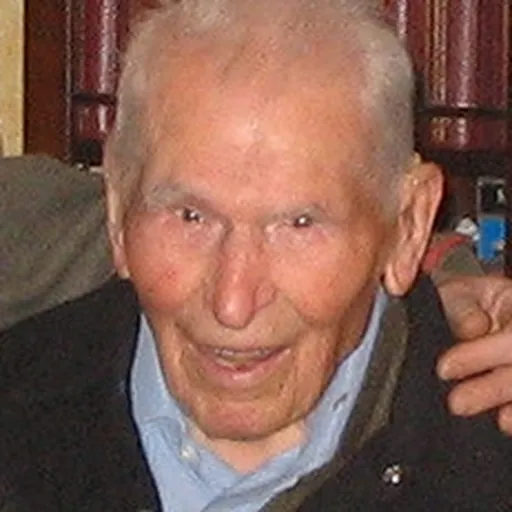
Lazare Ponticelli
World War I veteran, piping and metal worker
About Lazare Ponticelli
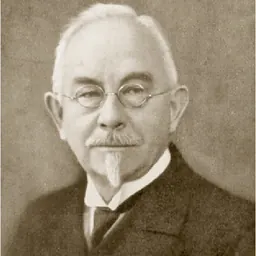
Lived 1897 – 2008 (aged 110). Lazare Ponticelli was a French entrepreneur, military personnel, businessperson, resistance fighter and soldier.
Lazare Ponticelli (born Lazzaro Ponticelli; 7 December 1897 – 12 March 2008), Knight of Vittorio Veneto, was at 110, the last surviving officially recognized veteran of the First World War from France and the last of its trenches to die.
Born in Italy, he travelled on his own to France at the age of eight. Aged 16, he lied about his age in order to join the French Army at the start of the war in 1914, before being transferred against his will to the Italian Army the following year. After the war, he came back to Paris where he and his brothers founded the piping and metal work company ('Ponticelli Brothers'), which produced supplies for the Second World War effort and as of August 2024, is still in business. He also worked with the French Resistance against the Nazis.
Ponticelli was the oldest living man of Italian birth and the oldest man living in France at the time of his death. Every Armistice Day until 2007 he attended ceremonies honoring deceased veterans. In his later years, he criticized war, and stored his awards from the First World War in a shoe box. While he felt unworthy of the state funeral the French government offered him, he eventually accepted one. However, he asked that the procession emphasise the common soldiers who died on the battlefield. French president Nicolas Sarkozy honored his wish and dedicated a plaque to them at the procession.
Early life
Born as Lazzaro Bernardo Ponticelli in Cordani di , a (civil parish) in Bettola, Piacenza, Emilia-Romagna, in northern Italy, he was raised in a mountain hamlet in Bettola, one of seven children born to Giovanni Ponticelli and Filomena Cordani. His father sold livestock on the fairgrounds and occasionally worked as a carpenter and cobbler.
His mother cultivated the family's small plot of land and, like many women of the area, commuted three times a year to the Po Valley to work in its rice fields. When Lazare was two years of age, his mother moved to France to earn a better living. After the unexpected deaths of Jean Ponticelli and his eldest son, Pierre, the rest of the family moved to Paris, leaving Lazare in the care of neighbors. By 1906, aged eight years old, he had saved enough money to buy a railway ticket to Paris, which he considered "paradise". He could not speak French, but found work as a chimney sweep in Nogent-sur-Marne and later as a paper boy in Paris. He obtained a work permit at age 13. Ponticelli worked at digging burial pits and trenches. In keeping a promise to Céleste to always assist others, he rescued a German and a French soldier who were wounded in the arm and leg, respectively.
Ponticelli was not a French citizen and in May 1915, when Italy entered the war, he was conscripted into the Italian Army. Although he attempted to remain with his French regiment, he eventually enlisted in the 3rd Alpini Regiment, after being escorted to Turin by two gendarmes. In 1918 Ponticelli was gassed in an Austrian attack that killed hundreds of his fellow soldiers.
Ponticelli Frères
After being demobilized in 1920, Ponticelli founded a metal work company with Céleste and Bonfils, his older brothers, which they called "Ponticelli Frères" ("Ponticelli Brothers").
During the Second World War, the Ponticelli brothers, who became French citizens in 1939, were too old for combat but supported the war effort by supplying soldiers with their products.
Later life
Until his death, Ponticelli lived with his daughter in the Paris suburb of Le Kremlin-Bicêtre, and every 11 November until 2007 he attended Armistice Day ceremonies. He kept his war medals in a shoebox. caused him to reconsider. Nicolas Sarkozy, the French president, released a statement and said there would be a day of national remembrance for the war dead of France. French academic Max Gallo delivered the eulogy. At the mass, French Guillaume Kaleff read a poem written by his class in Ponticelli's honor.
Flags were ordered to be flown at half mast while Sarkozy unveiled a plaque dedicated to the veterans of World War I.
Legacy On 11 November 2008, during the first Armistice Day since his death, Rue de Verdun in Le Kremlin-Bicêtre was renamed Rue de Verdun-Lazare-Ponticelli.
Don’t just read it —
keep it.
Full-length biographies made to live with: read them, listen on the way to work, watch them tonight.
- E-book
- Audio
- Video
Instant download · yours to keep · every purchase keeps this site free
Important facts
People in Lazare Ponticelli's life
Named in this biography and alive at the same time

Related people
Same field, nearest in time





Contemporaries
People whose lives overlapped Lazare Ponticelli's


Frequently asked questions
Who was Lazare Ponticelli?
World War I veteran, piping and metal worker
When was Lazare Ponticelli born?
Lazare Ponticelli was born on 7 December 1897 in Bettola.
When did Lazare Ponticelli die?
Lazare Ponticelli died on 12 March 2008 in Le Kremlin-Bicêtre.
What was Lazare Ponticelli's occupation?
Lazare Ponticelli was an entrepreneur, military personnel, businessperson, resistance fighter and soldier.
What nationality was Lazare Ponticelli?
Lazare Ponticelli was French.
Sources & further reading
· Wikipedia: Lazare Ponticelli
Cite this page
APA: Biography.guide. (2026). Lazare Ponticelli. https://biography.guide/lazare-ponticelli/
MLA: "Lazare Ponticelli." Biography.guide, https://biography.guide/lazare-ponticelli/.
Chicago: "Lazare Ponticelli." Biography.guide. https://biography.guide/lazare-ponticelli/.
Data last updated: 2026-09-22 · Spot an error? Report a correction.
Portrait: Wikimedia Commons · author & licence
Page generated 2026-09-27 05:03 UTC