
Lawrence of Rome
Christian saint, martyr and a deacon of Rome
About Lawrence of Rome
Lived 225 – 258 (aged 32). Lawrence of Rome was a Roman latin catholic deacon and deacon.
Saint Lawrence or Laurence (; 31 December 225
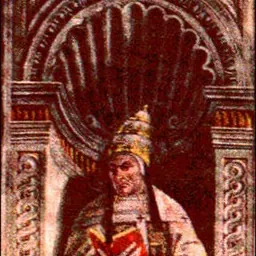
Lawrence encountered the future Pope Sixtus II, a famous teacher born in Greece, in Caesaraugusta (Zaragoza), and they travelled together from Hispania to Rome. When Sixtus became the pope in 257, he ordained the young Lawrence, who was only 32, as a deacon, and later appointed him as Archdeacon of Rome, the first among the seven deacons who served in the cathedral church. This was a position of great trust which included the care of the treasury and riches of the Church and the distribution of alms to the poor. St. Lawrence Distributing the Treasures of the Church by Bernardo Strozzi
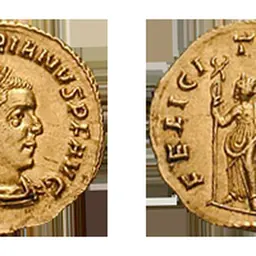
St. Cyprian, Bishop of Carthage, noted that at the time the norm was that Christians who were denounced were executed and all their goods confiscated by the Imperial treasury. At the beginning of August 258, the Emperor Valerian issued an edict that all bishops, priests, and deacons should immediately be put to death. Pope Sixtus II was captured on 6 August 258, at the cemetery of St. Callixtus, while celebrating the liturgy, and was executed immediately.
After the death of Sixtus, the prefect of Rome demanded that Lawrence turn over the riches of the Church, and St. Ambrose wrote that Lawrence asked for three days to gather the wealth. He worked swiftly to distribute as much Church property to the indigent as possible to prevent it from being seized by the prefect. On the third day, at the head of a small delegation, he presented himself to the prefect. When ordered to deliver the treasures of the Church, he presented the city's indigent, crippled, blind, and suffering, and declared that these were the true treasures of the Church: "Here are the treasures of the church. You see, the church is truly rich, far richer than your emperor!"
Martyrdom
As a deacon in Rome, Lawrence was responsible for the material goods of the Church and the distribution of alms to the poor. "Behold in these poor persons the treasures which I promised to show you; to which I will add pearls and precious stones, those widows and consecrated virgins, which are the Church's crown." as the slow, lingering death cannot be reconciled "with the express command contained in the edict regarding bishops, priests, and deacons (animadvertantur) which ordinarily meant decapitation". the Church of St. Lawrence in Palatio ad Sancta Sanctorum, Pontifical Sanctuary of the Holy Stairs (Chiesa di San Lorenzo in Palatio ad Sancta Sanctorum, Pontificio Santuario della Scala Santa), proximate to the Archbasilica of St. John in Laterano, which was originally a private Papal chapel when the edifice that houses it was a Papal palace, and which housed some of the most precious relics of the Roman Catholic Church, hence the title "Sancta Sanctorum" ("Holy of Holies"); and the Church of St Lawrence in Piscibus (San Lorenzo in Piscibus), which is proximate to the Basilica of St. Peter.
Miracles The life and miracles of Lawrence were collected in The Acts of St Lawrence but those writings have been lost. The earliest existing documentation of miracles associated with him is in the writings of Gregory of Tours (538–594), who mentions the following: A priest named Fr. Sanctulus was rebuilding a church of St. Lawrence, which had been attacked and burnt, and hired many workmen to accomplish the job. At one point during the construction, he found himself with nothing to feed them. He prayed to St. Lawrence for help, and looking in his basket he found a fresh, white loaf of bread. It seemed to him too small to feed the workmen, but in faith he began to serve it to the men. While he broke the bread, it so multiplied that his workmen fed from it for ten days.
Veneration
Due to his conspiring to hide and protect the written documents of the Church, Lawrence is known as the patron saint of archivists and librarians.
Roman Catholic Church Lawrence is one of the most widely venerated saints of the Roman Catholic Church. Legendary details of his death were known to Damasus, Prudentius, Ambrose, and Augustine. Devotion to him was widespread by the fourth century. His liturgical celebration on 10 August has the rank of feast in the General Roman Calendar, consistent with the oldest Christian calendars, e.g. the Almanac of Philocalus for the year 354, the inventory of which contains the principal feasts of the Roman martyrs of the middle of the fourth century. He remains one of the saints enumerated in the "Roman Canon" of the Holy Mass as celebrated in the Latin Church.
Lawrence is especially honoured in the city of Rome, of which he is considered the third patron after St. Peter and St. Paul. The church built over his tomb, the Papal Minor Basilica di San Lorenzo fuori le Mura, became one of the seven principal churches of Rome and a favourite place of Roman pilgrimages. The area proximate to the Basilica di San Lorenzo fuori le Mura is named the "Quartiere San Lorenzo".
Because the Perseid Meteor Shower typically occurs annually in mid-August on or around his feast day, some refer to the shower as the "Tears of St Lawrence".
Anglican Communion Within Anglicanism Lawrence's name is variously spelled Laurence or Lawrence. His feast is on 10 August which is in the calendar of the Book of Common Prayer, the volume of prayers which, in its 1662 format, was the founding liturgical document of a majority of Anglican provinces. In the Book of Common Prayer the feast is titled "S Laurence, Archdeacon of Rome and Martyr". His feast on 10 August has been carried into the contemporary calendars of most Anglican provinces, Laurence is remembered in the Church of England with a Lesser Festival under the title "Laurence, deacon, martyr, 258" on 10 August.
Anglo-Catholics venerate Lawrence, who is the patron of many Anglican parish churches, including 228 in England. A major church in Sydney, Australia, in the former civil parish of St Laurence, is known as "Christ Church St Laurence". The Anglican charitable society Brotherhood of St Laurence also bears his name.
Legacy
According to Francesco Moraglia, the role of deacon is distinguished by service of the poor. He is destined both to the service of the table (corporal works of mercy) and to the service of the word (spiritual works of mercy). "The beauty, power and the heroism of eacons such as Lawrence help to discover and come to a deeper meaning of the special nature of the diaconal ministry."
Many churches, schools, parishes, towns, and geographic features throughout the world are named for Lawrence of Rome. Depending on locality they are named St. Lawrence, St. Laurence, San Lorenzo, St. Laurent, St. Lorenz or similarly in other languages.
Europe San Lorenzo del Escorial, the monastery built by King Philip II of Spain, commemorates his victory at the Battle of St. Quentin (1557) on the Feast of St. Lawrence. The monastery and the attached palace, college, and library are laid out in a pattern that resembles the gridiron of Lawrence's martyrdom.
The gridiron of Lawrence is also thought to be the basis of the design of the Certosa di San Lorenzo di Padula, which is a monastery in Padula, Salerno, Italy, and in Switzerland, Saint Lawrence is represented on the coat of arms of the city of Bülach with a gridiron.
Americas Saint Lawrence is one of Canada's patron saints. On his second voyage, French explorer Jacques Cartier, arriving in the river estuary of the North American Great Lakes on the Feast of St. Lawrence in 1535, named it the Gulf of St. Lawrence. The river emptying into the gulf was named the St. Lawrence River. Many names in what are now Québec and the Maritime Provinces of Canada are references to this important seaway, e.g., the Laurentian Mountains north of the city of Montreal, Saint-Laurent (borough), Saint Lawrence Boulevard which spans the width of the Island of Montreal, and St. Lawrence County, New York, United States, near Lake Ontario. In the province of Ontario, St. Lawrence is a prominent, historic neighbourhood in the old centre of Toronto (formerly named York), now most known for the expansive St. Lawrence Market. The Laurentian Mountains gave rise to the name for the Laurential Plateau, or the Canadian Shield.
In Chile, the Day of the Miner (Spanish: Día del Minero) is commemorated on the feast of Saint Lawrence. On that day the National Mining Society awards the San Lorenzo Prize to individual miners and entities of the mineral industry.
Bernalillo, New Mexico, celebrates three days of devotions to the Saint, to honor a devotional promise made by Spanish settlers during the 1692 Pueblo Revolt. Among the festivities are a set of dances performed by matachines. An image of the saint is kept in the house of a local family throughout the year, and a vigil and feast are held from 9–11 August. It is one of the oldest dancing processions in the New World.
Patronage
Against Fire Against Lumbago Archives and Archivists Armouries and Armourers Barbecues Brewers Butchers Comedians Cooks, chefs and restaurant owners Cutlers Deacons Glaziers and stained glass workers Laundry workers Libraries and librarians Miners Paupers and poor people Seminarians Students Tanners Viticulturists, wine makers and wine sellers Abano Terme, Italy Alba, Italy Angrogna, Italy Bernalillo, New Mexico, USA Berzo Demo, Italy Berzo Inferiore, Italy Brissogne, Italy Cabella Ligure, Italy Camino, Italy Canada Cavatore, Italy Chambave, Italy Denice, Italy Esbonderup, Denmark Folgaria, Italy Gamalero, Italy Gross Gartach, Germany Győrszemere, Hungary Huesca, Spain Il-Birgu, Malta Ilaya, Dapitan City, Philippines Limbaži, Latvia Lund, Sweden Montevarchi, Italy Mortara, Italy Naurod, Germany Oldenburg, Lower Saxony, Germany Pontinvrea, Italy Rome Rotterdam San Lawrenz, Malta San Lorenzo, Calabria, Italy Santena, Italy Scala, Italy Seravezza, Italy Sri Lanka Supino, Italy Tivoli, Italy Wodzisław Śląski, Poland Zagarolo, Italy
Gallery
In popular culture In Fargo, season 1, episode 3, Lorne Malvo notes the stained glass window of St Lawrence in Stavros's office, in response to which Stavros narrates his martyrdom, in "A Muddy Road".
In a scene in the 1992 film Lorenzo's Oil, Augusto, Michaela, and Lorenzo tell a story about St Lawrence and refer to his Feast Day as "The Night of The Shooting Stars".
In music Marc-Antoine Charpentier, Motet de Saint Laurent, H.321, for one voice, two treble instruments and contino, 1677-78
Don’t just read it —
keep it.
Full-length biographies made to live with: read them, listen on the way to work, watch them tonight.
- E-book
- Audio
- Video
Instant download · yours to keep · every purchase keeps this site free
Important facts
more
Saint Lawrence the Martyr, Lawrence the MartyrPeople in Lawrence of Rome's life
Named in this biography and alive at the same time

Related people
Same field, nearest in time

Contemporaries
People whose lives overlapped Lawrence of Rome's




Frequently asked questions
Who was Lawrence of Rome?
Christian saint, martyr and a deacon of Rome (225-258)
When was Lawrence of Rome born?
Lawrence of Rome was born on 31 December 225 in Osca.
When did Lawrence of Rome die?
Lawrence of Rome died on 10 August 258 in Rome.
What was Lawrence of Rome's occupation?
Lawrence of Rome was a latin catholic deacon and deacon.
What nationality was Lawrence of Rome?
Lawrence of Rome was Roman.
Sources & further reading
Cite this page
APA: Biography.guide. (2026). Lawrence of Rome. https://biography.guide/lawrence-of-rome/
MLA: "Lawrence of Rome." Biography.guide, https://biography.guide/lawrence-of-rome/.
Chicago: "Lawrence of Rome." Biography.guide. https://biography.guide/lawrence-of-rome/.
Data last updated: 2026-09-26 · Spot an error? Report a correction.
Page generated 2026-09-27 05:15 UTC