
About LaVerne G. Saunders
Lived 1903 – 1988 (aged 85). LaVerne G. Saunders was an american football player and military leader.
LaVerne George Saunders (21 March 1903 – 16 November 1988) was a brigadier general in the United States Army Air Forces during World War II. A 1928 graduate of the West Point, he was an assistant coach of the college football team there from 1931 to 1939. He commanded the 11th Bombardment Group during the bombing of Pearl Harbor and the Guadalcanal campaign. In November 1942 the bomber he was in was shot down and he ditched in the sea. In 1944 he commanded the 58th Bombardment Wing, and he led the bombing mission against Yawata, the first attack on Japan since the Doolittle Raid in 1942. He was involved in a plane crash in September 1944, and spent two and a half years in hospital before retiring in February 1947.
Early life
LaVerne George Saunders was born in Stratford, South Dakota, on 21 March 1903. He attended school at Stratford, Groton and Central High School in Aberdeen. He then went to the University of South Dakota, where he played college football from 1920 to 1923, and was a two-time all-conference player. He graduated with a Bachelor of Arts degree in 1924, and secured an appointment to the United States Military Academy at West Point, which he entered on 1 July 1924. He played tackle on the football team and was All-American in his senior year. His matches included the 1924 13-7 loss to the University of Notre Dame that prompted Grantland Rice to describe the latter's offensive backfield as the Four Horsemen, and 21-all tie against the Navy team played in front of over 100,000 fans at Chicago's Soldier Field in the 1926 Army–Navy Game. He acquired the nickname "Blondie" although his hair was jet black. In 1926, Notre Dame coach Knute Rockne opined on Saunders' playing style that he was, "the waiting type of tackle, but very effective in own way."
Saunders also played on the academy's lacrosse team.
Saunders graduated for West Point on 9 June 1928, ranked 214th in the class, and was commissioned as a second lieutenant in the Infantry. He was then detailed to the Air Corps for flight training on 8 September 1928. He underwent primary flight training at Brooks Field, Texas, from 9 September to 28 June 1929, and then advanced training at Kelly Field, Texas, from 1 July to 12 October 1929. Upon the successful completion of his training, he was transferred to the Air Corps on 21 November 1929. After service with the 2d Bombardment Group at Langley Field, Virginia, Saunders returned to West Point as Assistant Coach of the football team, along with Russell Reeder, known as "Red". He held this position through the 1930s.
World War II On 15 December 1939, Saunders was assigned to Hickham Field in the Territory of Hawaii, where he commanded the 23rd Bombardment Squadron and then the 11th Bombardment Group. His unit was caught on the ground in the attack on Pearl Harbor on 7 December 1941 and many of his aircraft were destroyed. Although he were able to launch patrols later in the day, they were unable to find the Japanese fleet. For his service in the South Pacific, he was also awarded the Distinguished Service Medal, the Silver Star, the Bronze Star Medal, the Distinguished Flying Cross, the Commendation Ribbon and the Purple Heart. Saunders (center) with Rear Admiral John S. McCain Sr. (left) and Major General Millard Harmon at Espiritu Santo, New Hebrides, in August 1942. Saunders commanded the VII Bomber Command from January to March 1943, and was chief of staff of the Seventh Air Force from March to June 1943. He then returned to the United States, where he became the chief of staff of the 58th Bombardment Wing. This wing, under the command of Brigadier General Kenneth B. Wolfe, was the first to be equipped with the new Boeing B-29 Superfortress bomber. Saunders succeeded Wolfe as the 58th Bombardment Wing's commander in March 1944, and the wing deployed to the China-Burma-India Theater the following month. For his services in China-Burma-India he was awarded the Air Medal and the Legion of Merit with an oak leaf cluster.
Later life Saunders was retired from the Army on account of his disability on 28 February 1947. He returned to Aberdeen, South Dakota, where he was the district manager of the Rushmore Mutual Life Insurance Company and the President of Saunders Motor Sales. His son Second Lieutenant Saunders, Maurice M. Saunders was killed in the crash of a Douglas A-26 Invader bomber at Donelson, Tennessee, on 16 January 1954. Aberdeen Municipal Airport was named Saunders Field in his honor in 1946 but was renamed Aberdeen Regional Airport in 1979. He ran unsuccessfully for mayor of Aberdeen. He died in Aberdeen on 16 November 1988 and was buried in Sacred Heart Cemetery there.
Dates of rank
Don’t just read it —
keep it.
Full-length biographies made to live with: read them, listen on the way to work, watch them tonight.
- E-book
- Audio
- Video
Instant download · yours to keep · every purchase keeps this site free
Important facts
People in LaVerne G. Saunders's life
Named in this biography and alive at the same time

Related people
Same field, nearest in time



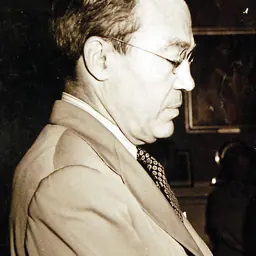

Contemporaries
People whose lives overlapped LaVerne G. Saunders's

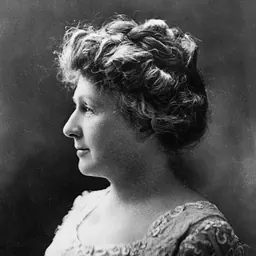
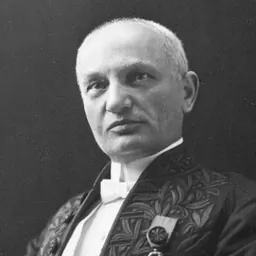
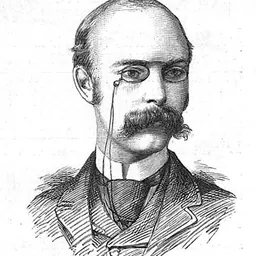
Frequently asked questions
Who was LaVerne G. Saunders?
American military officer (1903–1988)
When was LaVerne G. Saunders born?
LaVerne G. Saunders was born on 21 March 1903 in Stratford.
When did LaVerne G. Saunders die?
LaVerne G. Saunders died on 16 November 1988 in Aberdeen.
What was LaVerne G. Saunders's occupation?
LaVerne G. Saunders was an american football player and military leader.
Sources & further reading
· Wikipedia: LaVerne G. Saunders
· DBpedia: LaVerne G. Saunders
Cite this page
APA: Biography.guide. (2026). LaVerne G. Saunders. https://biography.guide/laverne-g-saunders/
MLA: "LaVerne G. Saunders." Biography.guide, https://biography.guide/laverne-g-saunders/.
Chicago: "LaVerne G. Saunders." Biography.guide. https://biography.guide/laverne-g-saunders/.
Data last updated: 2026-09-25 · Spot an error? Report a correction.
Page generated 2026-09-27 05:11 UTC