
About Lauretta Bender
Lived 1897 – 1987 (aged 89). Lauretta Bender was an American physician, psychiatrist, child psychiatrist and neurologist.
Lauretta Bender (August 9, 1897 – January 4, 1987) was an American child neuropsychiatrist known for developing the Bender-Gestalt Test.
Early life Bender was born in Butte, Montana, to parents John Oscar and Katherine Irvine Bender. Bender had a difficult time in school when she was young and had to repeat the first grade three times. Her family moved often and she attended high school in Los Angeles where she graduated as valedictorian of her high school class.
Education Bender earned a BA in 1922 and MA in 1923 from the University of Chicago. After graduation, she spent some time studying overseas, completed an internship at the University of Chicago and conducted research at Henry Phipps Psychiatric Clinic of Johns Hopkins Hospital. She was awarded the position of senior psychiatrist at the Children's Psychiatric Division in 1934, She also served as the head of the children's psychiatric service at Bellevue Hospital for 21 years starting in 1934. In 1954, she testified at the Senate Subcommittee of Juvenile Delinquency hearings on the effects of crime and horror comic books as a medical expert for National Comics with a job as an advisor for the company. Though not a Gestaltist, Bender believed that all people are made up of a sum of their parts, and that race was only one factor in what made a person who they are. Bender was one of the first to propose that there was something neurologically impaired with these children. Bender diagnosed many children with "childhood schizophrenia", and sought to treat these patients. With more knowledge, clinicians today would likely diagnose these children with developmental or behavioral disorders. This belief was supported by several case studies, one of which was a study on a six-year-old African American female who was abandoned by her parents, and later sent to Bellevue Hospital in 1943. The child expressed many feelings and past experiences in her artwork. Later it was revealed through her art that she had been sexually abused before she was abandoned. After extensive art, talk, and dream interpretation sessions the child was placed into a foster home and was considered to make an impressive recovery. It was observed that the children became more anxious after the treatments had ended, and this was reflected in their drawing; which became more primitive after each ECT treatment. Verbal body image distortions also occurred well after the ECT treatment for that day. Numerous psychiatrists were using LSD treat schizophrenia, as there were no psychotropic medications as such. An example of another controversial treatment for schizophrenia was insulin shock therapy and metrazol treatments. Patients were given large amounts of insulin to induce insulin shock, then given metrazol to induce epileptic convulsions. The use of ECT in psychiatric treatment declined with the advent psychotropic medications, but remains in use for intractable cases of depression. Steve Silberman, the author of Neurotribes, is sharply critical of Bender's therapeutic approach to children with autism. In the 1950s and 1960s, he told an interviewer from The Sun magazine, "autistic kids were often subjected to seclusion, restraint, and physical punishment by clinicians who did not understand their condition. The head of children's psychiatry at Bellevue Hospital in New York City, Lauretta Bender, administered electroconvulsive therapy to autistic patients and also insulin-shock therapy — administering overdoses of insulin to put them into a short-term coma. She gave them antipsychotic drugs like Thorazine. She also tried giving autistic kids LSD every day for nine months or more, but decided they were becoming 'more anxious.'"
Lauretta Bender also opposed Freudian views of childhood disorders. According to Freud and others, childhood anxiety stemmed from early hostility and aggression. Bender observed that childhood anxiety, aggression, and hostility was often caused by frustration or developmental issues, either physically or environmentally.
Don’t just read it —
keep it.
Full-length biographies made to live with: read them, listen on the way to work, watch them tonight.
- E-book
- Audio
- Video
Instant download · yours to keep · every purchase keeps this site free
Important facts
People in Lauretta Bender's life
Named in this biography and alive at the same time


Related people
Same field, nearest in time

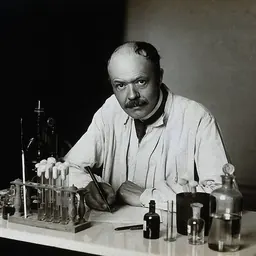
Contemporaries
People whose lives overlapped Lauretta Bender's

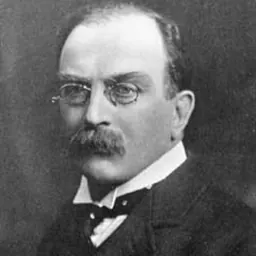


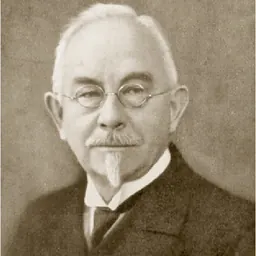

Frequently asked questions
Who was Lauretta Bender?
American neuropsychiatrist (1897–1987)
When was Lauretta Bender born?
Lauretta Bender was born on 9 August 1897 in Butte.
When did Lauretta Bender die?
Lauretta Bender died on 4 January 1987 in Annapolis.
What was Lauretta Bender's occupation?
Lauretta Bender was a physician, psychiatrist, child psychiatrist and neurologist.
What nationality was Lauretta Bender?
Lauretta Bender was American.
Sources & further reading
Cite this page
APA: Biography.guide. (2026). Lauretta Bender. https://biography.guide/lauretta-bender/
MLA: "Lauretta Bender." Biography.guide, https://biography.guide/lauretta-bender/.
Chicago: "Lauretta Bender." Biography.guide. https://biography.guide/lauretta-bender/.
Data last updated: 2026-09-20 · Spot an error? Report a correction.
Page generated 2026-09-27 05:31 UTC