
About Laura Restrepo
Born 1950. Laura Restrepo is a Colombian writer, journalist, poet and novelist.
Laura Restrepo (born 1950 in Bogotá, Colombia) is a Colombian author who began writing what were mainly political columns in her mid-twenties.
Early life Laura Restrepo is the older of two sisters. Her grandfather was self-educated and spoke six languages. Her father left school age of 13 to go out to work before becoming a businessman. According to Restrepo, her father would take her and her mother with him on his business travels and they never stayed long enough in one place to attend a full year of school. Once she attended a public school in California for only one day because her father took the family somewhere else the next day. When she was around ten years old her formal education consisted of six months at a ceramics night school in Denmark. When she and her family went to Madrid the school did not accept her because she failed the required admission tests for arithmetic, grammar, sewing, and embroidery. So instead, she went to a flamenco guitar teacher. Her father took her to visit museums, theaters, ruins, and to climb volcanoes and watch geysers. He introduced her to composers such as Bartók, Prokofiev and Stravinsky. By the time she was 14 she was reading books but did not know the full multiplication table.
She moved back to Colombia age fifteen where she had to work hard to earn a high school degree as she had not taken the required subjects previously but in spite of this, she was able to obtain her diploma. She was the first person in her father's family to receive a diploma. Soon after she got her diploma, she enrolled at the University of the Andes, Colombia. In her second year in college, at the age of 16, she wrote "that beyond the nuclear family and the land of wonders that is high culture, there lay a whole universe to be explored that was broad and remote, fierce and exciting." She cut her ties to her father and never saw him again before his death a few years later. She gave up her teaching job and got involved in Colombian politics before joining the Socialist Workers Party in Spain, then soon went to Argentina for four years where she was part of the underground resistance that opposed the military dictatorship. After three years with the Socialist Workers Party in Madrid she became a journalist.
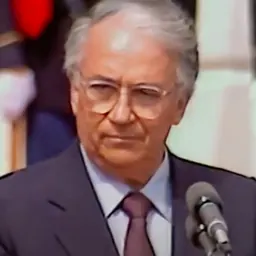
Political career In 1982 Belisario Betancur, the president of Colombia at the time, added Restrepo to the negotiating commission to negotiate peace with the M-19 guerrillas. After Restrepo's experience as a commissioner of peace she left the field of journalism, received death threats and was forced into exile in Mexico for six years. Her novels are widely used in academic institutions for courses ranging from humanities to social sciences. Restrepo has a son from her first marriage. She also teaches months every year at the University of Seville. When she is not teaching, she is usually writing and speaking at academic institutions or forums.
General writing style Laura Restrepo tried to find a style of writing that fit her, eventually developing a mix of reality and fiction to create a style she calls "report style". In her work, she uses history and investigative journalism woven together. Restrepo says, "I needed a formula that would allow me to slightly violate the verifiable facts so that my personal interpretation would not be offensive, and this explains the dual character of the chapters, some strictly investigative, others with license to lie a little." In basic terms, she wrote political non-fiction. Isle of Passion (Isla de la pasión) (1989) Set in the early 1900s during the Mexican Revolution and World War I, the novel narrates the story of Ramón Arnaud, his wife Alicia, and many soldiers from the Mexican military who making their lives on small and barren Clipperton Island in the Pacific. The group starts their lives on the island until the revolution and World War I leave them without any supplies. Bad weather happens and Alicia and Tirsa, a lieutenant's wife, are left to lead the survivors. Restrepo based this novel on a true story. The Dark Bride (La Novia Oscura: Novela) (1999) A journalist investigates a small Colombian town populated by mainly "oil riggers and the prostitutes who service them." The journalist interviews some of the townspeople of Tora to learn about Sayonara, a well-known prostitute who is the daughter of a white man and a Guahibo woman. She is in charge of La Catunga, the place where employees of the Tropical Oil Company "visit" prostitutes. Sayonara falls in love with two workers—Sacramento, whom she loves only as a brother, and Payanes as a lover. However, Payanes is married, and Sacramento wants to save Sayonara from prostitution. Her love story surfaces through the townspeople and the journalistic style that the narrator takes. Delirium (Delirio) (2004) Aguilar, an unemployed professor, finds his wife, Agustina, in a state of madness when he returns home after a four days trip with his children. While he searches for answers to save Agustina, he learns vague secrets about her past. The novel probes into the minds of four characters: Aguilar, Agustina, Midas (Agustina's past lover), and Nicolás (Agustina's grandfather). Through all four parts in the novel, the reader unearths the beginning of Agustina's delirium. Hot Sur (2013). Set in the United States.
As a co-author Operation Prince (Operación Príncipe) (1988) En qué momento se jodió Medellín (1991) Love and Fire (Del amor y del fuego) (1991) Other Children (Otros niños) (1993)
Honors and prizes In 1997, Restrepo won the Sor Juana Inés de la Cruz Prize at the Guadalajara International Book Fair for her novel The Angel of Galilea. In 2002 she won the Arzobispo San Clemente Award for her novel Leopard in the Sun. In 2004 Restrepo won the VII Premio Alfaguara de Novela for Delirium. She won the Grinzane Cavour Prize in Italy for best foreign fiction in 2006. In 2007 she won the Guggenheim Foundation Fellowship. Her novel Dulce Compañía won the Prix France Culture in France.
Don’t just read it —
keep it.
Full-length biographies made to live with: read them, listen on the way to work, watch them tonight.
- E-book
- Audio
- Video
Instant download · yours to keep · every purchase keeps this site free
Important facts
People in Laura Restrepo's life
Named in this biography and alive at the same time

Related people
Same field, nearest in time


Contemporaries
People whose lives overlapped Laura Restrepo's


Frequently asked questions
Who is Laura Restrepo?
Colombian author
When was Laura Restrepo born?
Laura Restrepo was born in 1950 in Colombia.
What is Laura Restrepo's occupation?
Laura Restrepo is a writer, journalist, poet and novelist.
What nationality is Laura Restrepo?
Laura Restrepo is Colombian.
Sources & further reading
Cite this page
APA: Biography.guide. (2026). Laura Restrepo. https://biography.guide/laura-restrepo/
MLA: "Laura Restrepo." Biography.guide, https://biography.guide/laura-restrepo/.
Chicago: "Laura Restrepo." Biography.guide. https://biography.guide/laura-restrepo/.
Data last updated: 2026-09-25 · Spot an error? Report a correction.
Page generated 2026-09-27 05:11 UTC