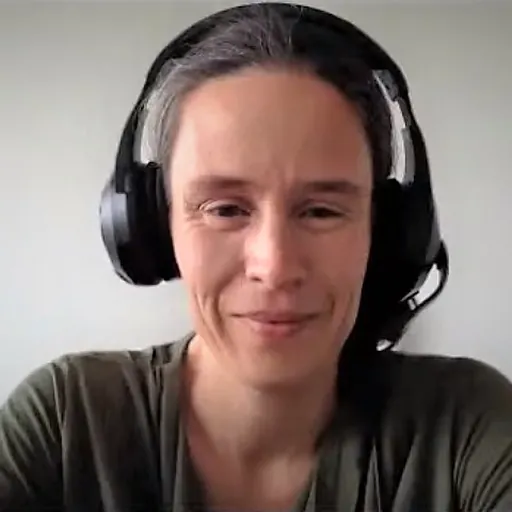
About Laura Busse
Born 1977. Laura Busse is a neuroscientist.
Laura Busse (born 19 September 1977) is a German neuroscientist and professor of Systemic Neuroscience within the Division of Neurobiology at LMU Munich. Busse's lab studies context-dependent visual processing in mouse models by performing large scale in vivo electrophysiological recordings in the thalamic and cortical circuits of awake and behaving mice.
Early life and education Busse was born in Bergisch-Gladbach, Germany, on 19 September 1977. She had an early interest in brain studies and received a scholarship from the State of Bavaria that supported her studies in basic psychology at Leipzig University in Germany from 1997 to 1999.
During her time at Tübingen, Busse pursued research abroad for her Master's in Neuroscience. Busse explored the cognitive underpinnings of attention in the human brain in the Center for Cognitive Neuroscience at Duke University. After successfully completing her Master's in 2001, Busse stayed at Duke University for another year to work as a research technician, continuing to explore the neurobiological underpinnings of cognition using various imaging techniques such as fMRI, EEG, and ERP. Busse completed her PhD in neuroscience in 2006 and then moved back to the United States for one year funded by the Leopoldina Postdoctoral Scholarship. Under Carandini, Busse explored visual processing in the cat V1 and visual behavior in mice. Since fMRI experiments often suffer from extensive overlap of adjacent trial brain signals, experimenters started to implement “null” or “no-stim” trials in order to provide time for extraction of stimulus generated signal during non-event trials. Busse found that when a subject is paying attention to a stimulus in one sensory modality, it increases the subject's attention to a non-related stimulus in a different sensory modality. Busse first showed both spatial and feature-based influences of exogenous cueing on motion processing. Busse then explored how cognitive attention in macaques changes the neural representation of motion information. Busse completed her dissertation in 2008, showing that cognitive factors have strong modulatory effects on the processing of visual motion. Essentially, the population response can be described as a weighted sum of the individual responses to the components of the visual stimulus. Busse extensively trained mice to detect visual contrast using trial-based operant conditioning. She led a team of researchers to approach studying the visual stimuli in an ethologically relevant way. Busse currently leads the Vision Circuits Lab along with co-principal investigator Steffen Katzner within the Department of Biology, Neurobiology Division.
Exploring Neuronal Circuits of Visual Perception in Mice As a Junior Research Group Leader, Busse began to explore the neural circuits underlying visual processing in mouse models. Busse began by asking whether surround suppression, a computation known to underlie visual salience, could be observed in the V1 cortex. Busse and her team found that in awake mice, parvalbumin positive interneurons in the primary visual cortex mediate surround suppression, however, when mice are under anesthesia, this profoundly affects surround suppression and thus spatial integration. They found that locomotion de-correlates V1 population responses however, locomotion seemed to control the tuning of dorsolateral geniculate nucleus population responses. Using in vivo recordings, Busse and her group were able to detect that layer 3 and layer 4 exhibited the strongest surround suppression and that intermediate stimulus sizes resulted in the strongest functional connections between layers. In the feedforward visual processing pathway, the retina extracts visual information from light inputs and passes this information on via its output layer of retinal ganglion cells (RGCs), which project axons to the dorsolateral geniculate nucleus (dLGN) of the thalamus, which in turn routes this information to the primary visual cortex (V1). Whereas the dLGN has traditionally been thought of as a passive relay in visual signal processing, Busse and her colleagues investigate the hypothesis that it might instead be involved in actively shaping visual signals via several factors including recombination of incoming RGC inputs, processing of cortico-thalamic feedback inputs and local inhibitory interneuron computations, amongst others, which will actively shape the output signals sent to the primary visual cortex (V1) (e.g. via altering the thalamic firing modes between burst vs. tonic firing). Fascinatingly, they found that the output of one thalamic cell relies on no more than 5 retinal cells, and that though these retinal inputs are combined to generate an output, they are not given equal weights. 2008 Förderpreis’ of the Berlin-Brandenburg Academy of Sciences 2007 Doctoral Thesis Prize “Effects of selective attention on sensory processing of visual motion”
Select publications Román Rosón, M., Bauer, Y., Kotkat, A.H., Berens, P., Euler, T., and Busse, L. (2019). Mouse dLGN Receives Functional Input from a Diverse Population of Retinal Ganglion Cells with Limited Convergence. Neuron 102, 462–476.e8. Jurjut, O., Georgieva, P., Busse, L., and Katzner, S. (2017). Learning Enhances Sensory Processing in Mouse V1 before Improving Behavior. J. Neurosci. 37, 6460–6474. Erisken, S., Vaiceliunaite, A., Jurjut, O., Fiorini, M., Katzner, S., and Busse, L. (2014). Effects of locomotion extend throughout the mouse early visual system. Current Biology, 24(24):2899–2907. Vaiceliunaite, A., Erisken, S., Franzen, F., Katzner, S., and Busse, L. (2013). Spatial integration in mouse primary visual cortex. Journal of Neurophysiology, 110(4):964–972. Busse, L., Ayaz, A., Dhruv, N. T., Katzner, S., Saleem, A. B., Schölvinck, M. L., Zaharia, A. D., and Carandini, M. (2011). The detection of visual contrast in the behaving mouse. The Journal of Neuroscience, 31(31):11351–11361. Busse, L., Wade, A. R., and Carandini, M. (2009). Representation of concurrent stimuli by population activity in visual cortex. Neuron, 64(6):931–942.
Don’t just read it —
keep it.
Full-length biographies made to live with: read them, listen on the way to work, watch them tonight.
- E-book
- Audio
- Video
Instant download · yours to keep · every purchase keeps this site free
Important facts
Related people
Same field, nearest in time





Contemporaries
People whose lives overlapped Laura Busse's



Frequently asked questions
Who is Laura Busse?
German neuroscientist
When was Laura Busse born?
Laura Busse was born in 1977 in Germany.
What is Laura Busse's occupation?
Laura Busse is a neuroscientist.
Sources & further reading
Cite this page
APA: Biography.guide. (2026). Laura Busse. https://biography.guide/laura-busse/
MLA: "Laura Busse." Biography.guide, https://biography.guide/laura-busse/.
Chicago: "Laura Busse." Biography.guide. https://biography.guide/laura-busse/.
Data last updated: 2026-09-22 · Spot an error? Report a correction.
Portrait: Wikimedia Commons · author & licence
Page generated 2026-09-27 05:01 UTC