
About Laszlo Varga
Lived 1924 – 2014 (aged 89). Laszlo Varga was an American and Hungarian cellist, conductor, music educator, university teacher, music arranger and musician.
Laszlo Varga (December 13, 1924 – December 11, 2014) was a Hungarian-born American cellist who had a worldwide status as a soloist, recording artist, and authoritative cello teacher.
Biography As a Jew, Varga lost his position at the Budapest Symphony during WW II and was later interned by Hungarian authorities in a Nazi labor camp.
For 11 years Varga held the position as principal cellist of the New York Philharmonic under the baton of the orchestra's music directors Dimitri Mitropoulos and Leonard Bernstein, and many guest conductors including Fritz Reiner and Guido Cantelli. He performed as soloist with orchestras in countries such as Australia, Japan, USA, the former Soviet Union, and throughout Europe. In music festivals such as Aspen, Chautauqua, and Shreveport, he has been spotlighted during the last 40 years for his duties as a soloist, chamber musician and teaching mentor. During this time recorded a multitude of disks for numerous labels including Columbia, CRI, Decca, EMI, Musicelli, Period, Philips, RCA, Serenus, and Vox. Many composers throughout the world have requested that Mr. Varga give the first performance of their works.
As a chamber musician he was a member of groups such as the Borodin Piano Trio, the Canadian String Quartet, the Léner String Quartet, the Hungarian Quartet, the Trio Concertante, and the Crown Chamber Players. Indiana University awarded Varga with the title of Chevalier du Violoncelle for having dedicated his career as a teacher and soloist for the improvement of cello playing. He taught the cello at San Francisco State University (where he also taught conducting and oversaw the chamber music program), University of California, Santa Cruz, the University of Toronto and the University of Houston, from which he retired in 2000.
He has the great pleasure of having many of his students landing jobs in orchestras and in universities throughout the globe. He routinely holds master classes and performs in recitals as well as conducts large groups of cello ensembles on all sides of the globe. Many of these take place during the various international Cello Congresses. He has been the conductor of orchestras in Budapest, Hungary and San Leandro, California, as well as Festivals in Aspen, Colorado and Shreveport, Louisiana. He not only conducted the Virtuosi of New York and the Virtuosi of San Francisco but he was founder of both of them. He has arranged many works of music which are published by MusiCelli Publications. Groups such as the Yale Cellos, the Saito Cello Ensemble, CELLO for Sony/Philips, MusiCelli, the Los Angeles I Cellisti, as well as his own New York Philharmonic Cello Quartet have recorded his arrangements.
Laszlo Varga's list of Cello Arrangements
for Solo Cello BACH, Johann Sebastian Partita in D minor for solo cello, BWV 1004 (which includes the famous Chaconne) Partita in E for solo cello, BWV 1006 Solo Cello Suite No. 4, BWV 1010 (Transposed to G Major)
BRAHMS, Johannes Three Violin Sonatas (Cello part only) Sonata in G, Op. 78 Sonata in A, Op. 100 Sonata in d, Op. 108
for Cello and Piano BACH, Johann Sebastian Toccata, Adagio, and Fuga (Originally for organ.)
BARTOK, Bela Sonatine (1915) (Originally for piano.)
BEETHOVEN, Ludwig van Sonata, Op. 64
MOZART, Wolfgang Amadeus Adagio, K. 261 (Originally for violin.) Andante, K. 467 (Originally for piano.)
SCHUBERT, Franz Two Songs: “Litanei” and “Aufenthalt”
SCHUMANN, Robert Two Songs
RAVEL, Maurice Tzigane
for Two Cellos BACH, Johann Sebastian Fifteen Little Pieces Suite in C Major Suite No. 5, BWV 1011 in C minor for cello duo (transposed to G minor) Aria from Goldberg Variations
for Three Cellos BACH, Johann Sebastian Two Little Preludes
Cello Quartets and bigger Ensembles BACH, Johann Sebastian Chaconne in d, BWV 1004 Prelude and Fugue VIII from Book One of the “WTC” Sarabande and Bourree, BWV 1002 Suite V for solo cello, BWV 1011 Allemande, Sarabande, Gavotte, and Gigue from Suite VI
BARTOK, Bela Hungarian Peasant Songs
BEETHOVEN, Ludwig van Quartet, Op. 14, No. 1 (Originally for piano.) Adagio, Op. 31, No. 2 (Originally for piano.)
BOCCHERINI, Luigi Adagio and Allegro (from the Cello Sonata in A)
CHOPIN, Frederic Etude, Op. 25, No. 7 (Originally for piano.) Prelude in e, Op. 28, No. 4 (Originally for piano.)
DEBUSSY, Claude Sarabande (from “pour le piano”) Prelude, “La fille aux cheveux de lin” (Originally for piano.) Prelude, “Minstrels” (Originally for piano.)
HAYDN, Franz Joseph Quartet, Op. 76, No. 5 (Originally for string quartet.)
MOOR, Emanuel Suite, Op 95
MOZART, Wolfgang Amadeus Sonata in F, K. 358 (Originally for piano.)
RIMSKY-KORSAKOV, Nicolai Flight of the Bumble Bee
ROSSINI, Gioacchino Variations “Un Larme” (Originally for cello and piano.)
VIVALDI, Antonio Concerto Grosso, Op. 3, No. 11
Cello Ensemble with Voice SCHUBERT, Franz Two Songs for Soprano and Cello Quartet, Der Müller und der Bach and Heidenröslein
BRAHMS, Johannes “Ihr habt nun Traurigkeit” from Ein deutsches Requiem for mezzo soprano or solo cello and eight-part cello ensemble (with optional six-part cello choir.)
Solo Cello and Four Cellos or other Instruments HANDEL, George Frederic Concerto in g for five celli or solo oboe and four celli
MOZART, Wolfgang Amadeus Quintet, K. 407 for oboe and four celli. (Originally for horn and strings.)
RESPIGHI, Ottorino Adagio con Variazioni for solo cello and cello octet
STRAUSS, Richard Don Quixote, Op. 32 for solo cello and viola, violin, clar./bass clar., French horn, and piano Sonata, Op. 6 for solo cello and 12-piece ensemble (pairs or flutes, oboes, clarinets, bassoons, horns, 1 cello, and 1 bass)
TCHAIKOVSKY, Peter Ilych Andante Cantabile from the String Quartet, Op. 11 for solo cello and five-part cello ensemble
Don’t just read it —
keep it.
Full-length biographies made to live with: read them, listen on the way to work, watch them tonight.
- E-book
- Audio
- Video
Instant download · yours to keep · every purchase keeps this site free
Important facts
People in Laszlo Varga's life
Named in this biography and alive at the same time
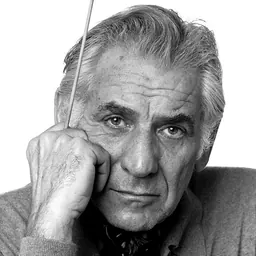




Related people
Same field, nearest in time

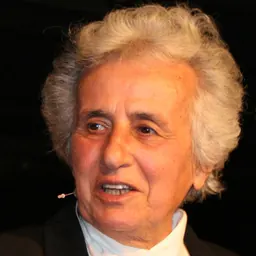
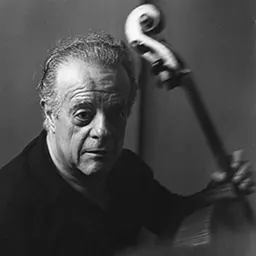

Contemporaries
People whose lives overlapped Laszlo Varga's



Frequently asked questions
Who was Laszlo Varga?
cellist, conductor, music pedagogue
When was Laszlo Varga born?
Laszlo Varga was born on 13 December 1924 in Budapest.
When did Laszlo Varga die?
Laszlo Varga died on 11 December 2014 in Sarasota.
What was Laszlo Varga's occupation?
Laszlo Varga was a cellist, conductor, music educator, university teacher, music arranger and musician.
What nationality was Laszlo Varga?
Laszlo Varga was American and Hungarian.
Sources & further reading
· DBpedia: Laszlo Varga (cellist)
Cite this page
APA: Biography.guide. (2026). Laszlo Varga. https://biography.guide/laszlo-varga-cellist/
MLA: "Laszlo Varga." Biography.guide, https://biography.guide/laszlo-varga-cellist/.
Chicago: "Laszlo Varga." Biography.guide. https://biography.guide/laszlo-varga-cellist/.
Data last updated: 2026-09-20 · Spot an error? Report a correction.
Page generated 2026-09-27 05:06 UTC