
About László Polgár
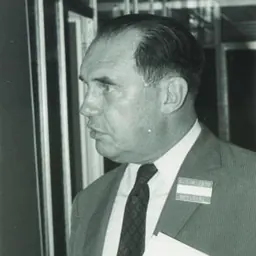
Born 1946. László Polgár is a Hungarian chess coach, teacher, pedagogue, chess player, esperantist and writer.
László Polgár (born 11 May 1946) is a Hungarian chess teacher and educational psychologist. He is the father of the famous Polgár sisters: Zsuzsa, Zsófia, and Judit, whom he raised to be chess prodigies, with Judit and Zsuzsa becoming the best and second-best female chess players in the world, respectively. Judit is widely considered the greatest female chess player ever, as she is the only woman to have been ranked in the top 10 worldwide, while Zsuzsa became the Women's World Chess Champion.
He has written well-known chess books such as Chess: 5334 Problems, Combinations, and Games and Reform Chess, a survey of chess variants. He is also considered a pioneer theorist in child-rearing, who believes "geniuses are made, not born". Polgár's experiment with his daughters has been called "one of the most amazing experiments…in the history of human education." He has been "portrayed by his detractors as a Dr. Frankenstein" and viewed by his admirers as "a Houdini", noted Peter Maas in the Washington Post in 1992.
Education and career Polgár was born on 11 May 1946 in Gyöngyös, Hungary. He studied intelligence when he was a university student. He later recalled that "when I looked at the life stories of geniuses" during his student years, "I found the same thing...They all started at a very young age and studied intensively." He prepared for fatherhood before marriage, reported People Magazine in 1987, by studying the biographies of 400 great intellectuals, from Socrates to Einstein. He concluded that if he took the right approach to child-rearing, he could turn "any healthy newborn" into "a genius." In 1992, Polgár told the Washington Post: "A genius is not born but is educated and trained….When a child is born healthy, it is a potential genius." Polgár and his wife considered various possible subjects in which to drill their children, "including mathematics and foreign languages", but they settled on chess. "We could do the same thing with any subject, if you start early, spend lots of time and give great love to that one subject," Klara later explained. "But we chose chess. Chess is very objective and easy to measure."
The experiment began in 1970 "with a simple premise: that any child has the innate capacity to become a genius in any chosen field, as long as education starts before their third birthday and they begin to specialize at six." Polgár "battled Hungarian authorities for permission" to home-school the girls.
The family lived "in a modest apartment in the heart of Budapest" in which the "narrow living room" was "cluttered with chess books" and one wall was "lined with sketches of chess scenes from centuries ago." "For me, learning chess was natural; with my sisters around me, I wanted to play," said Judit in 2008.
While Polgár taught the girls the game, Klara took care of the home and later "coordinated their travels to tournaments in 40 countries." His daughter Susan said in a 2005 interview, "My father believes that innate talent is nothing, that [success] is 99 percent hard work." She also described Polgár as "a visionary" who "always thinks big" and who "thinks people can do a lot more than they actually do." Although Polgár was criticized in some quarters for encouraging his daughters to focus intensely on chess, the girls later said they had enjoyed it all. Polgár "once found Sophia in the bathroom in the middle of the night, a chessboard balanced across her knees." "Sophia, leave the pieces alone!" he told her. "Daddy, they won't leave me alone!" she replied. as did Frank McNeil in his 2009 book Learning with the Brain in Mind. In 1992, Cathy Forbes published a book entitled The Polgár Sisters: Training or Genius?.
A documentary about Polgár and his experiment was shown on Israel I TV in 2012. Amir Harel, producer of the documentary, said that the story of the Polgárs "touches upon many aspects of life: the educational experiment, the underlying ideology, the heroic fight against the Communist regime, issues pertaining to the equality of the sexes, family relationships, and even love stories. Obviously, the film attempts to decipher the mysterious nature of the father, László Polgár." Filmmaker Yossi Aviram said that "Years of abuse by the authorities and media made the family suspicious" of people who wanted to make a film about them. "What helped me was my love of chess and the fact that I had fallen in love with this family."
Books by Polgár Polgár has written many books on chess. By far the most famous of these is Chess: 5334 Problems, Combinations, and Games, which "includes 5,334 different instructional situations--many taken from real matches--including 306 problems for checkmate in one move, 3,412 mates in two moves, 744 mates in three moves, 600 miniature games, 144 simple endgames, and 128 tournament game combinations, plus solutions, the basic rules of the game and an international bibliography." It has been called "One of the most iconic chess books ever written." In 2023, Zsuzsa Polgár claimed in a Facebook post that "in good part" she had been the author of this book solely attributed to her father.
Published works Nevelj zsenit! , 1989 Minichess, 1995 Chess: 5334 Problems, Combinations, and Games, 1994 Chess: Reform Chess, 1997 Chess: Middlegames, 1998 Chess: Endgames, 1999 Királynők és királyok. Sakk, Szerelem, Szex, 2004 Salom haver: Zsidó származású magyar sakkozók antológiája, 2004 PeCHESS ember elCHESSte, 2004 Polgar Superstar Chess, 2004 Polgar Superstar Chess II, 2005 I Love Superstar Chess, 2005 Hatágú csillag. Sakk, képzőművészet és humor, 2005 Biztonság. Sakk és humor, 2005 Knight, 2005 Queens, 2005 Blanka: Miniaturaj ŝakproblemoj , 2005 Sakkmat(t)ek. Sakk, matematika, humor, 2005 Eszperantó és sakk , 2006 La ŝtelita stel''', 2006 Barna Viktor Pályafutásom'', 2013
Don’t just read it —
keep it.
Full-length biographies made to live with: read them, listen on the way to work, watch them tonight.
- E-book
- Audio
- Video
Instant download · yours to keep · every purchase keeps this site free
Important facts
People in László Polgár's life
Named in this biography and alive at the same time




Related people
Same field, nearest in time

Contemporaries
People whose lives overlapped László Polgár's


Frequently asked questions
Who is László Polgár?
Hungarian chess teacher
When was László Polgár born?
László Polgár was born on 11 May 1946 in Gyöngyös.
What is László Polgár's occupation?
László Polgár is a chess coach, teacher, pedagogue, chess player, esperantist and writer.
What nationality is László Polgár?
László Polgár is Hungarian.
Sources & further reading
Cite this page
APA: Biography.guide. (2026). László Polgár. https://biography.guide/laszlo-polgar/
MLA: "László Polgár." Biography.guide, https://biography.guide/laszlo-polgar/.
Chicago: "László Polgár." Biography.guide. https://biography.guide/laszlo-polgar/.
Data last updated: 2026-09-20 · Spot an error? Report a correction.
Page generated 2026-09-27 05:21 UTC